
The Soapbox
We love mini reviews! Nom nom nom! Or maybe we should call them responses. Gut punches. Share your thoughts about recent shows, we'll lightly edit, and (if selected) up they'll go. Pretend we're your friend; Staff Picks is your friend, and we're asking, "What'd you think of the show?" We really wanna know, in two paragraphs max, please.
If you have an idea for a longer piece, whether its a manifesto, a list of things you need to get off your chest, a love letter, a hate letter, a rant, or the next paradigm-shifting 3am dramaturgical framework, submit these, too! We want it all!
-
STAFF PICKS SOAPBOX SUBMISSIONS
What is a Soap Box?
A Soap Box™️ is a short essay, dialogue, or response about a piece of live art. Staff Picks uplifts, through weekly posts, live works of theater, dance, music, and a combination of those mediums, taking special note of shows in unique or far-flung venues that may only enjoy a short run. Soap Boxes are chances to further highlight those works through rigorous and curious commentary.
What Should Be in My Soap Box?
A distinct point of view. We are not looking for an essay of complimentary adjectives, though we of course want to uplift works that do not enjoy mainstream press. That said, we are more curious about what about a production is sticking with you, and why. That might mean all you discuss is a single costume, moment, or performance. Or, a theme or trend or something larger!
How Long is a Soap Box?
Given Staff Picks is entirely volunteer-run and editing is a love of labor, a Soap Box should be at most 1,000 words, but you can also go much shorter. There can also be flexibility around the word count depending on individual conversations with the Staff Picks team..
How Do I Submit a Soap Box?
Email staffpicks.fun@gmail.com with SOAP BOX: <and then the name of the show or artist you are considering> in the subject line of your message. Then, in the body of the email, share just a paragraph or two sharing the show you want to write about (or person you want to have a conversation with), when it runs (or ran), why you want to discuss it, and when you think you can turn in a draft. From there, the Staff Picks team will discern and then reply either green lighting or passing on the Soap Box pitch.
Can I Write About a Friend’s Show?
Yes, but be judicious. Many artists know each other, so not writing about friends is sometimes impossible. Nonetheless, Staff Picks prizes rigor and honesty over pull quotes and overly flowery praise.
LBJ: The Play: The Post-Show Conversation
from Staffer Blake Bolan
with photos by Jose Miranda
So much of the delight of LBJ: The Play is the madcap pacing and the constant surprises: when the bell rang in Ms. Davis’s classroom, we did not and could not have anticipated the non-stop riot that we were about to enjoy. To that end, because as of writing there are still 16 performances left of LBJ: The Play, I don’t want to spoil the fun by telling you too much. With this under consideration, what I will share is my conversation with my partner Ash from after the show. As with all juicy political documents — please enjoy a heavily redacted transcript of the conversation we enjoyed post-show.
Edited for clarity and length.
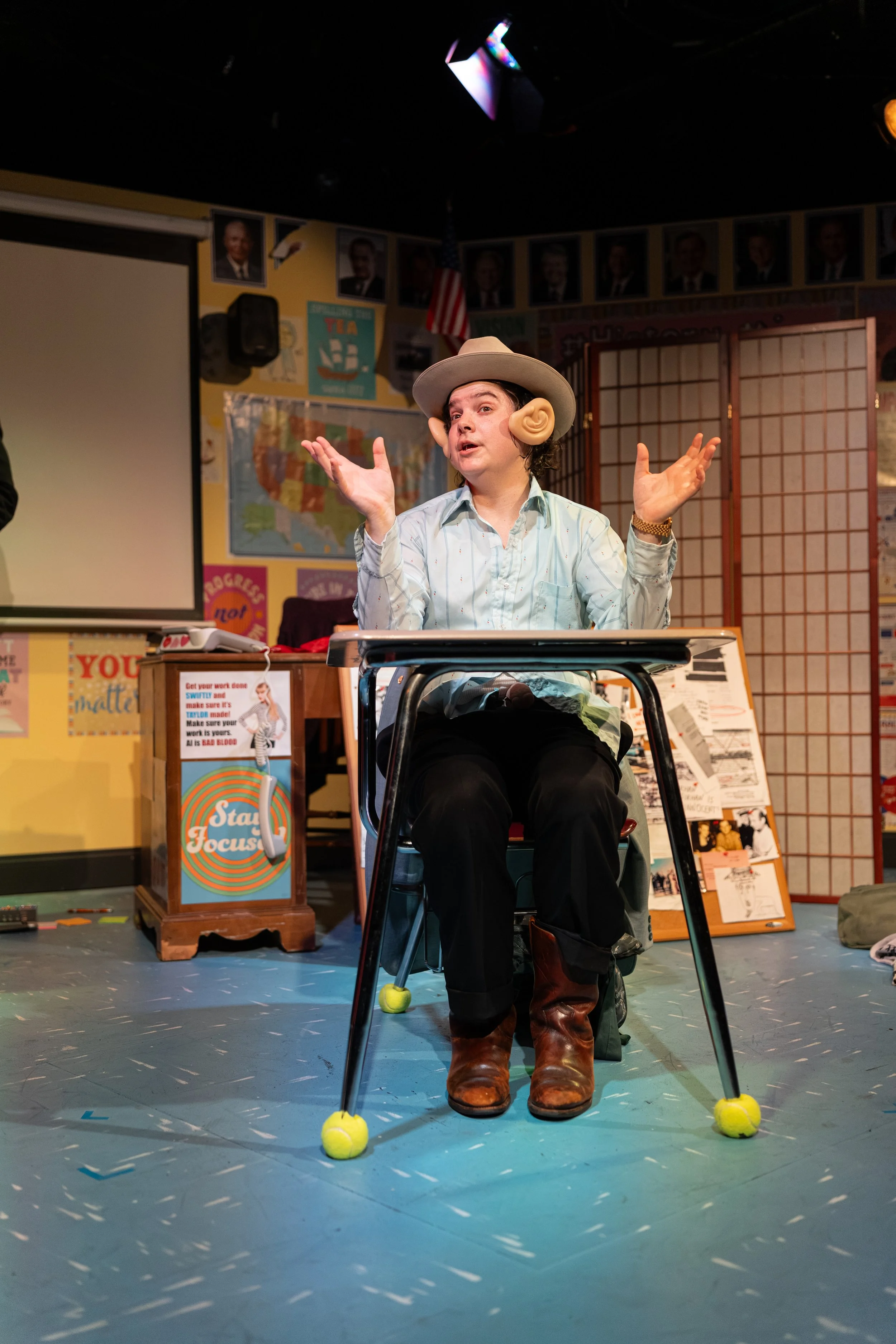
B: Alright, I want all your thoughts.
A: Every single one of my thoughts?
B: I mean, obviously we loved it because we bought a shirt -
A: Yeah, I’d say we loved it. I mean, I didn’t know what to expect going into it, you know, ‘cause the premise is just - this dude thinks he is this president, he’s here to do a class. I really liked that we were the children, I thought that was very fun.
B: It gave the tension that we needed, for it to be that ridiculous.
A: Exactly. The audience participation was very fun.
B: Also, they picked bangers. They couldn’t have picked better people, honestly. It felt like a 90 minute Simpsons episode to me.
A: OH MY GOD, that’s the exact perfect way to put it.
B: I had already had that thought, and then there was a slide that had the Simpsons, like, they know. That was the kind of humor that it was, except, like, raunchier. It just felt like the way that they were, the physical comedy of it, and also, the way that they were poking fun at everyone, felt like the Simpsons. Classic, really good Simpsons.
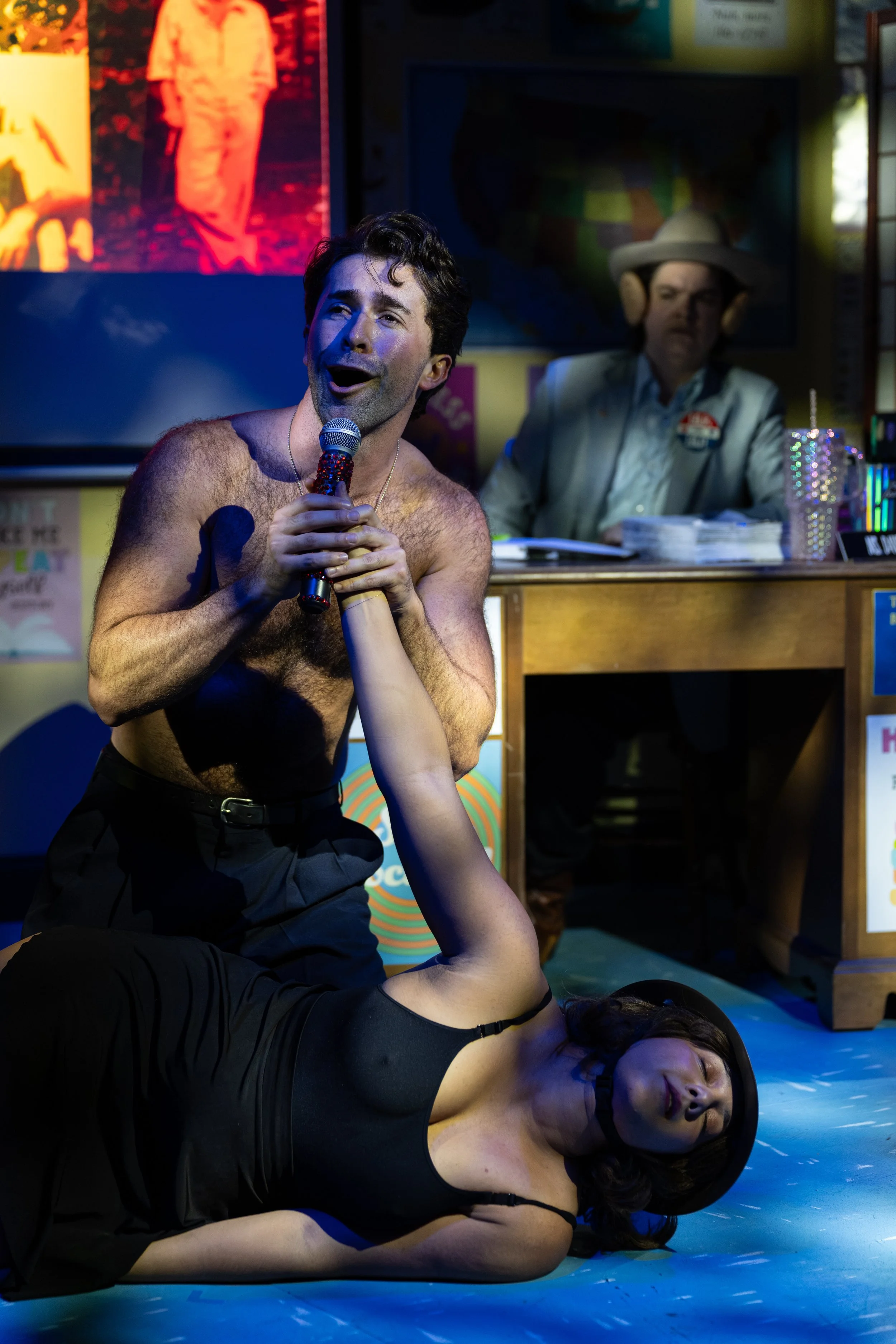
A: The part that really sells that for me is just how elastic that [REDACTED] was. He stretched that thing a solid four feet when he was smacking—
B: Wherever they found that particular thing is incredible, I need to know more. I’m reticent to make note of that in any kind of writing or review, because it’s such a good surprise.
A: It is such a good surprise, the fact that it [REDACTED], I think is—
B: I wouldn’t want someone to tell me ahead of time—
A: It was superb.
B: I also LOVED the first time early on that he took his hat off and we got to see the, like, device for the [REDACTED].
A: I’m pretty sure it was [REDACTED] that they took the [REDACTED] off of and put [REDACTED] on for the [REDACTED], and then two enormous [REDACTED] which is what really did it for me.
B: Yeah.
A: I didn’t look at the cast, so I had no idea there were going to be more people - I thought this was a two-man show and then it became a four-man show, and I was actually so obsessed with those two.
B: Oh my god, they were amazing.
A: In such a small cast, you rarely get the two kinds of dumb sidekicks that work really well but they’re not just there to be dumb sidekicks, they’re characters. I thought they foiled really well.
B: And they played, in my experience, they played these classic kind of character actors—
A: The character shoes!
B: The character shoes, the character dress, the way they styled them was right but also the way that they acted was right, that they were like - oh, I could see these two, especially the woman, doing children’s theater in Minnesota.
A: I can see in my head, the Craigslist ad that both of these people responded to, to be a part of this. Both great singers as well. And he’s so fuzzy!
B: So fuzzy! A classically hot man who can play [REDACTED]. They did a good job, it makes sense that the teacher got all swoony for him.
A: One of the things that I think is really interesting with that, too - I did not expect to get hit in the transmasc feels at the end of it. Because I know my people, absolutely clocked, oh yes this is a trans performer—
B: For sure!
A: But I did not anticipate that becoming a part of the play, so suddenly, I’m doing 70 minutes of the funniest physical comedy, and they just really let that moment of [REDACTED] sit in a way, I didn’t expect it.
B: Yeah, because nothing in that madcap of a comedy, you don’t let anything sit that long. Oh my god, there’s Slam Frank!
[Brief tangent in which B tells A the lore of Slam Frank.]

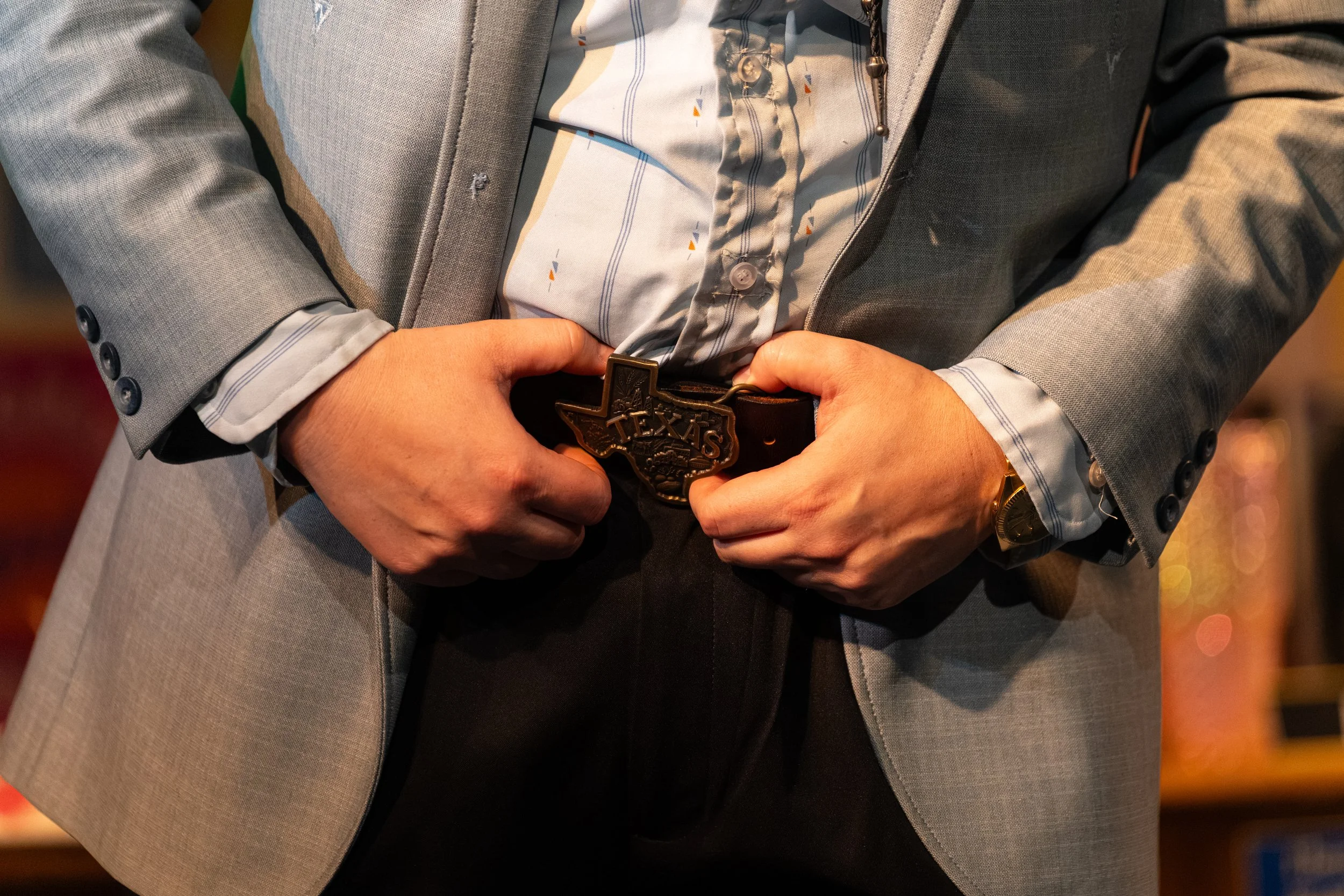
A: But, back to the show – those were some real Texas-kid photos.
B: On a [REDACTED], in a [REDACTED].
A: I think there’s something really interesting about the idea of a trans guy from Texas emulating this Texas political figure. Yeah he did all this stuff and there’s also Vietnam, you know, at the end of the day, who the fuck was this guy? Your idea of masculinity is what you see, so you know, growing up in Texas, maybe it was — here’s Texas’s fuckin’ politician.
B: Well, better him than one of the Bushes. I’m now fascinated by the idea that this guy with this understanding the game and the dirty politics, getting a bunch of really important shit done and then Vietnam fucked his legacy in the end. Cause none of us know any of that shit about him. I feel like it was, while it didn’t have to be, it was deeply educational.
A: It was! I did in fact learn a lot! Now I know [REDACTED] grows real slow! Also, the inferiority complex of him versus JFK is really interesting if you apply it to the transgender narrative.
B: Uh-huh.
A: Because they got this hot, fit, fuzzy, cis actor — man, man, man, man.
B: I guess all that hair has a really masculine quality.
A: Fit, man, furry. There’s also that contrast between the two of those which I think is fun.
B: Yeah I think also you’d think it would land on, “but he’s a [REDACTED],” that that would be the crux, when really it wasn’t at all, it was really who are you if you let this fall away from you. Who are you and why are you doing this?
A: It’s the story of the President, but the SHOW is about (unintelligible due to emergency sirens). What else?
B: Great set dressing.
A: The set was so fun.
B: And I really like the device of the [REDACTED] writing in the [REDACTED]. That was good.
A: I wish I could have paused reality so I could read what all of those notes were.
B: You’d have had to pause reality, I’d need to stand about 20 feet closer.
A: Oh, and the pull out of [REDACTED] was just, chef’s kiss.
B: Yeah, real. Okay, I’ll stop now.
Late Carnage
by Alex Aguirre
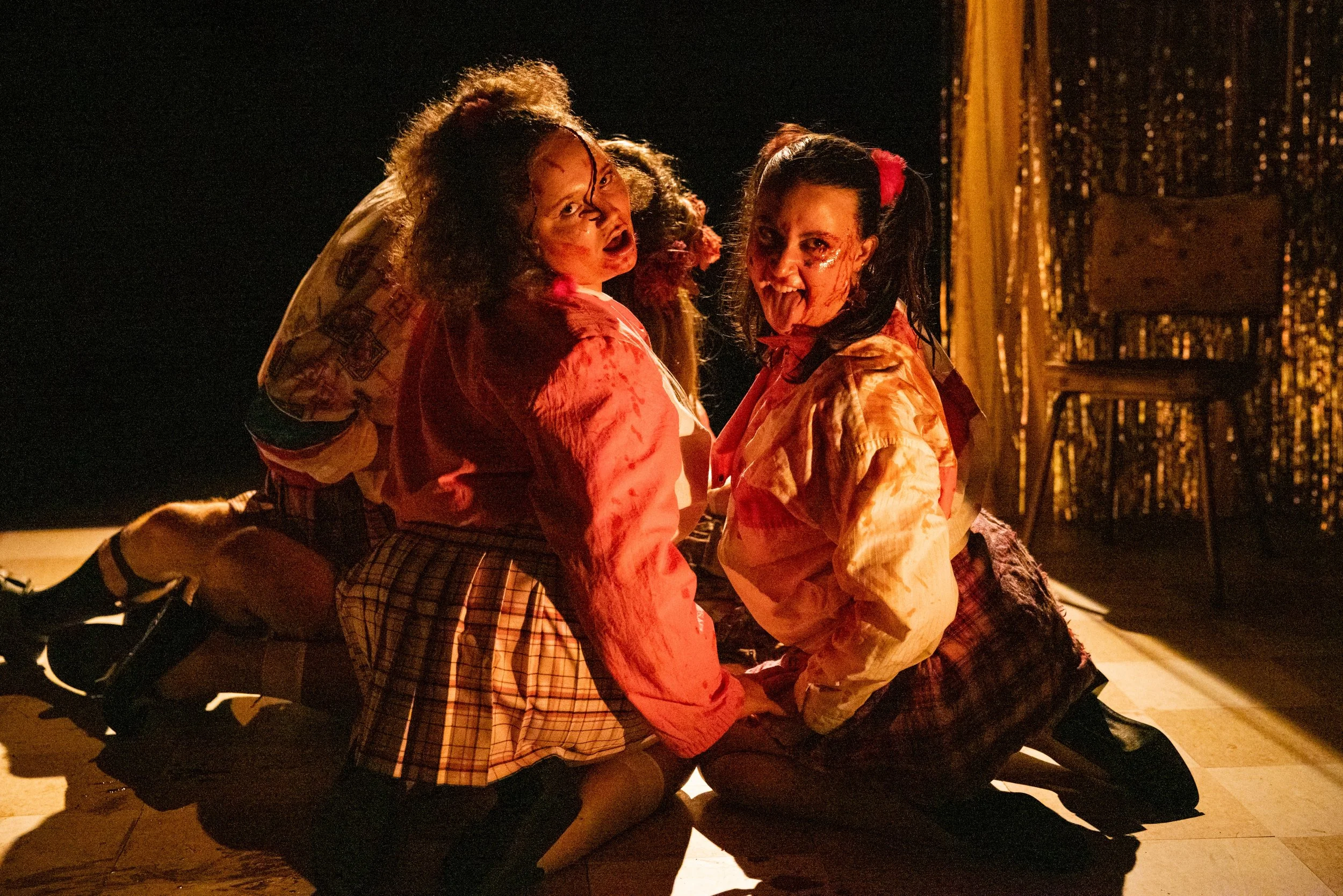
Leonie Bell’s Im Dunkeln sieht man besser (translation: you can see better in the dark) is the dream play you’ve been waiting for. Even though the piece is primarily in English (there are some intermittent splashes of German), the whole piece feels like a foreign film without the subtitles. This is a play of making moments that have no business fitting together… fitting together.
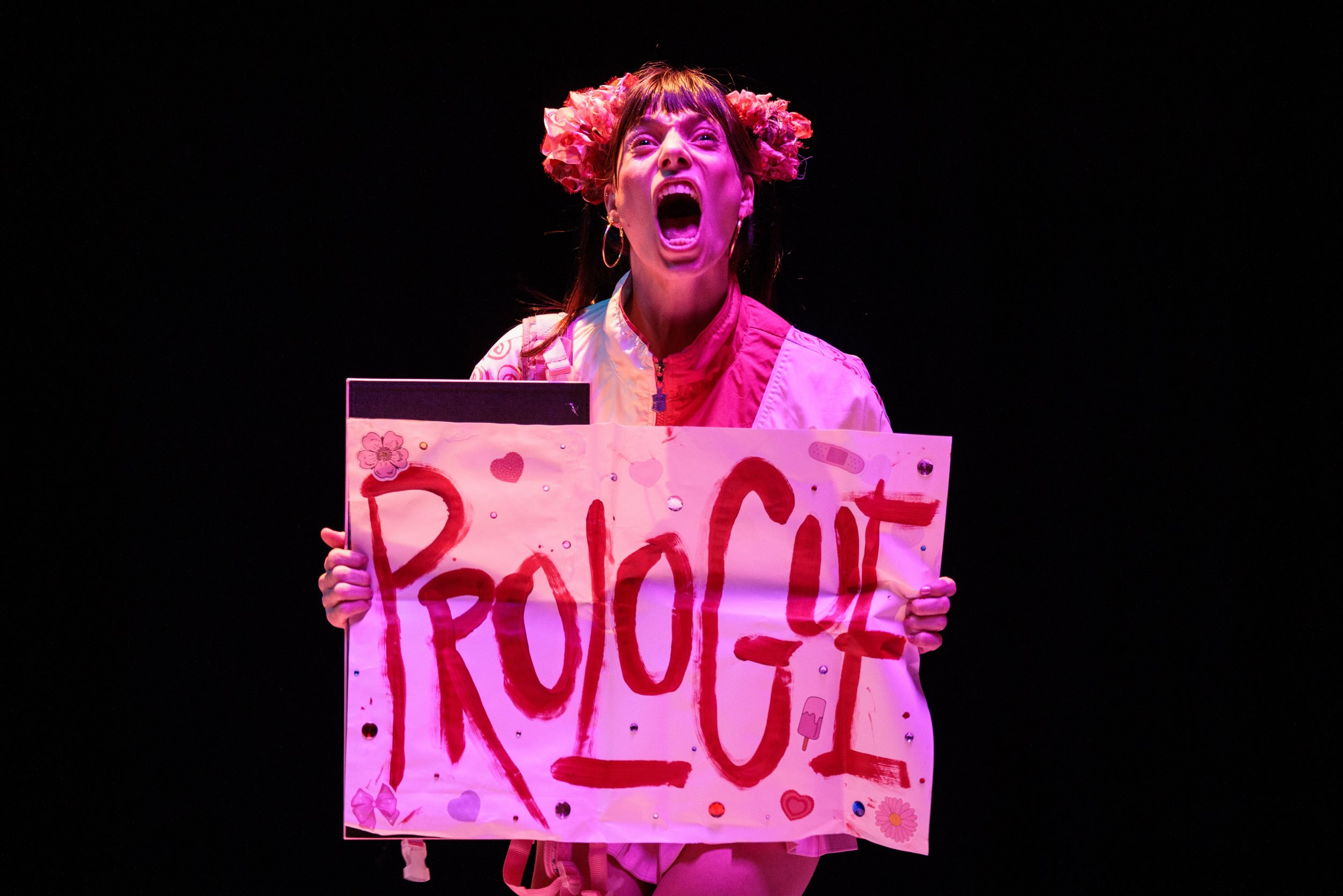
Leonie Bell herself leads a team of murderous cheerleaders into a Dionysian blood orgy as the play transitions into a gloomy yet somehow still endearing second act. The carnage leaves us with the protruding head of one of the underworld safari rangers poking out of a Gothic buffet, which was a thing of macabre beauty. The eery displacement of reality was accomplished with poise and humor. The word dreamlike gets thrown around a lot when describing plays and films that are even the slightest bit abstract, and that always upsets me because waking life itself is pretty abstract. You can take me seriously then, when I say that this piece does dream logic justice. The Lynchian WTF factor is pinging on all levels but it does so in that way art can do, with threads that are connected aesthetically rather than with expected narrative relation.
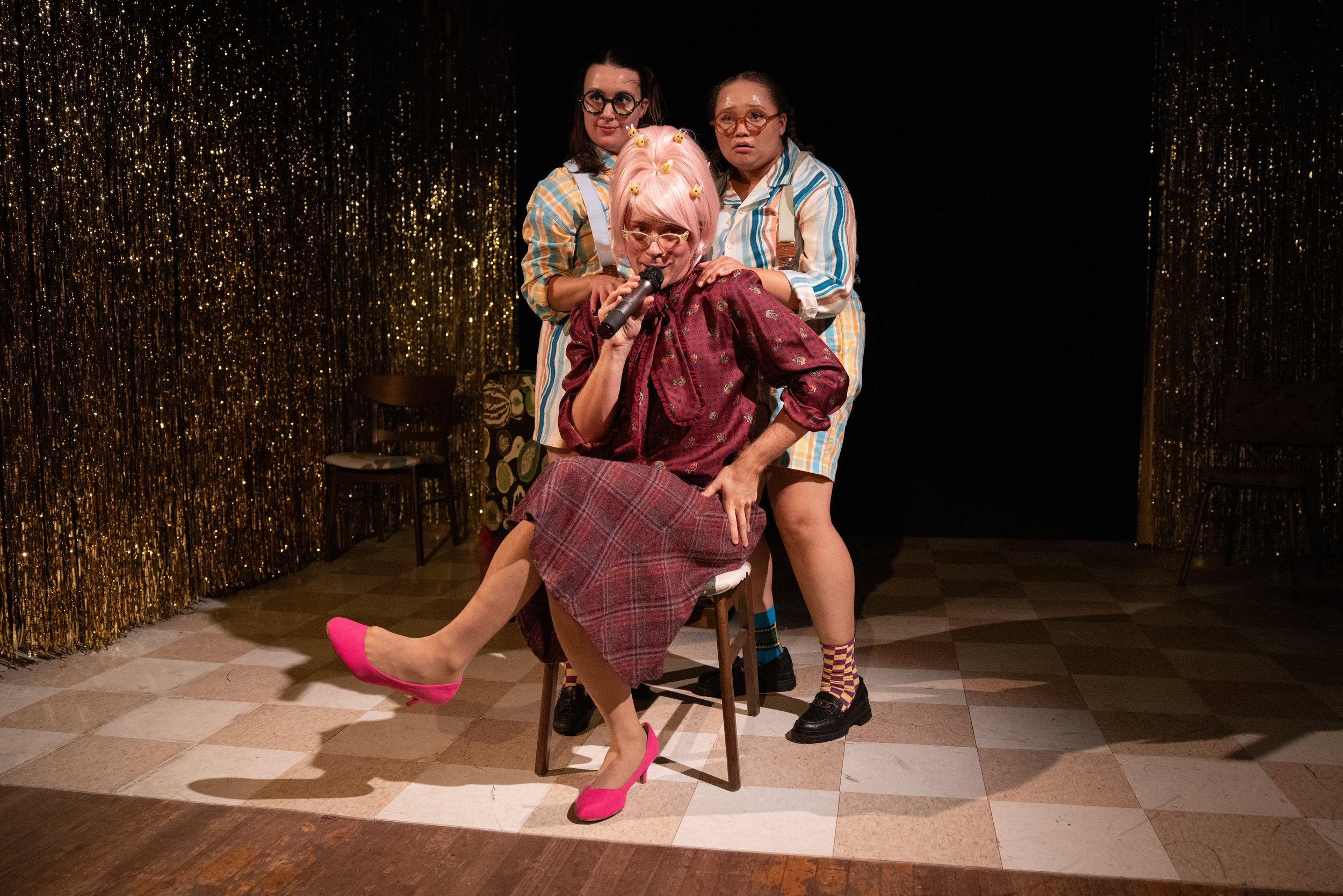
Speaking of carnivorous explorations of late capital, I also saw Meat by Zara Roy at the Tank this month and found its dive into these themes apt and compelling. Meat is about a lonely meatpacker who finds love with a woman several decades his senior. He doesn’t hold onto that love for long though, because the system has trapped him and robbed him of his agency. Meat is a well-written portrait of the worker trapped in the bone-crushing jaws of capital, just as Im Dunkeln sieht man besser is a collage of the distortion of logic that grows like a fungus in the corners.
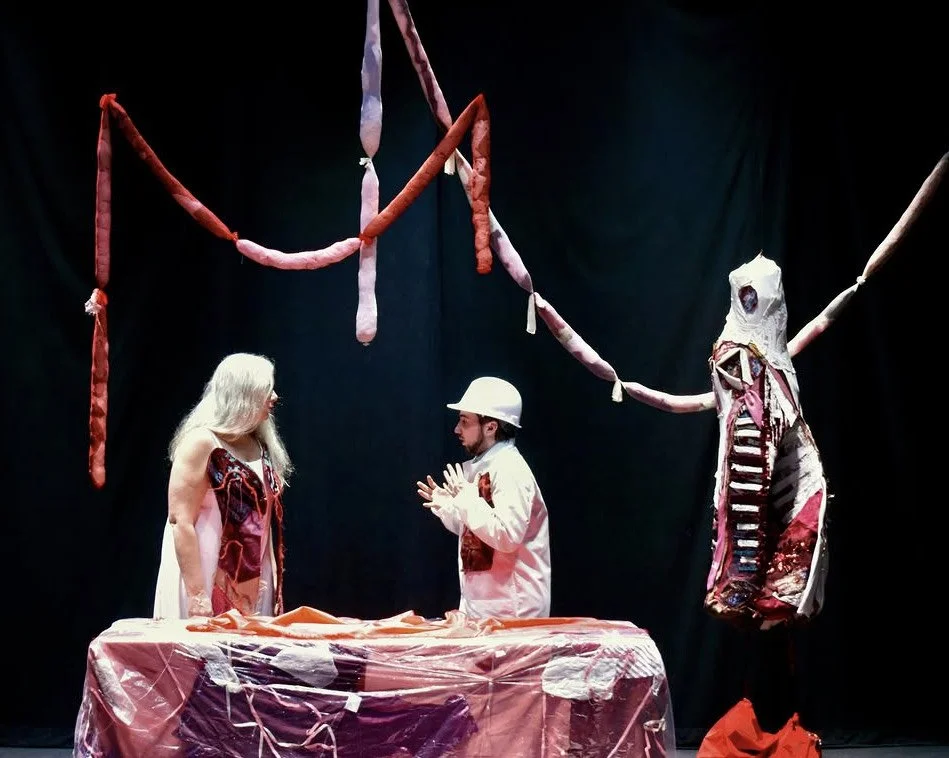
Im Dunkeln sieht man besser images by Walter Wlodarczyk
Desire Denied
A Soapbox Response to The Misgotten New Hope of the Dirty Bird
By Alex Aguirre
Last Friday I saw The Misgotten New Hope of the Dirty Bird, an adaptation of Anton Chekhov’s The Seagull written and directed by Whit Flint. The production was staged at Erf Gallery, a charmingly industrial warehouse venue that used to be a WeWork, and is now thankfully host to far more exciting projects. Rather than the metaphysical mess of a one-act play that usually opens Chekhov’s bittersweet masterpiece, Dirty Bird kicks off with a screening of an experimental short film directed by the young and troubled filmmaker/playwright Konstantin (decidedly non-binary in this production and played with sensual angst by River Knight). The film introduces Nina (played with an intoxicatingly giddy earnestness by AJ Molder), but the whole affair is met by disdainful laughs from his mother, Irina (played with bourgeois acerbity by Mary Bacon). Masha (played by Fiona Rose Dyer) is a visual focus point in the minimalist yet sleek production, as she appears in a full-on mall goth look, a wonderful homage to the notorious melancholy of the character. Many moments were directed towards those familiar with The Seagull, such as Konstantin’s line early on that “I’m going to kill myself, soon” which got a hearty laugh from the audience.
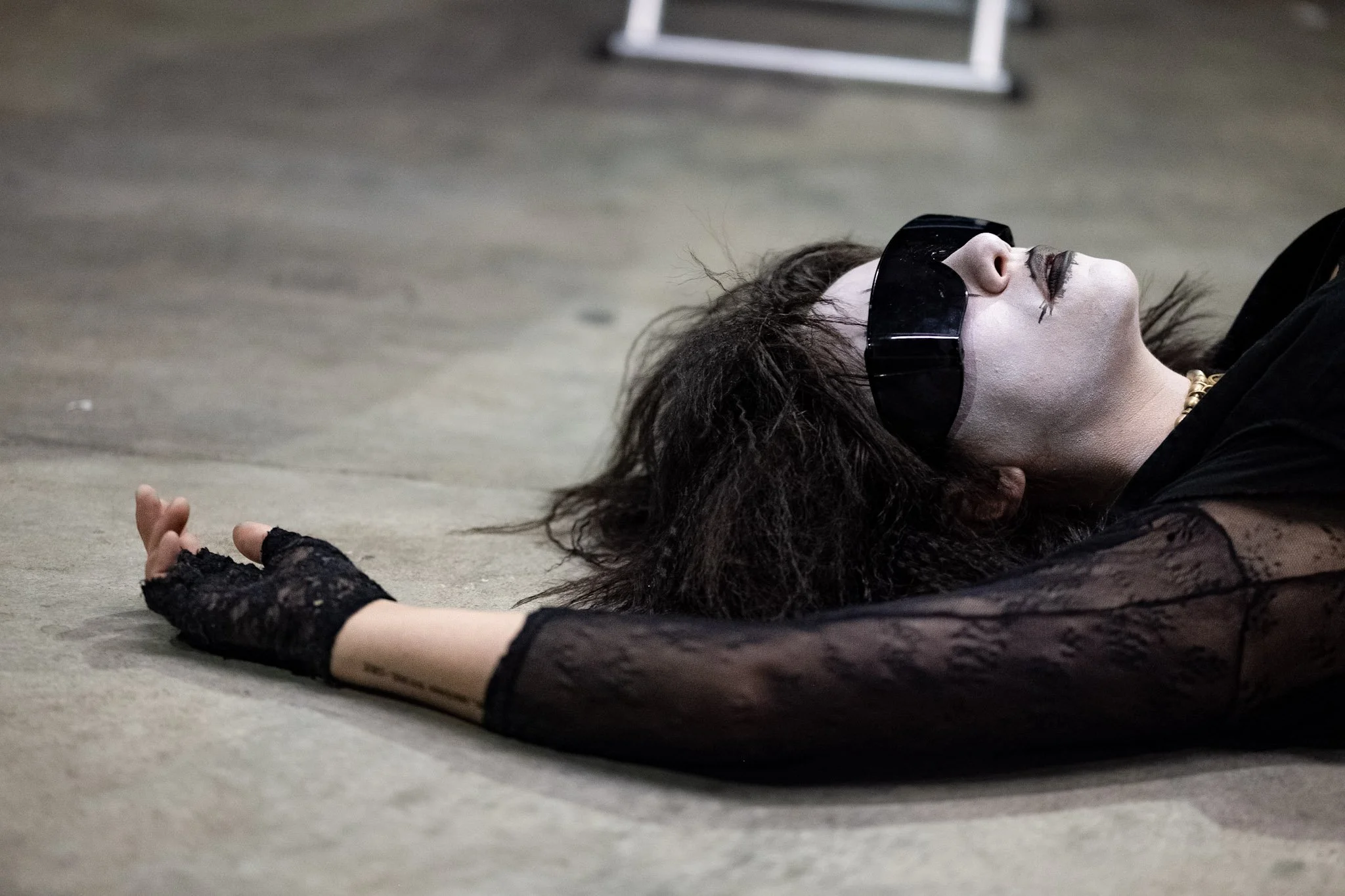
Fiona Rose Dyer - Photo by Joey Damore
Alex Trigorin (played with golden-era hipster chillness by Neal Bedslow) can’t be bothered to feel much of anything, that is, until he is jolted into the famous monologue to Nina about his compulsiveness to turn everything into a note for a story. I do think that this adaptation missed a few moments for comedic modernization and this was one of them, but overall the script of Dirty Bird portrayed a Trigorin that is truly in pain when having to talk about his own career, because he knows that him caring about it so deeply is holding him back. This is a much more thematically faithful adaptation than Thomas Bradshaw’s The Seagull/Woodstock, NY (for example) is. Flint stays close to the archetypal and sociological core of these characters, drawing upon their contrasts sharply to emphasize the emotionally mismatched yet fatefully aligned nature of their relationships. AJ Molder’s take on Nina was one steeped in vulnerability and curiosity and figured perfectly into the overall sense of dread that was baked into this production so effortlessly and moodily.
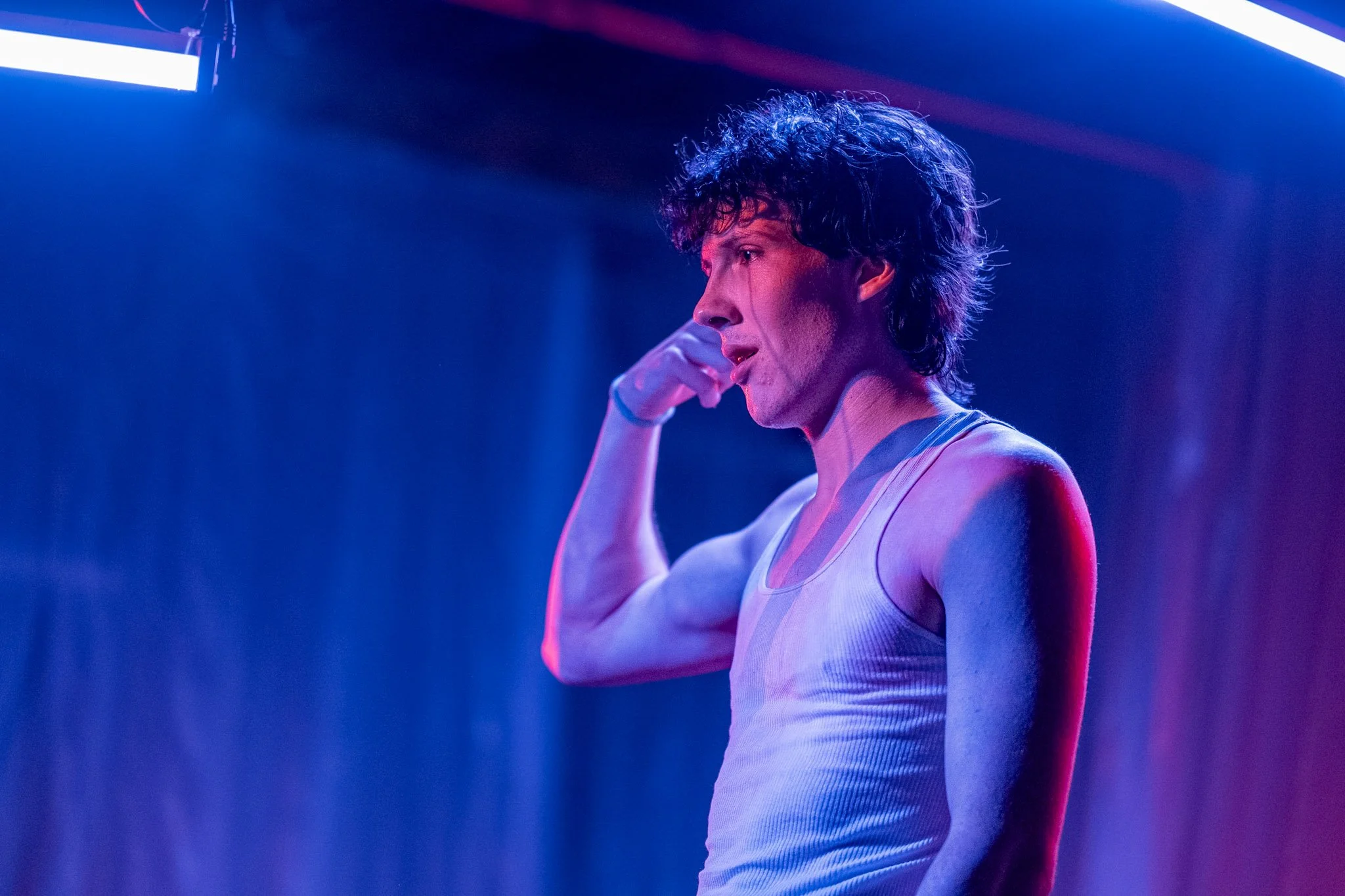
River Knight - Photo by Joey Damore
Out of all versions of this play I have seen and read, I picked up on a curious parallel I never have before: that of Konstantin and Medvedenko (played with mercurial brilliance by Trever Clarkson and called Simon in this production). Both characters begin the play with complaints that could be seen as petty and commonplace: Konstantin feels under-appreciated and misunderstood, and Simon feels overworked and unlucky. Both characters suffer the tortures of unrequited love, with Nina abandoning Konstantin for Trigorin and Masha bluntly rejecting Simon’s love. Traditionally, Konstantin has the more memorable and resonant end since Nina’s abandonment of him ends in suicide, but this version’s portrayal of Masha’s reluctant marriage to Simon is equally painful and bleak. There is a moment towards the end where Masha wipes her makeup off in front of the camcorder (which is live-projected at the far end of the traverse stage), a beautiful and heartbreaking symbolic triumph that drove home just how effectively this play addresses the coarse stifling of desire. Konstantin’s life burns out due to an excess of passion whereas Simon’s is stripped of all inherent meaning in his career and his relationship with Masha, yet he clings to life in spite of the resounding emptiness within it. This show demonstrates the fluctuations of the characters’ deeply entrenched existential ailments with style and steely yet palpable compassion. The lead-up to Konstantin’s demise is orchestrated perfectly in this production with Nina’s final return (after being used and discarded by Trigorin) performed in an increasingly hallucinatory and bloody loop as Konstantin’s psyche implodes. Even after a burst of success, they just couldn’t let go of their dirty bird.
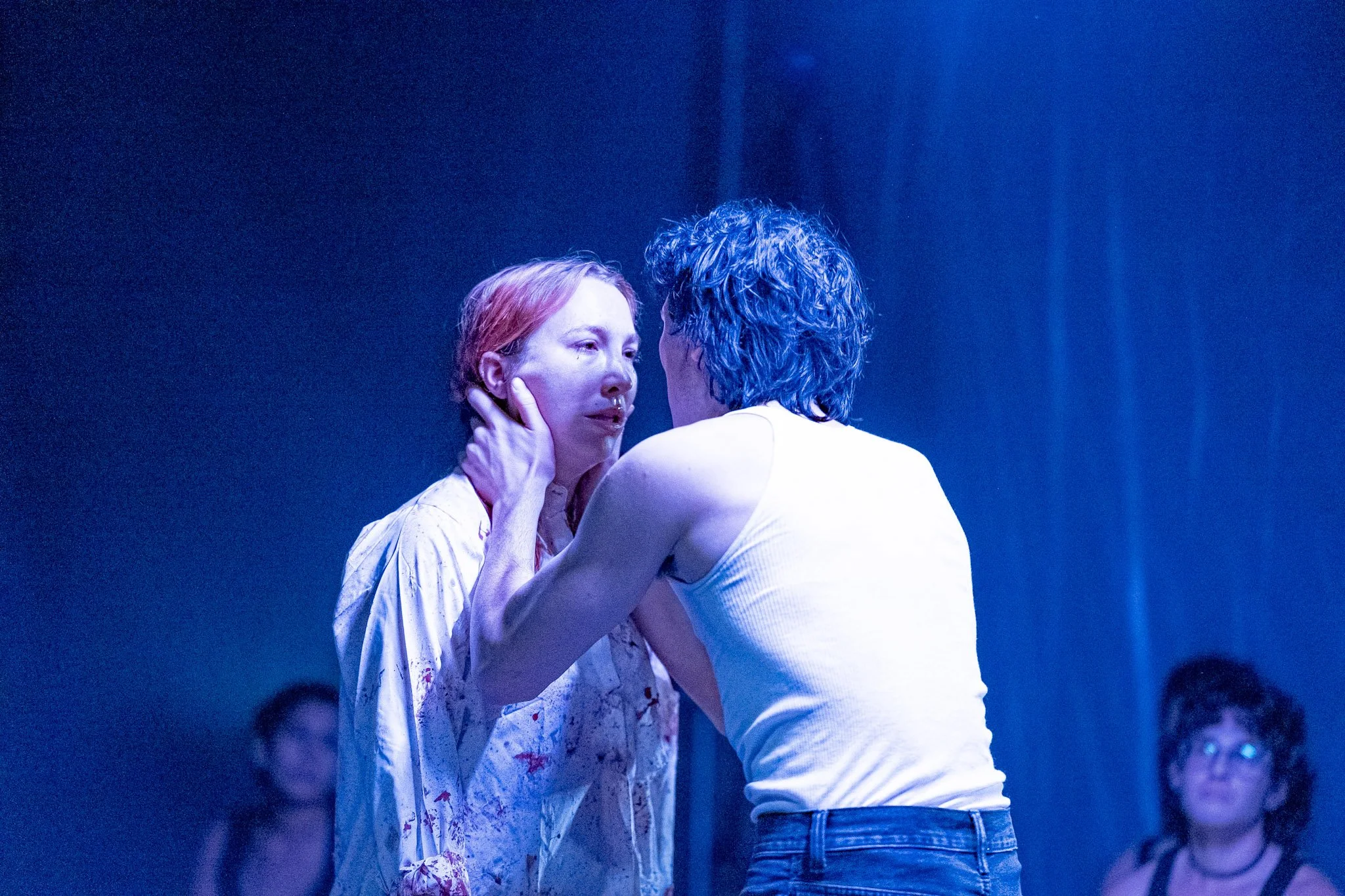
AJ Molder and River Knight - Photo by Joey Damore
Dirty Bird is running until September 20th at ErF Gallery, tickets available here: https://dice.fm/bundles/dirty-bird-27mm
Mind Dream Season 2: Nic Adams Interviews Allyson Dwyer
[This conversation was conducted over Zoom and has been edited for concision and clarity.]
Nic Adams: Allyson Dwyer, founder of Mind Dream Theater, congratulations on the launch of the second season.
Allyson Dwyer: Thank you.
NA: You're welcome. The theme of season 2 is the semi-quincentennial of our country. I've never said that word before.
AD: I think it's like “quince”.
NA: “Quince”. So after listening to the 7 audio plays, I found so many points of connection between them. Your play's incontinent tinfoil-hat-wearing football fan, and the end-times-patriarchy of Leonie Bell's podcast bros. Then there are the allusions to political speech meant to justify atrocities in my play, Thinking Backwards, the backwards text, like, "freedom your hate terrorists," which, as reordered forwards, is "terrorists hate your freedom," right? And in Alyssa Haddad-Chin's play I heard the phrase "I have the right to defend myself," which is something we’ve been hearing a lot from Israel on the justification for genocide of the Palestinian people. Then there's the violence of ecocide in Caridad Svich’s play. The quote I love was "I look out at where the trees used to be and yell fuck!" There's the violence of state in Kenneth Keng’s, "the Republic shall endure, sir." Then there's the slippery double entendre of Ben Holbrook's There Is Only My Voice, which is at once a satire of wellness-as-opiate-for-the-masses and also this insistence that we remember that collective power begins with using our voice.
Throughout the Mind Dream audio dramas, I'm reminded of bell hooks' diagnosis that oppression travels as a quartet - the imperialist, white supremacist, patriarchal, capitalism, right? I'm reminded of the Georges - Carlin and Orwell - of “doublespeak” and euphemism, and how language can be used to manipulate. I'm reminded of Lawrence Ferlinghetti's quote, "I am signaling you through the flames" from his book, Poetry As Insurgent Art. With all this as backdrop, I'm wondering about your sense of occasion with this season's themes as both producer and writer. I think many artists that we know are - for very legitimate and understandable reasons - fatigued by our nation's politics and leaders, and are choosing to avoid the topic of America’s 250th and all that carries in their artistic work, sometimes for security. So, as the producer of and contributing playwright to this Mind Dream season 2, Allyson Dwyer, why do you choose to lean into these topics?
AD: Wow, what a beautiful send-up to the season. I am so moved. It's complex and simple all at once. Basically, as you were talking, what my brain went to is that, yeah, we live with so much noise. We're surrounded by technology where people can say their opinions on anything at any moment, and so we're kind of tired of hearing all those things. But at the same time, that means people shut up more because there are so many people talking about politics and commenting on it. So with the season, I was excited by the idea of going to very thoughtful artists and writers and saying, "hey, what are your feelings about this occasion?"
That's the answer to your question now. Before that, what inspired the America 250 season itself was that I learned it [America 250] was happening because I had no idea until last year, and I was like, oh, okay. And then also very famously, the NEA grants were rescinded from a lot of organizations, and that really angered me. At first, I thought, whoa, wouldn't it be funny if Mind Dream Theater applied for an NEA grant after… Well, I guess I should go backwards. They said "We're going to prioritize and give grants to things that focus on America 250." I haven't actually looked to see if that's even true. But I was thinking, "Wouldn't it be funny if we applied for a grant like this but from artists that are ready to be scathing, or have something to say?" But obviously we couldn't do that, because we're not really that big of an organization. So hypothetically, if I could ask this group of people, how would they?

NA: And as an artist yourself?
AD: I always ping very violently in my art between being extremely sincere and then just being really goofy. So for America 250, this was a no-brainer even though I write very sincere things. I'm very angry about the state of the world and politics all the time, which, you know, everybody is. I think it's just been with me for so long now that any chance I get to talk about these things, I want to.
And specifically with the episode I wrote, Wazzup, I'm very fascinated by, for lack of a better word, the deep state. I know that kind of sends out dog whistles. But over the pandemic, I kind of gave myself a lot of brain rot reading books about the inner workings of the government. Books like The Devil's Chessboard and Family of Secrets.
NA: I'm thinking of the...what was the big United Fruit Company book?
AD: Oh, I don't know that one.
[Nic is referring to Bananas: How the United Fruit Company Shaped the World by Peter Chapman about the company, which operated in Guatemala, and the Dulles brothers, who, through their work for United Fruit and in the CIA, colluded to depose the democratically elected Guatemalan president Jacobo Arbenz.]
NA: In any case, I'm with you on a lot of this history of CIA intervention abroad. And that is public information that anyone can verify, you know? But it wasn't at the time it was happening, which is evidence of some sort of collusion, some sort of “inside job”, if you will.
AD: Oh yeah, there's this great podcast called American Exception. It's also a book by this guy, Aaron Goodman, and his thesis is basically that there's this sovereign state that exists within the United States government that controls the actual politics of the country. And yeah, it goes beyond that, to not just, like, "oh, conspiracies," but the actual material pain of what this has done to the world.
NA: Right.
AD: There's this other book, The Jakarta Method, which made me cry. I had to put it down and go back to it months later. It was about the forces that colluded to stop the PKI [Communist Party] in Indonesia in the 1960s and the violence that that wrought. With Wazzup, it's looking at how these very privileged, cushy people in life sit atop a throne of death. And even though Ollie [one of two characters in Wazzup, played by Peter Mills Weiss] is in a nursing home, it's like he's living a life of comfort where someone's changing his diapers for him, and he's not really gonna ever face the consequences of the things he's wrought on the world.
NA: Right. He feels he's earned the right to simply enjoy the football game and the commercials between them. And yet he seethes. It’s not as if he doesn't speak of the atrocities he's aware of. He gives voice to them. And so the audience knows they're in there, weighing on his conscience.
AD: In my head, he knows he's playing dumb on purpose. And he's been used to it for so long, throughout his life, that he can hide behind a cloak or a mask and things will turn out okay for him. And even if those things are on his conscience, it's almost like he's saying those things because he knows no one will ever believe Book [the other character, played by Catrin Lloyd-Bollard] if she were to be like, "Well, this just came out of his mouth!" In a way, to me, that was America in a nutshell, was this Ollie character.
NA: Totally.
AD: I'm really curious about your play, Thinking Backwards, because with Wazzup, like I was saying before, I tend to write very sincere things, and instead I wanted to write a goofy thing. What was your approach to the theme? When you received it, were you immediately like "Oh, yes, I've been dying to write this!" Did you grapple over it, or did you sit with it?
NA: There are two ancestors of Thinking Backwards. And they represent the two halves of the play I turned in for the commission. What they share is a sort of insistence on mythologizing the contemporary New York City or contemporary American experience of being an artist. Both of those things are present in the beginning scene and the end poem. The first ancestor is - I wrote this long-form epic poem in 2017 called Icarus in the L.E.S., which supposes that Icarus didn't die when he fell from the sky, but he landed in New York City's open-mic poetry scene and tried to become a legendary poet. And his universe is populated with figures from mythologies from all over the world, and the art world celebrities and literati that modern readers would be aware of, too. Like, they all intermingle.
So there was a character in that piece from 2017 named Jo Sue, and Jo Sue was a character that my friend Rebecca Robertson and I devised together leading up to me writing Icarus. I was tickled by her creation of Jo Sue. And that character didn't get a whole lot of stage time in Icarus. So part of me was like, “I'd love to work with Rebecca again. And I'd love to revisit that character who's this ancient, sexy, funny, hyper-literate artist who’s seen it all, you know? And then the second half of my piece is this epic poem that features all these fragments of texts I hope are somewhat recognizable in an American media diet that I have rearranged backwards as a way of reclaiming and perverting and corrupting some of the awful shit we've been forced to listen to for the history of America. And my experience of the last 10 years has been this amplification of open-mouthed hatred and bigotry that has just become so normalized. So as a citizen-slash-artist, I've been collecting these phrases for the last 10 years and asking myself, “Is there a way to turn it around and create something new out of it? That lays bare its ugliness? Is there a way to play the dog whistle backwards so that there’s no mistaking what's beneath it?” That is the language experiment I wanted for that concluding poem of my piece.
AD: That's so beautiful. I have a couple thoughts on your episode. I could literally write an essay about it. But just jumping off of that point, it's interesting because these characters, Hosanna [Jo Sue’s new poetry persona] and Aesop - well, especially Hosanna - they kind of exist outside of time. It makes me think of, like, okay, don't laugh, I thought of a Marvel universe, but for literature, right? Which I think is so fun.
NA: That's the inside of my head, Allyson!
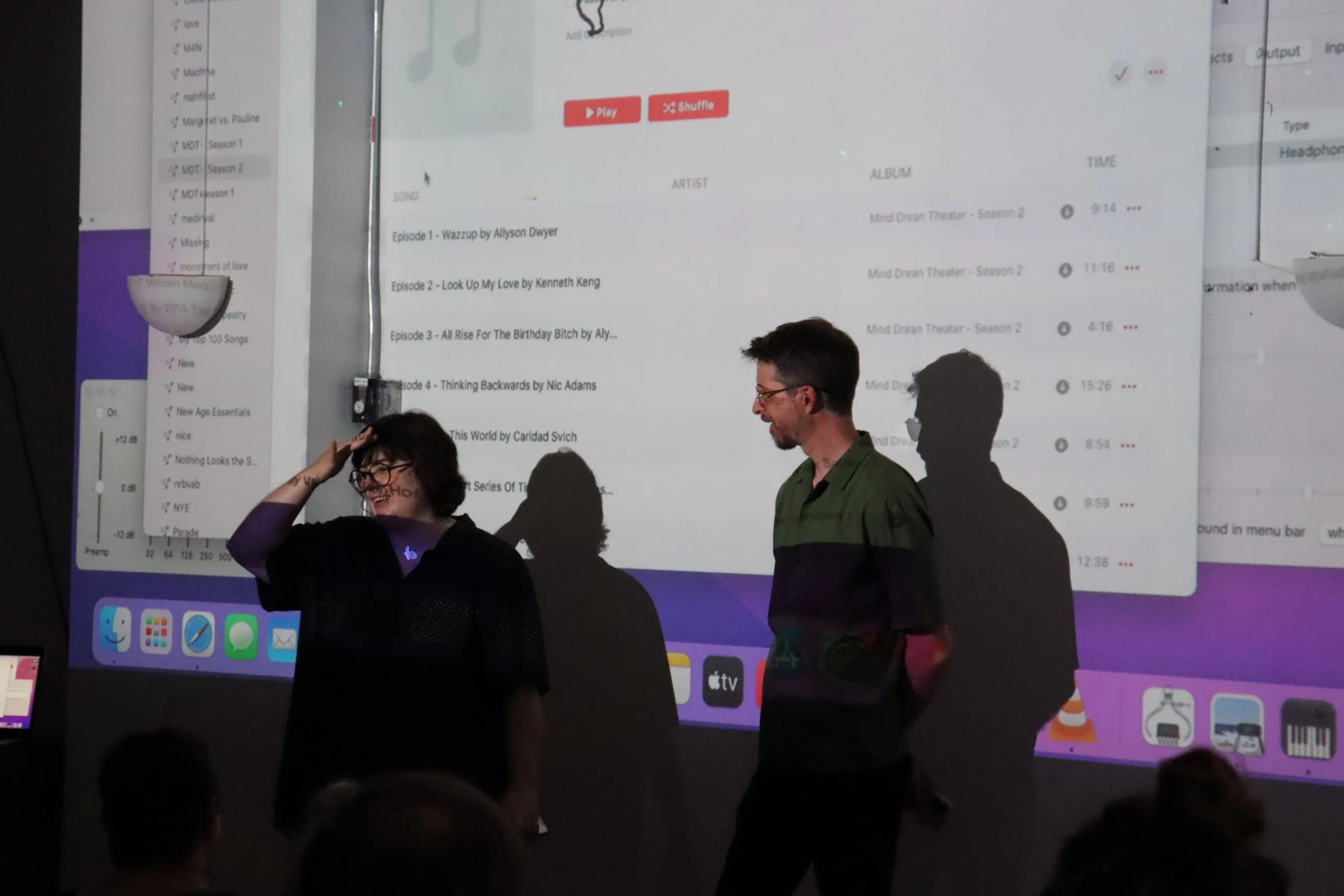
Allyson Dwyer and Jerrod Jordahl Introducing Mind Dream Season 2 at Brick Aux
AD: Which I love! It's so clever! And I think you could go so far with that. There's all this discussion about how reading as we know it is dying. I grew up at a time where it was really cool to read, and it was really cool to be like, "I know about The Odyssey," you know, Christopher Nolan movie notwithstanding. But The Odyssey, or The Inferno, or take your pick, Paradise Lost, or something like that, where there's a rich bedrock of literature that we then build on top of. And I think there's a subset of Americans that pride themselves on knowing these things. There's this fear that, at least to me, that that would go away. I know that sounds a bit pretentious, but it's also part of human history. So the reason your episode excited me so much is that it's such an appeal to this imaginary listener in my head that if they came across the episode, they would be really intrigued by this concept that tickles their brain. This goes to a bigger part of the Mind Dream mission. I think a lot about how people are scattered across the world, or across the country, and they're not just all in New York City. There's someone who might listen to this; maybe they live in Kansas or Texas or wherever, and they're really excited and feel seen by it.
NA: I'm so glad you brought that up because I've been thinking about that a lot with my episode in particular, and while I'm so glad to share it with my peers, and so glad to share it in this community that you've brought together, I'm also so excited by the potential that this could reach someone I've never met across a generation or two, who's asking, “Does it matter that I have a relationship to a literary canon?” Not to say that my piece is great literature, but that it's full of allusions and references to it, and really puts that stuff on a pedestal. And Thinking Backwards is also not without its ordeal. My piece is like a puzzle, pretty intentionally so, and I hope pretty plainly so. I hope it's accessible.
But it reminds me of something that Paul Lazar said about watching Richard Foreman's work, either on his podcast, Talk to Paulie, or OK Radio by Nature Theater of Oklahoma. He said that watching Richard Foreman's work was an ordeal. And he said, “I don't mean it's a chore.” He meant it's something that you have to struggle with in order to get something out of it.
AD: Everyone was really intrigued by yours, I think because they went on the journey. And I appreciated that so much. I think everyone did that in a way with their episodes, which makes me so proud. There's this very intense trust of the listener to just go on a journey, which all my favorite theater does.
But yours specifically is American in this way because it's dealing with, I think it's a very important topic right now, about literacy and the American struggle with intelligence. There is an attack on being well-read and intelligent in this world -
NA: Yeah, and some people are surrendering.
AD: And people are surrendering, and you have to actively fight against it, and value your own brainscape. A part of America that we don't engage with enough is reminding people of their own intelligence. And I think you do that beautifully though, kind of shamelessly - I say that in a complimentary way - by grabbing what you can and playing with them like dolls. It’s very theatrical for a soundscape. Anyway, I just had to get that in there.
NA: Thanks, Allyson. Well, speaking of journey. Writing in CultureBot, season one Mind Dream Theater playwright Theresa Buchheister wrote about fellow season one playwright Jerrod Jordahl’s piece, "Without leaving my bed, I was able to go somewhere wild just for a bit and remember my frailty, my humanity, my oddity before flopping back into the rest of my day."
I want to talk about the sound journey Buchheister wrote about. The sound design for most of these pieces is pretty psychedelic. And often in this season the psychedelia is more like a bad trip than a good one. Given that most of these were designed by separate sound artists, what does this emerging, shared Mind Dream Theater audio aesthetic say about our community and its concerns?
AD: Going back to talking about intelligence, and I don't mean the good intelligence, I mean, like, government intelligence, it makes me think of that era of the later 60s where everything became a bad trip. Or speaking of those books I was talking about reading before, there's one I read called Chaos, which is about Charles Manson and MK-ULTRA. Anyway, this is a roundabout way of saying history repeats itself, and it feels like maybe we're in one of those eras, again, where…Let me backtrack. So, I'm very into the JFK assassination. I'm fascinated by it, because it does echo with today, right? I didn't live then, but you had JFK getting assassinated, and then, of course, MLK getting assassinated, and Bobby Kennedy —
NA: And Malcolm X.
AD: And Watergate. An American history where people became very jaded. And somehow, I don't know how, we kind of rappelled off of that and forgot about it over time. And something just feels very salient, like we're back in those times. A big trigger for that was the Epstein files. But even before that, with the expansion of the internet, people and the way we get information, the way we understand truth collectively, we're in an era of everyone deciding reality for themselves. We're in a very psychedelic time. I love that Mind Dream Theater evokes that because, in a way, each episode is a reflection of each writer's mindscape.
NA: Yeah, and in different ways, I'm thinking about Caridad Svich's play, the distortion of the voices, and then I'm also thinking about Leonie Bell's almost vaudevillian, silent movie scoring and foley. There are so many different expressions of the “bad trip”. But like, so few of them are aiming to delight or pacify?
AD: Yeah, even Alyssa, who - her work is so funny and kind of jovial - and behind it there's a darkness, which I really appreciate.
NA: Ben's is really funny. The sound design is simple and surprising.
AD: Yes! Ben's is…and I explained this to Ben, the reason why I selected it as the final one is because it felt like the most hopeful. It's funny. It’s also beautifully cynical, because you've got, and this plays into the psychedelic theme, that we're living in a time when everyone thinks their voice is the only voice, and we're all competing with each other. But at the same time, the episode ends with them singing together, which I found to be very theatrical. You've got these different voices, and somehow they end up together, and it doesn't need to be explained to you, but you feel it in the production.
NA: Totally. Yeah, it's magical. It's the last thing you would expect of all those voices, who spend most of the play competing with one another to be the "only” voice, right?
AD: Yeah, and almost like you have to accept that maybe we are all different souls and different voices coexisting at once. Which is very true to Ben, which, again, is why I asked everyone specifically, because I knew everyone has such strong voices and points of view. Leonie's is so phenomenal, especially if you're someone living nowhere near New York City. When you listen to it, it's like you're watching a Leonie Bell play. But you're just feeling it through sound, and that really is exciting.
I wanted to ask more about Thinking Backwards. Did you write it thinking about the production? Like, did you know you were going to sound design it yourself? How much were you thinking about sound when you wrote it?
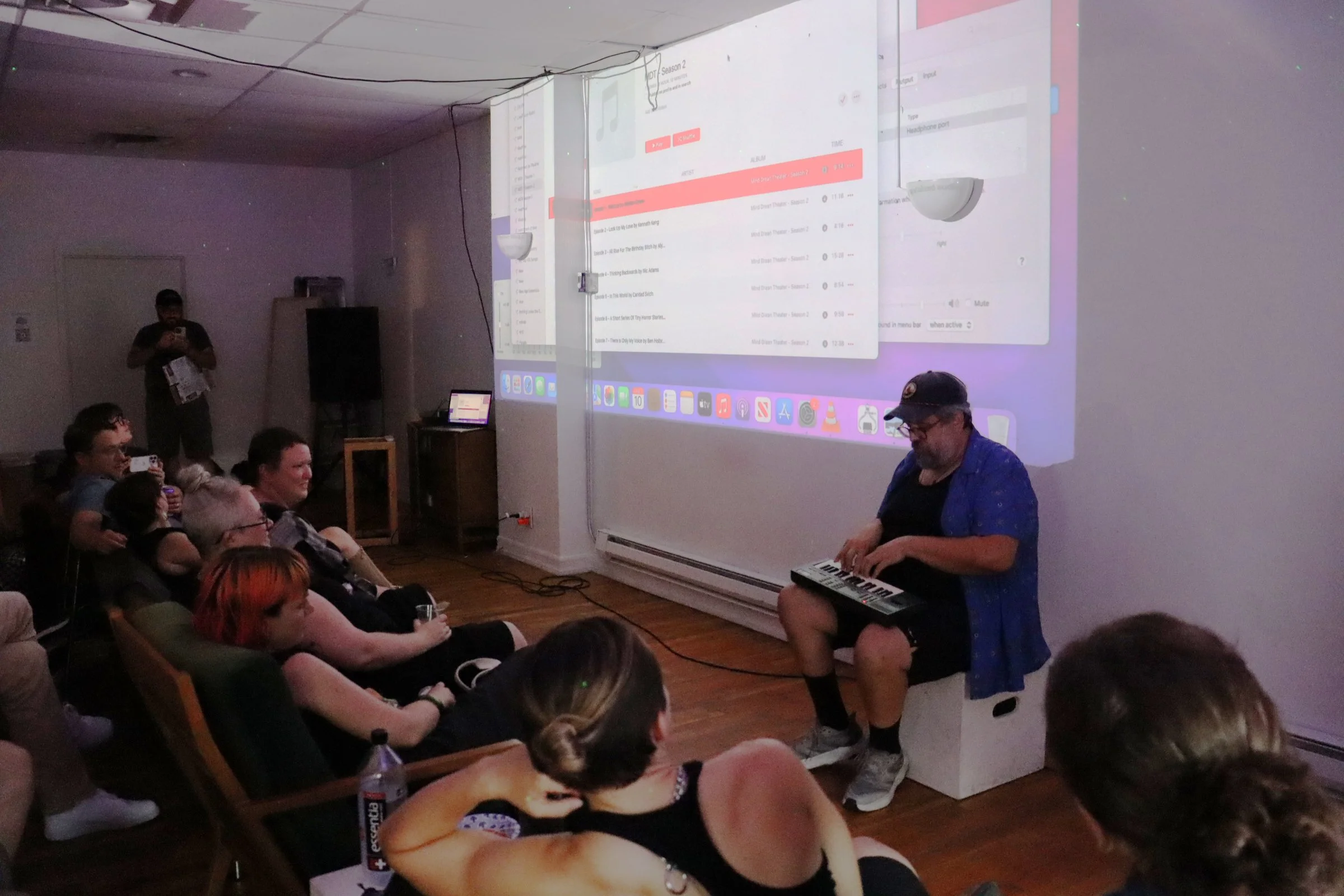
Devon Wade Granmo playing the Mind Dream Theme Song at Brick Aux
NA: You gave me some really great feedback on the first script I turned in. I write Talky Shit with a lot of text, and most of my work for a digital medium, like Corona Cam Show or Bun in the Oven - which I made with cabaret performer Lee Rayment - is Talky Shit. When I wrote this epic poem, Icarus…when I did my play at Exponential in 2025, NECK DOWN…it's people yapping.
So, I turned in a draft of Thinking Backwards to you, and I had probably written only five stage directions referencing the sound design. You know, “an atmosphere of” this, “an atmosphere of” that, “sound cue of” this. And, gently, you asked me to look for opportunities to expand that atmosphere, that element. So I took the play to Shaun Leisher, who's a director and dramaturg, and I asked him to read it and pitch me on sounds that he thought would meet the material in some way.
AD: Interesting.
NA: I already had perhaps an unwritten or unexpressed knowledge or instinct to build to a cacophony like in the sound design you hear at the end of my piece. And Shaun added some elements to that that really helped me break the binary of my play. Shaun’s feedback helped me build a bridge of sound design between the first half - the scene work - and the more abstract use of sound later in the piece.
And I'd like to say that the final composition that underscores this epic poem - which is read amazingly, dramatically, funnily, beautifully by Becca Blackwell and Rebecca Robertson - that piece of music that scores the poem was made by myself and my brother, Jack Adams, who's a musician, and was just an extended jam we did a few years ago. While I was editing the episode, I reached out and was like, "Hey bro, do we have any of those really out-there jams that we made together that you'd be comfortable sharing?" And he was like, “How about this one?” And there was something really cursed about the one he sent over. So I used it.
AD: Oh. That's so beautiful. Another reason I felt so driven to start this theater is I was thinking about it as another opportunity to be creative that didn't necessarily involve too much time, or physical energy, or, for lack of a better word, effort. You could literally just contact your brother and say, "Hey, I have this thing I'm doing, can I use this piece?" Did you get a sense of that, that you got to be creative in a different way? How did it differ from working in theater for you? Regular, old, live-action, in-the-flesh theater?
NA: Yeah, that's a beautiful question. And thank you for the invitation to join this season of audio work. There's a spirit in your invitation to me, and Leonie, Ben, Alyssa, Caridad, Kenneth…your invitation is one degree of separation, two degrees of separation in this community. Like, it really does feel like a yearbook of who makes work in Brooklyn right now.
I took the spirit of your invitation, and I turned around and made invitations to my loved ones to make Thinking Backwards. So I invited my brother. I invited Rebecca Robertson, who I've known since I was 12. I turned around and invited Becca Blackwell, who is someone I've collaborated with a little, but have admired for decades. And I invited my girlfriend, Angel Desai, who's an enormously talented actor and musician, and also an activist through her work with the Asian American Performers Action Coalition, and a brilliant director. With my collaborators on this piece, they’re all half badass artists, half people that I've been in love with for a dog’s age.
AD: I kind of suspected this when I invited people, that it was going to gravitate towards usual suspects. When I invited Ben, it's like, of course he worked with Nate Weida, of course he worked with Cristina Pitter, and Thea Brooks, and Andrew Butler. Same with Kenneth working with Carlos Enrique, Alyssa Haddad-Chin with Adam Kassim, and so on. I had this suspicion, and I think that also led me to be like, okay, this would be a fun snapshot to capture these really wonderful little communities of work happening, because it's not like everything everyone's making in New York and Brooklyn is an amorphous blob. It's like a garden where there are different flowers of different groups of people doing things, and these are all just sound images of those flowers.
One particular person I definitely want to make sure gets a shout-out in this interview is Hannah Birch-Carl, who is a dear collaborator to me. She is primarily a sound designer, but she's done costumes and props for me, and she's just got a wild, funky brain that I adore, and working with her on our episodes has been very inspiring, and I trust her so much. Even with Wazzup, she made some choices that I didn't originally think of, including making it so that Book, the character Catrin [Lloyd-Bollard] plays, is in a kind of hazmat suit, and just adding little things on top that I wouldn't have thought to.
NA: Speaking of this collective - so beautifully manifested in Leonie Bell's piece, A Short Series of Tiny Horror Stories, which features as actors all of the playwrights from Season 2, with the exception of Caridad Svich - and these, like, deep, long collaborations you've had with Hannah and Ben and Christina Tang, this Mind Dream Theater season resonates with the work you write about in your stage plays: how the isolation and anonymity of the internet can radicalize people, the way internet addiction manifests in different generations, and the hopefulness of this truly lowercase d, democratic, pluralistic, polyphony of voices…I love how Mind Dream vibrates within your artistic output as a playwright.
I can trace the history of my politics to studying Howard Zinn in high school, the hypocrisy of nativism when our country's economy requires poverty-wage labor, as expressed in the border politics of California and Arizona. I studied abroad in Mexico in high school and Guatemala in college. I guess my question is, I've noticed that there's a collectivism that is present in form, content, and production in your plays and in this season of Mind Dream Theater, as a manifestation of your vision, artistically, and as a producer. Is collectivism important to the work you and Mind Dream make, and how intentional is that as a practice for you?
AD: Oh, boy. I mean, again, like with all your previous questions, I'm extremely moved by what you're saying and how you framed it. I think, yeah, everything about that has been intentional, very quietly to me. It's just something I hold with me at all times, and I don't know how I got it or how I learned it. I don't know if it's because I'm a Cancer or what, but the things I feel and believe I take very seriously, and I definitely try to live by them. I don't know if it's from growing up watching anime and Ghibli movies, but I would say it definitely is connected to even just growing up online. When I was younger, I want to say pre-teen age, I found a chat room that was dedicated to this animation block on Cartoon Network called Toonami.
NA: Oh, I remember that.
AD: I think most people have that thing from when they're young that triggered their brain and rewired it in very prolific ways. But in finding that chat room, it was almost like I left my body and was always connected to these people in ways that went beyond anything. I was always thinking about them; I was always wishing I was with them. And the mechanism of a chat room, typing into it, it felt like theater to me.
And then moving forward, in my 20s, like a lot of people, I was pushed and prodded by politics. I think it definitely started with Occupy Wall Street, and, you know, "We are the 99%." That always stayed with me; it still does. And then Bernie Sanders, of course. And then just arriving at theater, I'm so inspired and moved by the community at large. I learned a lot from Theresa [Buchheister] and The Brick about what it means to be present in community; it's been something that has driven me. I think it's okay to admit I'm not the most secure person. I think a lot of the pain I've felt in my life, I try to make sure other people don't feel it, so I'm very pushed by this idea that everyone can feel involved and accepted, and that it doesn't matter where you're educated, but if you want to create, and you want to be present, and you want to be there, you should be.
This also goes back to our conversation about Thinking Backwards, which is this idea of pretension, and that some things are for some people and not for others, and I just, I deeply disagree with that. I love being “pretentious,” I love watching Criterion movies, and reading weird books, and going to weird plays, and I feel like everyone can do it. It's not just for us; it's for everybody. I love this idea that maybe we could keep the spark alive that says you can be weird and make things, and it can be ubiquitous and not just for some people. I hope all that congealed into a coherent thought.
NA: I think that's a beautiful way to begin to wrap up, which is that you have, not only as an individual but as the catalyst for this collective, made opportunity for people to grow their community, become less isolated, and continue this American tradition of creating these artistic works that audiences grow from.
AD: Yeah, and it does connect back to the internet, and this idea of fighting against what it's become. Even going back to talking about chat rooms and things, I refuse to be like, okay, this is what it is. I think by making these digital plays, it's just a little bit of a flag saying we can put this stuff out, and it could exist here, and I think that's also what Mind Dream is about.
NA: My sister says sometimes it feels like no one is having fun on the internet anymore.
AD: Hahaha. I mean, yeah, right? I think about that, too.
NA: And you have done your part to keep the slop at bay - keep the mainstream, polished, AI, Photoshopped, unreal at bay - by creating this uncontainable, ungovernable platform for wild, rigorous artists and writers. And through your mission to create a property-less theater - “where the venue is your mind” as theme song writer Devon Wade Granmo sings - you've guaranteed that that work can be accessed and found by, and will reward, the kind of curiosity that brought artists like you and me to this contemporary New York City moment and place, to make some cool shit. You’ve done such a beautiful service to our community.
AD: Yeah, I hope, I definitely hope so. And going back to intelligence. They can't touch your thoughts, you know? Just because everyone online is succumbing to whatever it is doesn't mean you have to.
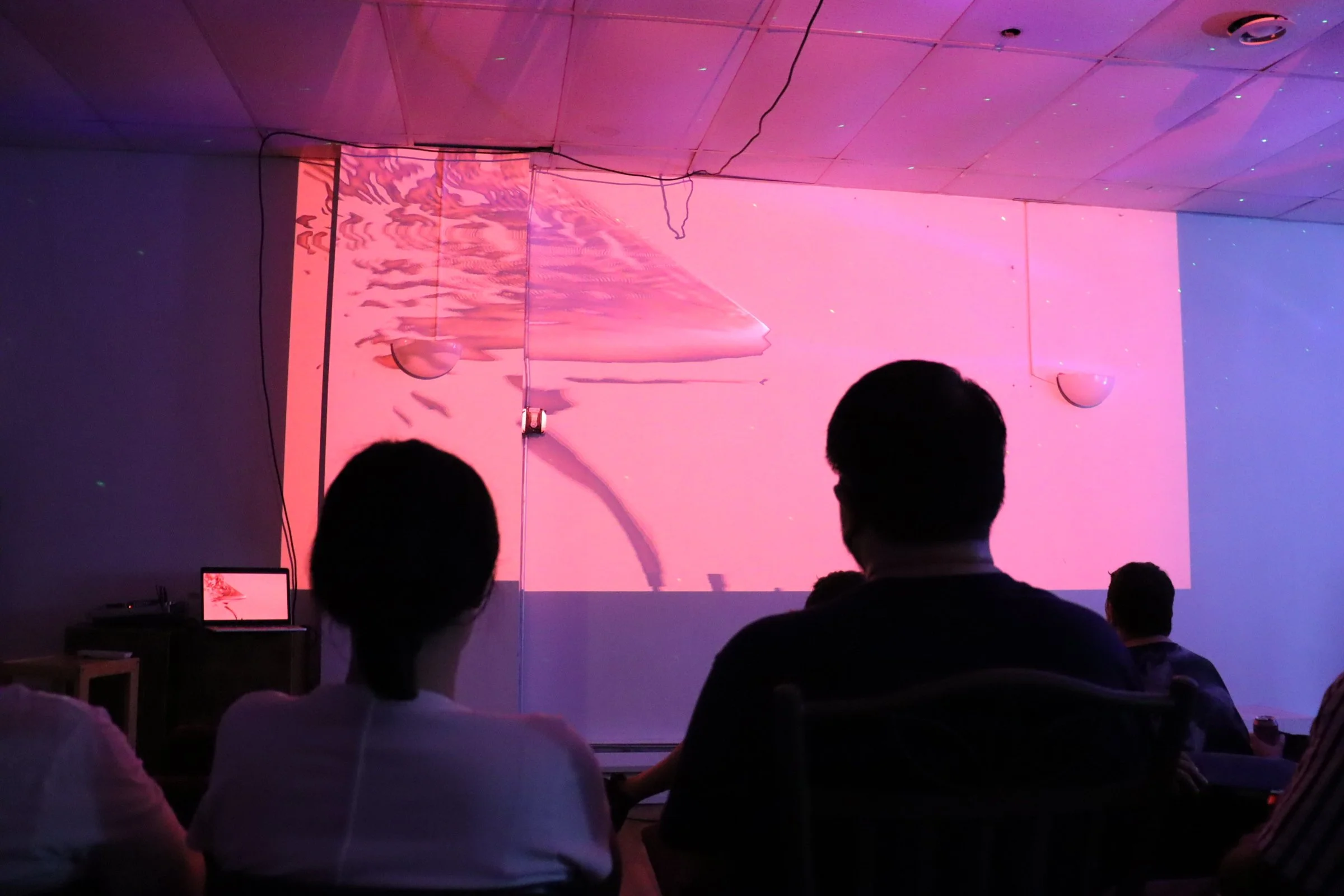
Audience listening to Mind Dream Season 2 at Brick Aux
NA: I tell that to my writing students all the time, told to me by Sibyl Kempson — this [touching his temple] is the one thing they can't take from you.
AD: Yeah, yeah, that's totally it. I think it's like a call into the world with it, and my hope is these plays reach other parts of the country, other parts of the world. It's just the beginning, but my hope is not only for other people to find it, but maybe eventually other people in other parts of the world can contribute. Hopefully it's not always New York-based, but I guess for now it is, just because I know so many wonderful writers here, but I know they're all over the country, and so that's the next phase, branching out west. Like a true American.
…
Nic Adams (he) is a playwright and cultural organizer. Presenters include We Are Here, Judson, Joe's Pub, The Bushwick Starr (produced by TMT), JACK (with Oye Group), and The Brick (Weasel Festival). Funders include the MAP + Venturous Theater Funds, NYSCA, the Anna Sosenko Assist Trust, and NYFA. Producing Director, The Exponential Festival. MFA, Brooklyn College. nicadams.com
Allyson Dwyer (she) is a theater artist from New Jersey and founder of mind dream theater, where the venue is your mind. Recent plays include u are the dream (Exponential Festival, The Brick, Most Unwanted & mind dream theater), Arrow of Time (1319 Press, Exponential Festival, mind dream theater, NYC Indie Theater Film Festival, Young-Howze Theatre Journal Awards Best Audio Production), Extraordinary Machine (EST/Sloan), Gumshoe (Arthouse), Plato’s Gooncave (?! New Works at The Brick). She is an alum of Clubbed Thumb ECWG, Soundlab at The Brick, The Road’s UC4, The Alcove at The Lucille Lortel, and Arthouse Inkubator. Say hello: allysondwyer.com
Matthew Sekellick’s 8 Philly Fringe Picks for 2026!
After trawling the 300-some listings of the 30th Philadelphia Fringe, paying attention to how artists describe and locate their practices, themselves, and their shows, to work samples, past reception, and word of mouth, I’ve picked out eight. Some of these artists I know, some of them, I know their work. Some of them I’d never heard of before: their novelty, their lack of pretension and cliche, or an act of curation catching my eye.
This is not an exhaustive list of what I’m excited about. I’ve selected for diversity of form, genre, training and background (though comedy, clowns, and the Pig Iron School are inevitably well-represented), and aimed for a spread to cover the three week festival. I’ve mostly selected against institutionally presented work as already-curated and highly visible, and against shows that New York readers have had the opportunity to see in New York, of which there are some great ones that I would be glad to chat about if you see me out during the festival.
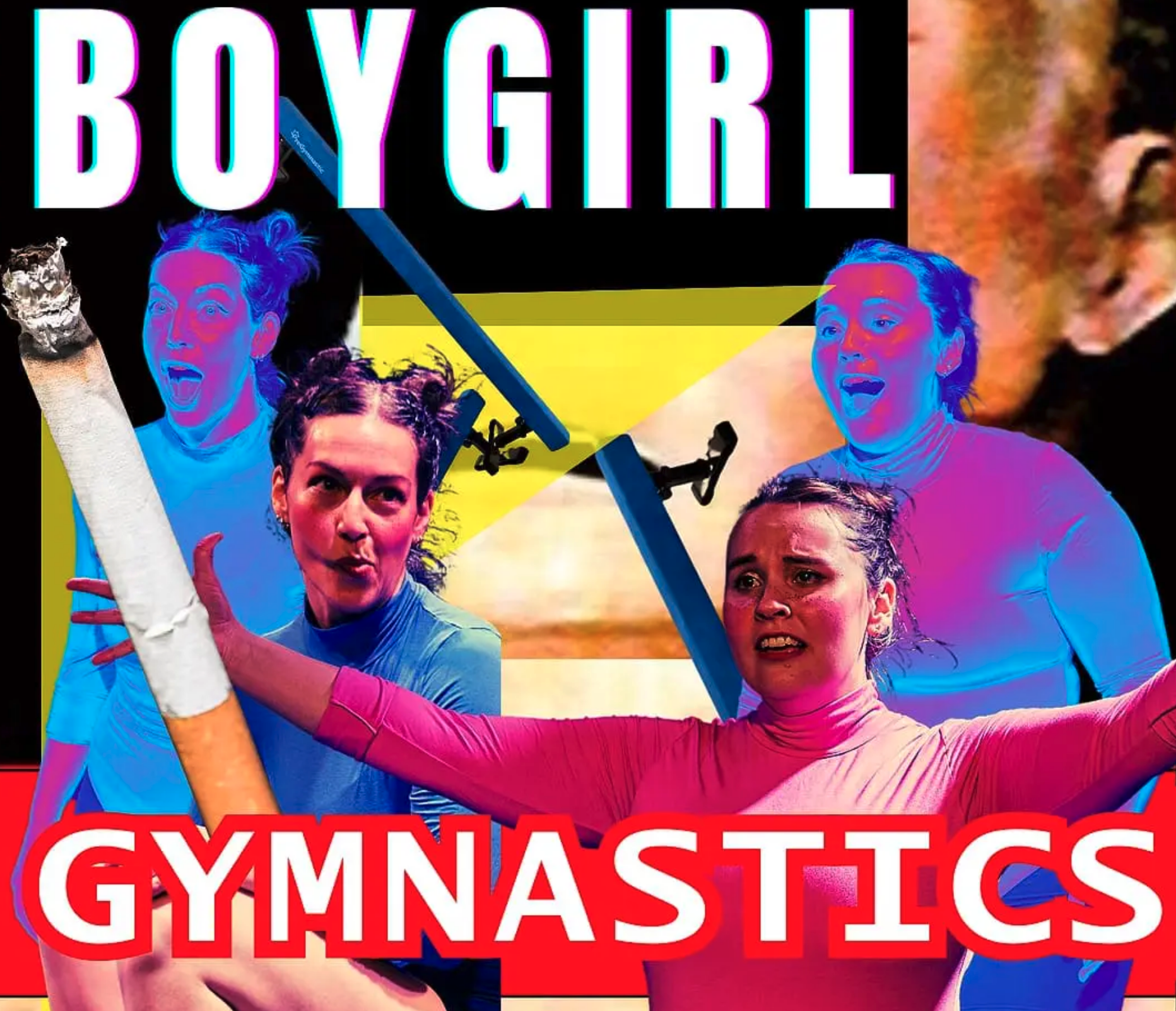
mimebaby: BoyGirl Gymnastics
Plays and Players
September 10, 12, 25, 27
Clown-duo MK Korbisch and Heather Hosford have undeniable chemistry as the core of mimebaby, with whom they make playful absurdist physical theater.
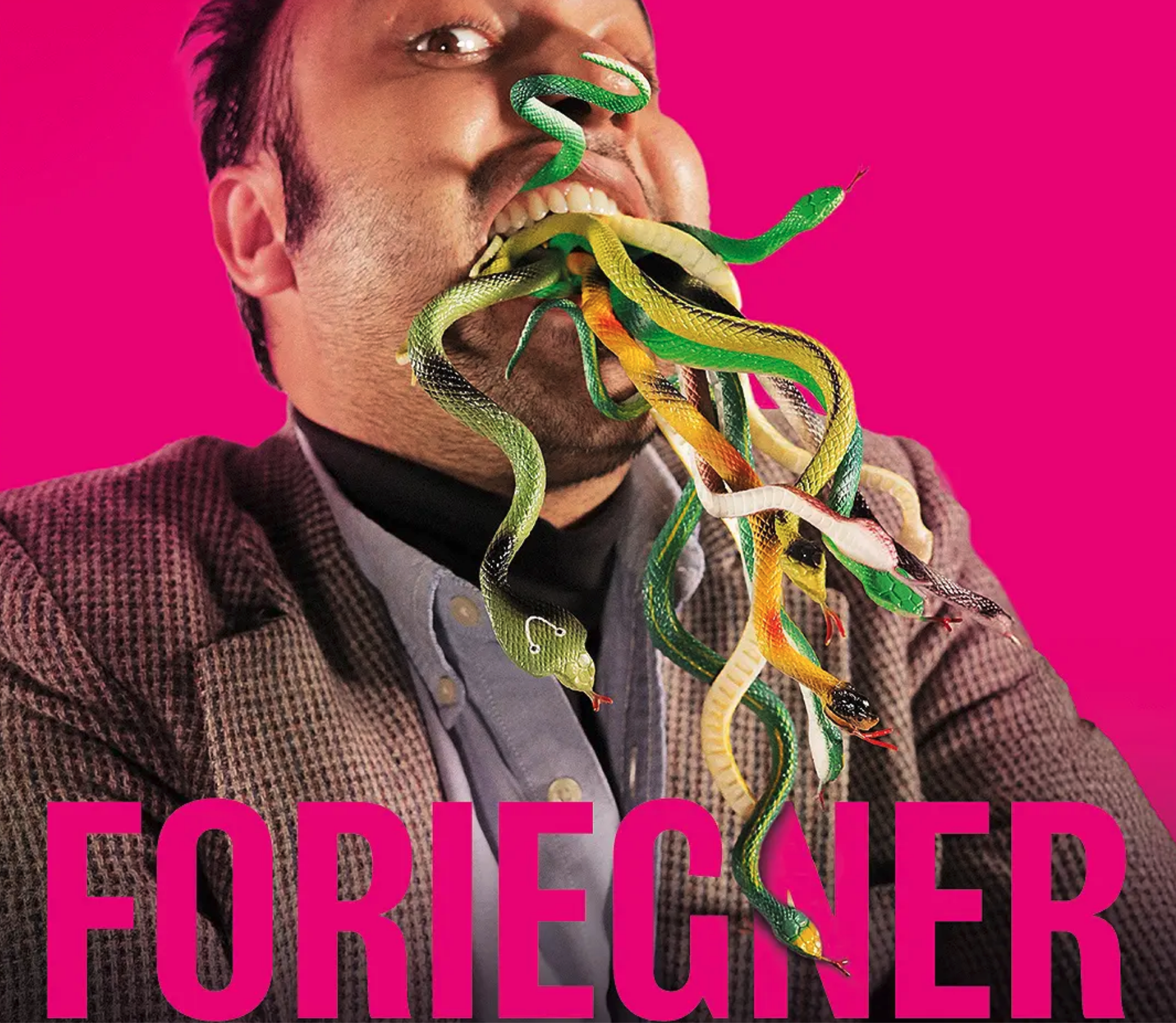
The Koan Brothers: Foriegner
Asian Arts Initiative
September 11, 20, 22
Iran-born clown Sohrab Haghverdi has transmutated his personal story into a must-see meta-theatrical performance about the meeting of the art world and immigration. I saw the 2024 premiere, which has likely been sharpened by unfortunate current events and a run at Edinburgh.
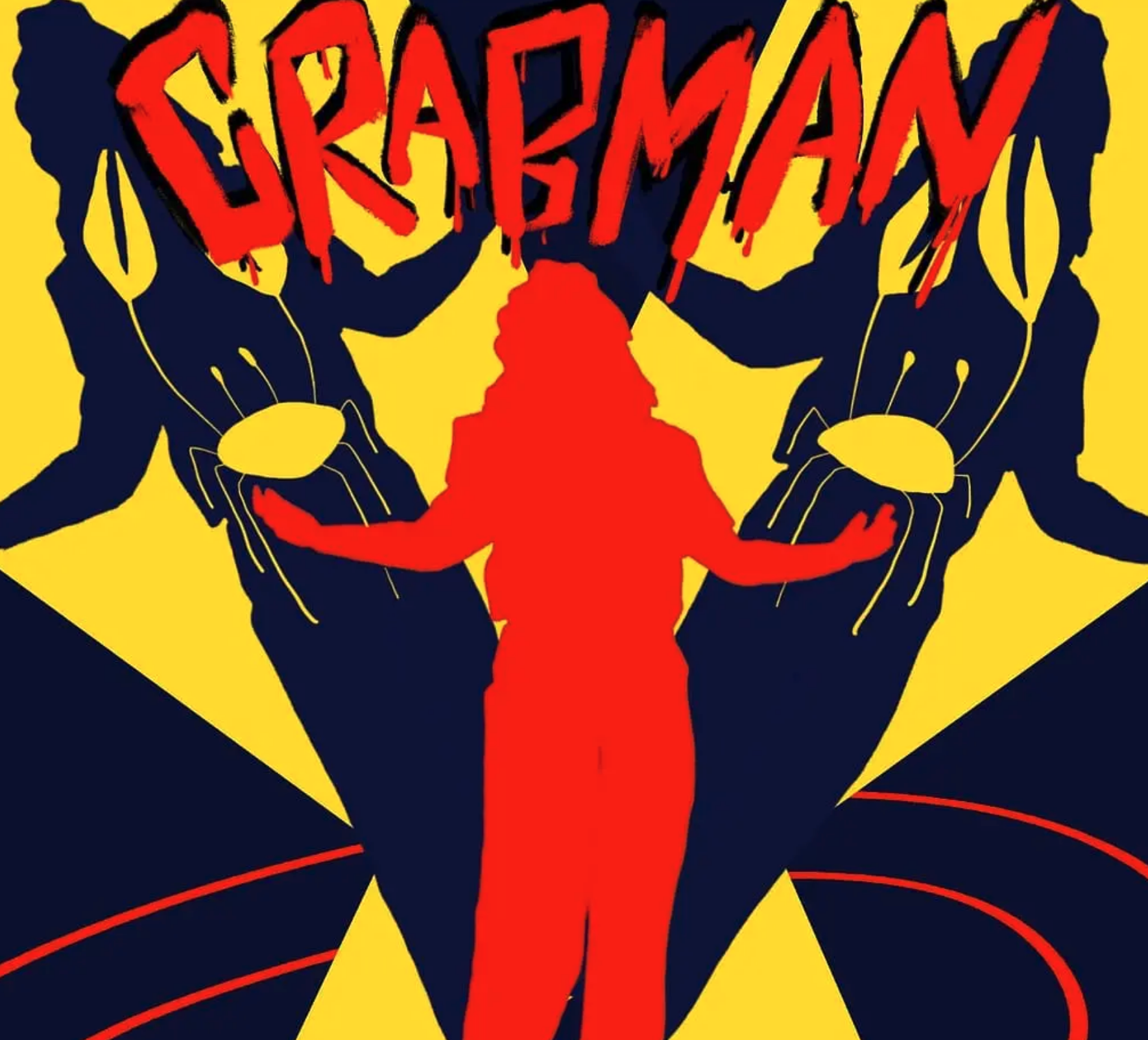
Melo Acevedo: CRABMAN
Dumb Hub/Pig Iron Theatre
September 12, 13
A whole school of fringe performance is crammed into Sarah Knittel’s Dumb Hub, which brings clowns from across the US together with some of Philly’s finest to worship at the altar of a guy in an ape suit. One-stop shopping for audiences looking for Gaulier-trained idiots and others committed to the bit. I saw the entire lineup last year, loved several shows and liked all but one of them. I expect similar results this year, where the dumbest of them may be CRABMAN, for whom it’s day 1000 of 1000 days of shoving a crab up his ass.
Savannah Reich: The Groundhog
Asian Arts Initiative
September 13, 19, 24, 26
Philly playwright Reich is always thinking about how to get the most out of the fringe format. Her latest promises a Groucho/Harpo dynamic amid a lecture on the Harold Ramis classic Groundhog Day.
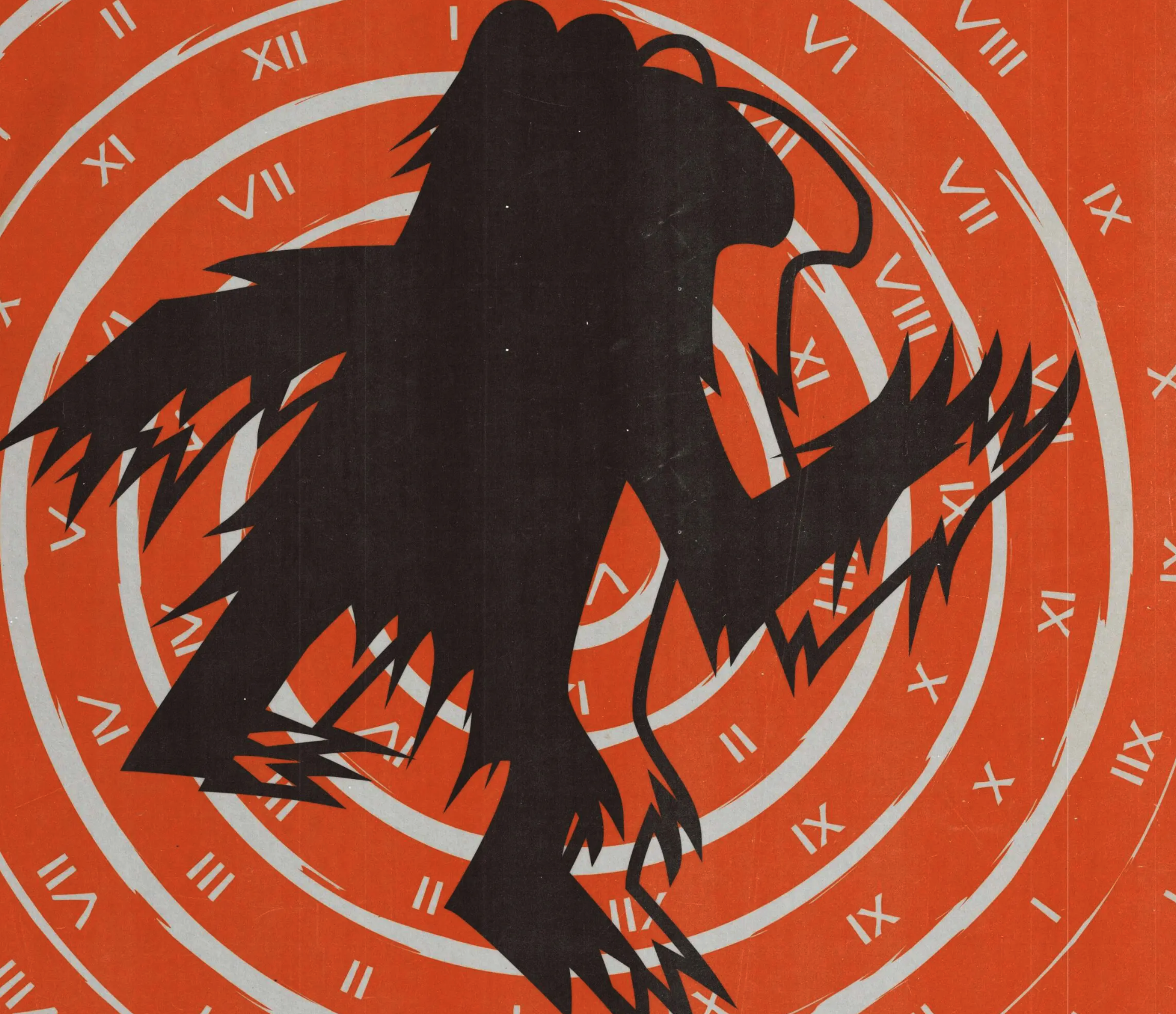
Cassie Works: Fictional Names
Asian Arts Initiative
September 16-18
Sculptor-playwright Works has been organizing performance projects with their fictional collaborator Cashew Lowman around Central Virginia via a newsletter, "Fictional Names," which is now an hour-long play about Cashew, with object theater, practical effects, and "conventional" theater, featuring a live score and a cast of four.
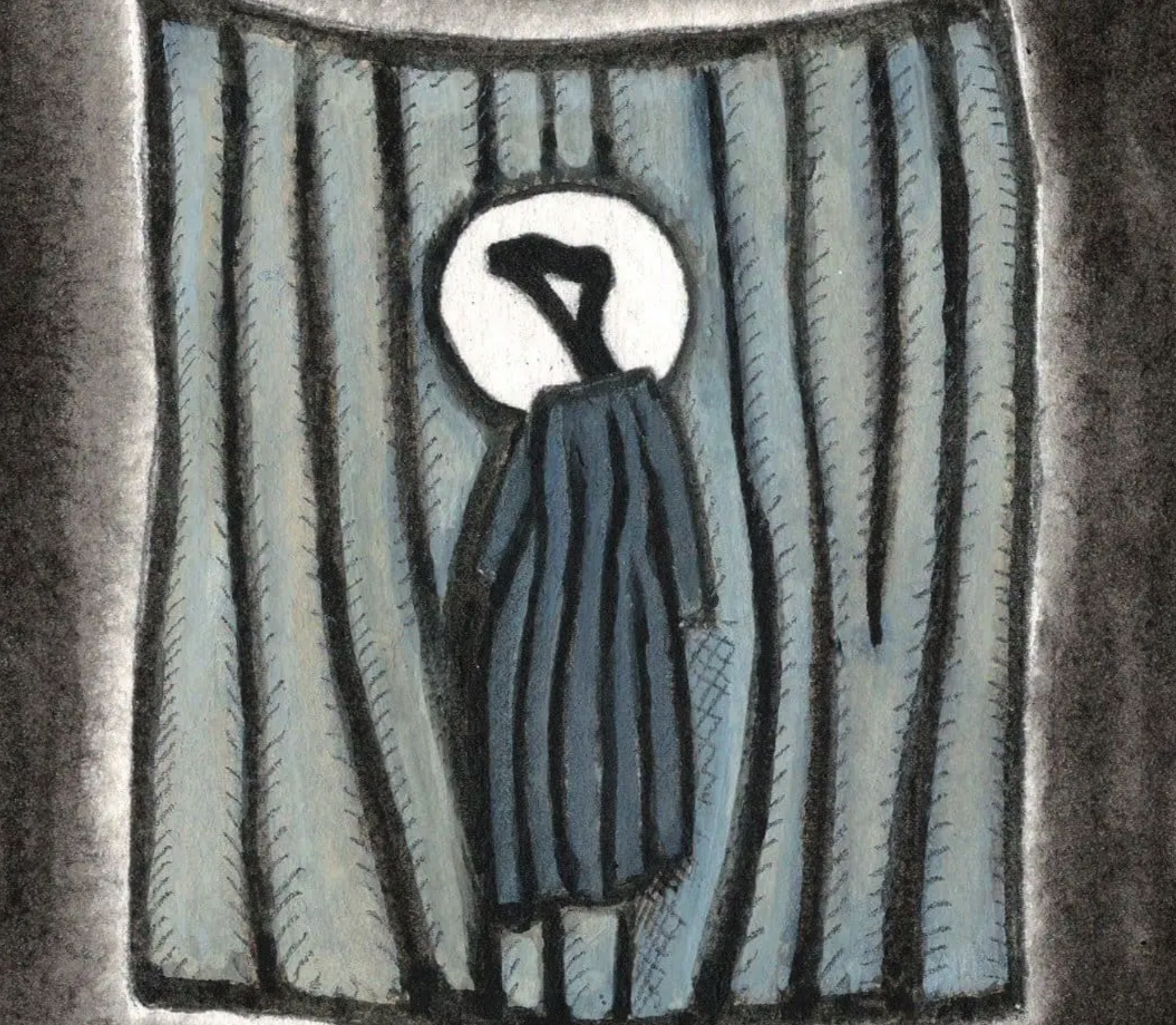
Vanessa Kamp: Houndstooth
Icebox Project Space
September 17, 20, 26
Barcelona-based American dancer Vanessa Kamp has been delivering beguiling character driven solos at the Cannonball Festival the last few years; their Devour Me was one of my favorites last year.
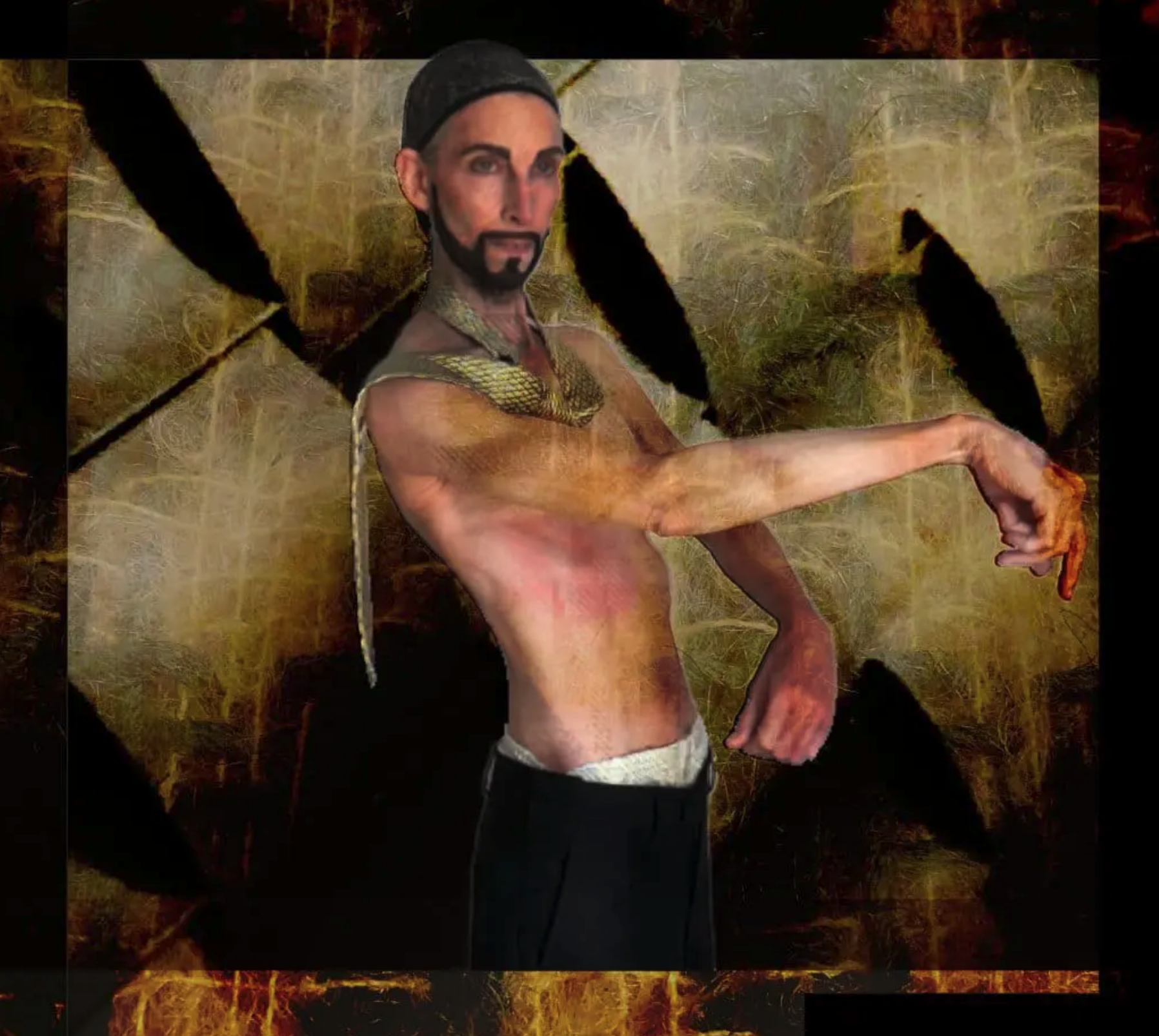
Ontroerend Goed: Handle with Care
Athenaeum of Philadelphia
September 17-19
Perhaps the most experimental of the not-actually-fringe curated festival and a rare US “performance” by Belgian company Ontroerend Goed, Handle with Care bills itself as giving the audience a box to open and nothing else. But I think it’s full of prompts. I hope there’s a few clowns in the audience when I see it.
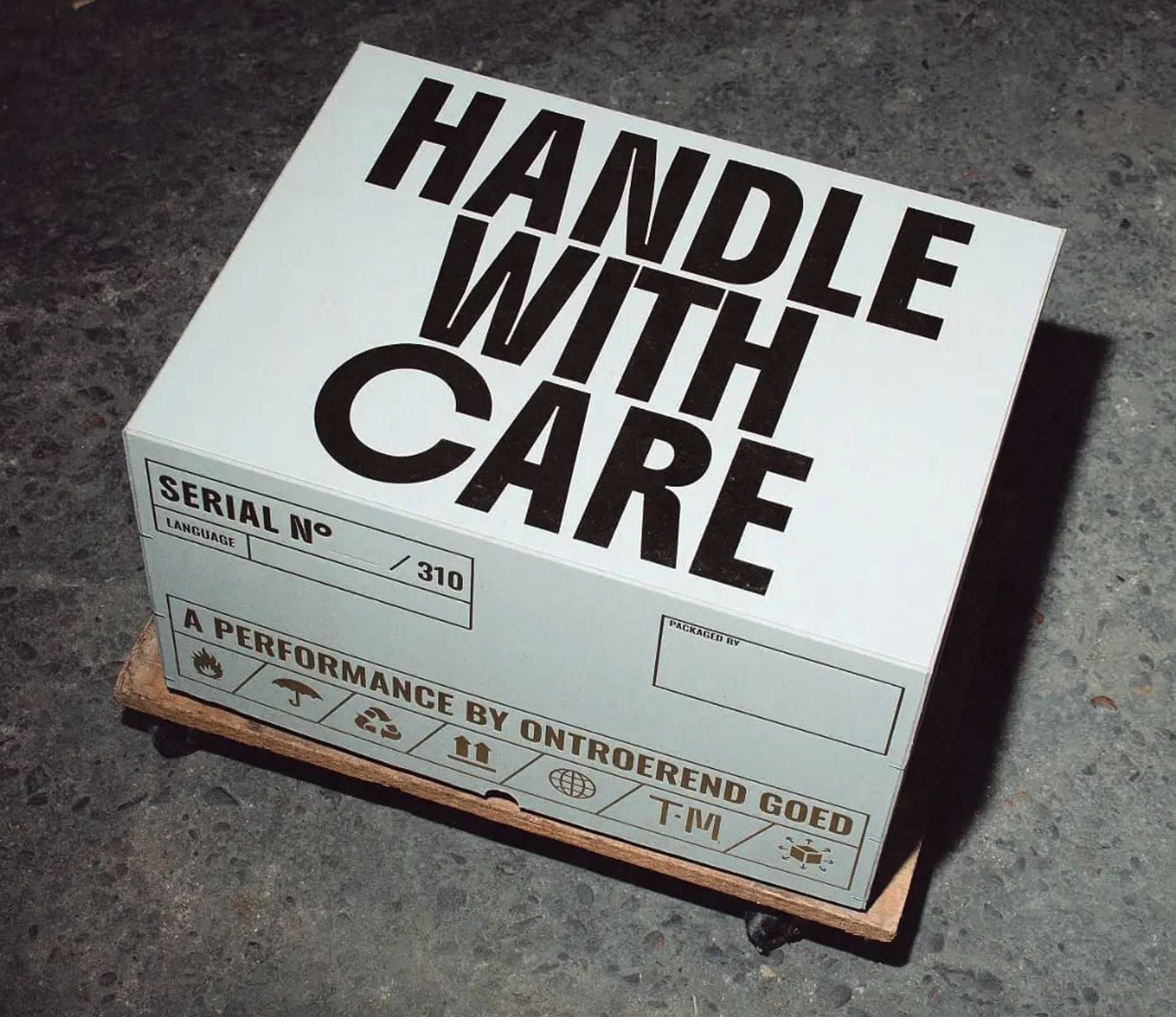
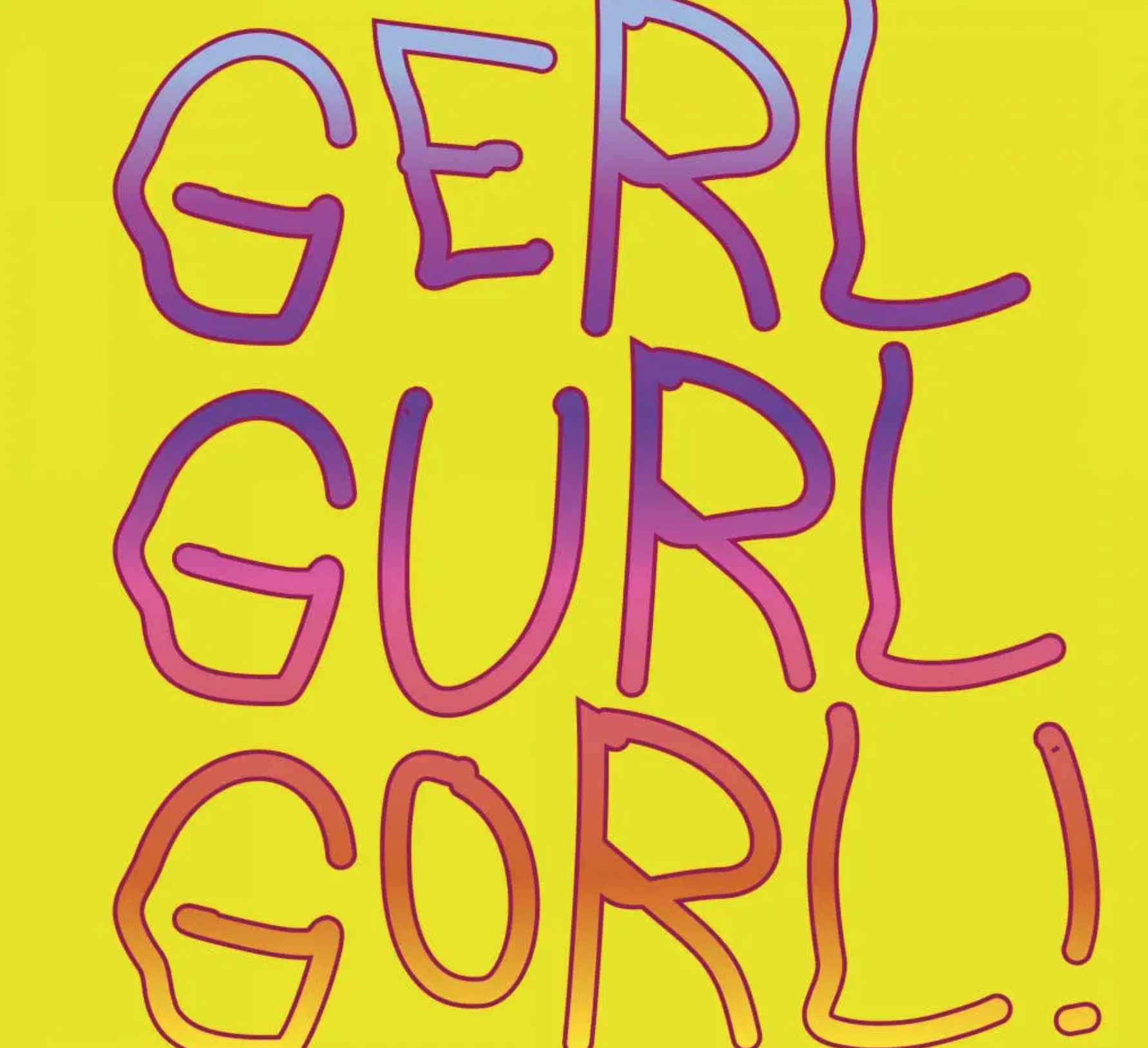
Andie Flores: GERL GURL GORL!
Asian Arts Initiative
September 18, 19, 20
I don’t know what to expect from Austin-based "embarrassment artist” Flores, whose show was selected by a panel including Alex Tatarsky and Crackhead Barney, but her past work is visually exciting and includes titles such as 10 Ways to Effectively and Consensually F*** A Minion. https://phillyfringe.org/events/gerl-gurl-gorl/
The Maybe-Myths of Leonie Bell
by Jeffrey M. Jones
This article is published in partnership with our friends at CultureBot
Here’s one difference between stories and myths: Stories are about the things people do, while myths are about things that are done to people. Agency is essential of course, as is the related concept of responsibility. In myths, protagonists have little choice in how they act (asking whether Gregor Samsa should have behaved differently pretty muchmisses the point), and because the consequences are driven by external forces, protagonists are often not considered to be “at fault.” Myths like that become cautionary tales. And here’s one curious corollary: stories are generally expected to be at least somewhat plausible, whereas myths, not so much. In fact, when plausibility becomes an issue, the usual response is that the myth never even happened.
Now, true narratives, as opposed to action sequences, are rare in performance work, but because Leonie Bell works at a far more ambitious level of abstraction and sophistication than is usual in downtown experiment, her performances often depend on actual narratives with deliberate, even elaborate, “plot points.” Here, for example, is a (truncated) outline of Slowtanz (2021), an early solo video, shown live online during the pandemic:
An inflatable dinosaur picks out a simple tune on a piano, then moves to a small table, completing a setting for a breakfast. A recording in English introduces a “Mitten in der Nacht” exercise class, followed by music, as the dinosaur dances. A woman unzips the costume, and explains she’s having a bad case of Frühjahrsmüdiskeit (spring fatigue); then uses a loop pedal to create a children’s “Spring Song”, sung as a round in German. When she stops and starts eating the breakfast, a second recording mirrors the original introduction (this time in German) followed by a similarly simple piano tune, then switches to English to tell a story about Rosalind, a T. Rex, who knows she is on the verge of going extinct—that “we are all going to leave to leave at some point” and has “only a bit more time left.” The recording then asks “What does it mean to have breakfast at night? What does it mean to sit alone at night in solitude?” and the woman, placing her palm to her cheek, starts a bi-lingual conversation with the recorded voice, suggesting they just call each other back and leave messages. The voice responds: “Stop. The fact is, it’s going to happen. You’re going to have to create an imagined world that helps you cope with these things. … Contemplating inevitable things you are afraid of seems like a pretty good survival strategy to me.” To this, the woman rubs pieces of bread with jam on her face, and throws the coffee cups on the floor. The recording ends with, “I am sorry for all of you, all that were lost—past, present, and future… but it’s now time to go.” Crickets resume and the woman announces a “Goodbye Song,” a second simple German loop song, during which she climbs back into the dinosaur costume and eventually walks out of the theatre, up Metropolitan Avenue, and into the subway.
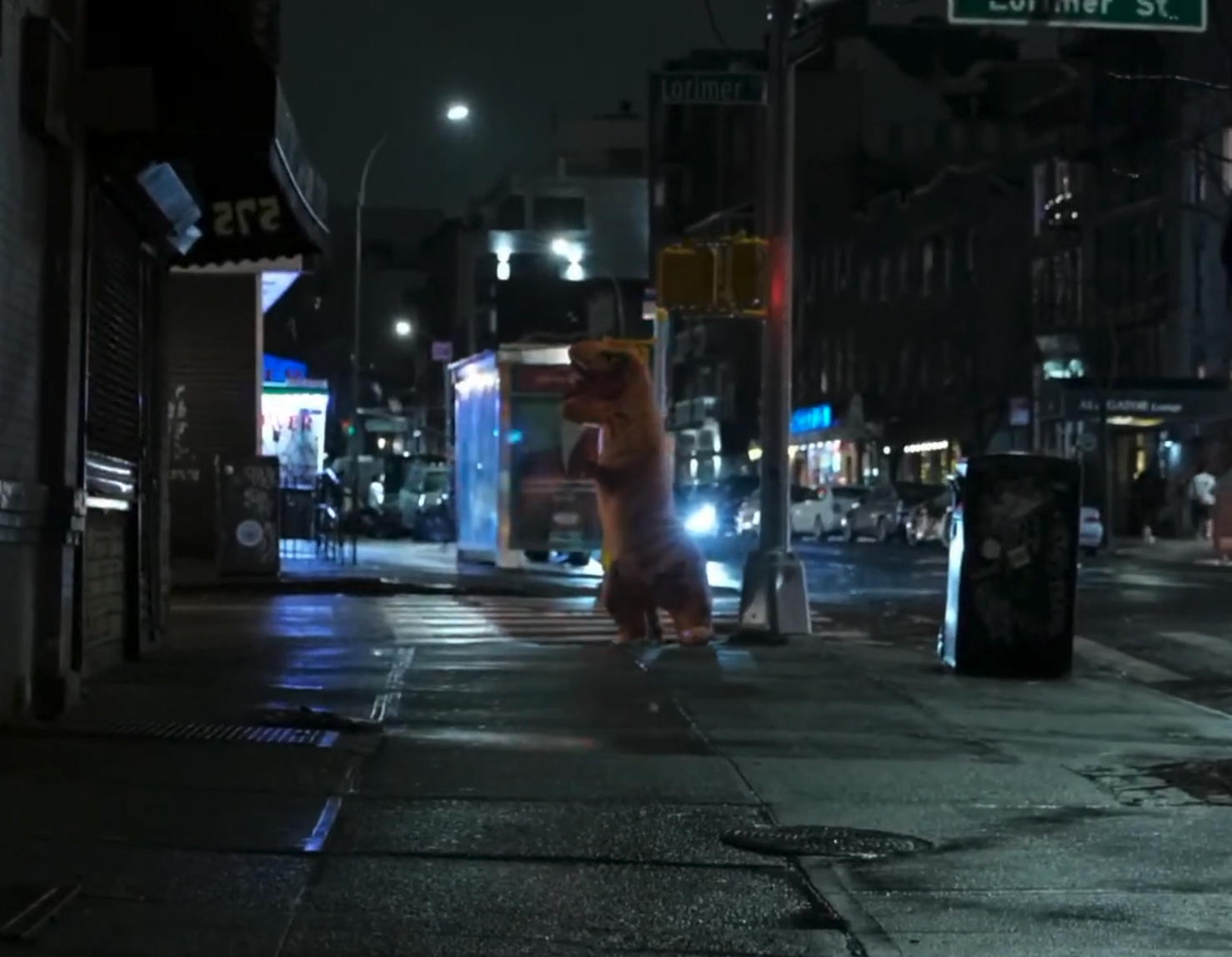
Image from Slotanz (The Brick Theater Live Streams 2021) of Leonie Bell as T-Rex on Metropolitan Avenue, filmed by ZANNI Productions
What is one to make of this?
The live performer is clearly a version of Rosalind, so do they both know they are on the verge of extinction, with only a bit more time left? Probably (if not, why even bring it up?), but then, who is the voice expressing sorrow (certainly not the dinosaur), and who are “all that were lost—past, present and future?” If the woman is contemplating inevitable things she is afraid of—like death—is this part of her survival strategy? And is the “Goodbye Song” and her exit down the subway part of that too? Slowtanz then is partly autobiographical—Bell herself is German-American—but distanced, for the story of Rosalind is only an illustration of the artist’s own obsessive thoughts and feelings, and the conclusion is at best a temporary exit—a literal “walking away.” The only possible ”resolution” to the inevitability of death is death itself.
Resolutions and endings play an even greater role in an earlier monologue, Mamimumu (2020), which switches between two unrelated narratives that both end abruptly, and are abandoned unresolved. Bell follows with several additional possible endings, also all rejected, adding, “What is it with this sorting of other people’s memories?” In her own description, she describes the piece as, “a live-media attempt to locate ourselves through history we weren’t there for … a trans-Atlantic processional-protest advocating memories as lineages.”
References to thoughts of loneliness and displacement, displaced thoughts, memories and the memories of others occur in Bell’s many other descriptions: SchmidtSmithSchmidt is a “lonesome search amidst the chaotic + mundane.” A Maybe-Myth of Runny Nuns is “an interstitial attempt to grieve our way through the negative spaces we cannot touch.” I Don’t Want To Interrupt You Guys makes it even more explicit: she calls it “ a physicalized disruption of the defensive spaces we inhabit when we encounter our most vulnerable selves … a yard sale of memories that we may have altered in the interest of feeling connected to anything at all.”
Here are other elements common in Bell’s work, which build on her own summary on her website: “highly physical theatrical landscapes populated by pseudo-historical, multilingual narratives that center matriarchal lineages, [that] imagine nature as a main character, and consistently involve fake blood, mustaches & nuns.”
Her first works were solo and about her. They are now longer, but the casts remain almost always women—specifically mothers and their (sometimes lost) daughters. The women moreover typically act as a group, sometimes as nuns (rarely doing any things nuns normally do, like pray), otherwise as maids (who serve an equivalent group of mistresses). Men barely exist.
Nature is more than a main character. Rooms, and more generally interior spaces, are rarely even delineated (except as backgrounds in videos), and action is sometimes performed against nighttime crickets and other nature sounds. Even in SchmidtSmithSchmidt, wherethe women have specifically been banished to apartments, they appear only in the piece outdoors, squatting in “garden allotments,” and then penetrate the forbidden dark forest, where they find trees that are alive and holding a “death party.”
Germany is everywhere, but always as an ersatz Deutschland, just as fake nuns who claim to be centuries old are sometimes played by men, and murders with fake blood are always committed by fake nuns using fake axes. Almost everything presented in the work is somehow essentially and demonstrably fake.
An enormous amount of dialogue is spoken in direct address; in several pieces, the performers express surprise that the audience is “still there,” only to begin performing to them.
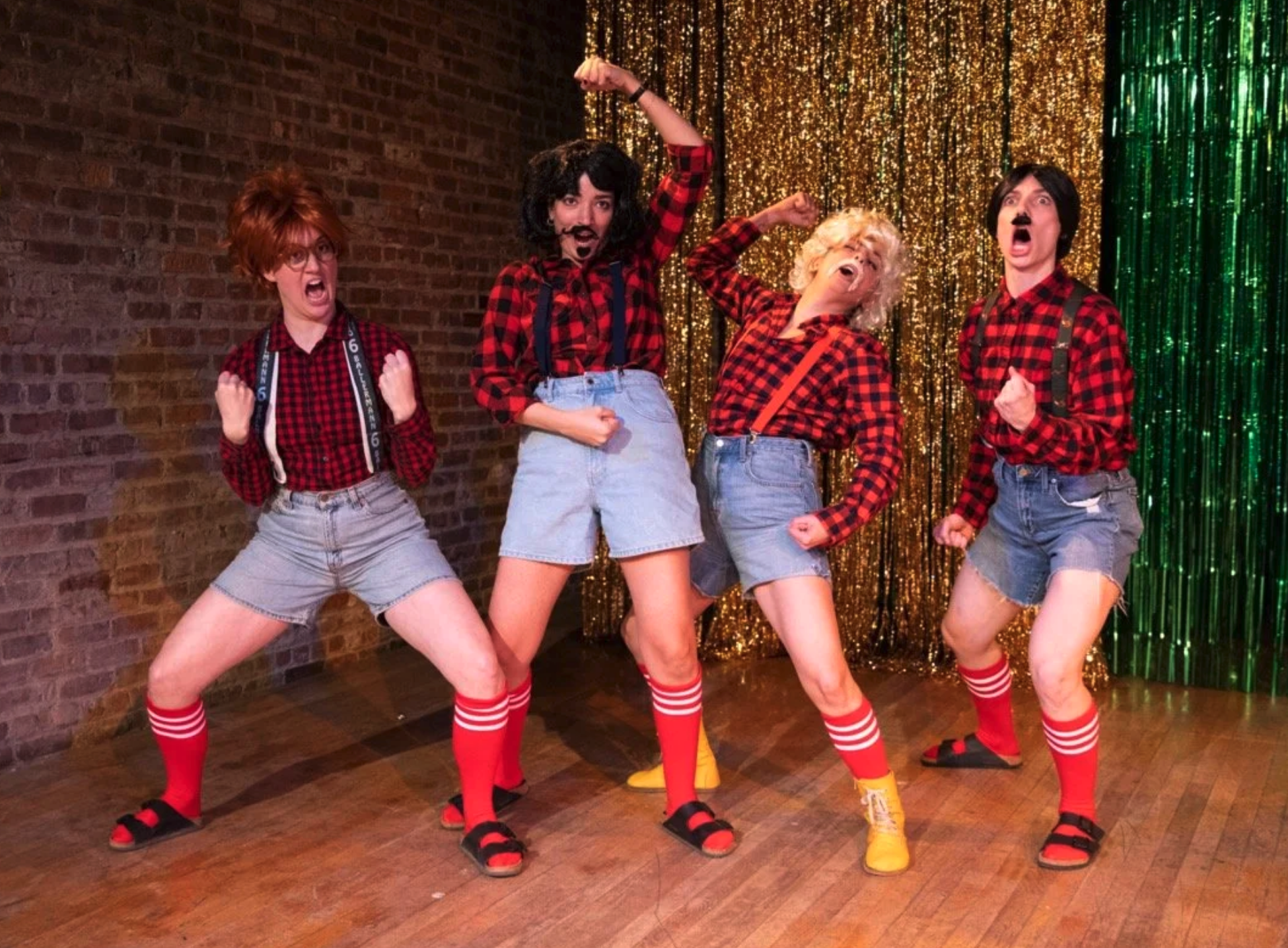
Image from SCHMIDTSMITHSCHMIDT (The Brick Theater 2023) by Walter Wlodarczyk featuring Caroline Burkhart, Lianne Elsouki, Rawya El Chab and Leonie Bell
The fake and the false seem to reach their pinnacle in the recent We Live to Die, the Grieving Widows Club—three online episodes presented in 2022, 2023, and 2025—where the storylines are so complex and involved that they become nonsensical. Here, for example, are just the first two minutes of the first episode:
In blackout, a voiceover with obviously fake accents (all characters in the series are played by Bell, often in split-screen) tells a stupid joke , followed by “it’s about to begin.” Footage then appears of Bell in a wig, fake moustache and ruff opening a door, as the voiceover continues, “That was strange. I mean, that was Fred. Fred is our intern. He’s a bit camera shy. And dramatic.” Cut to footage of Fred, on the phone, saying, “Mommy, I did not even sign up for this internship,” as the Narrator, in blackout, resumes with “That part is true. Someone found him at the supermarket in the vegetable aisle.” Footage appears of Bell in a wig, as voiceover continues, “That’s me, our narrator. You can call me Dolores. Ok, we’ll begin now.” Footage of Dolores, as she tries to add a third pair of glasses, calling “Fred!... Fred! Fred!... “ Voiceover in blackout continues, “Welcome to the Grieving Widows Club’s theme song. I mean, poem.” (Footage of “Fred” playing a chord, over and over) Voiceover: “Welcome to the Grieving Widows Club’s theme poem. Grieving Widows Theme Song. Grieving Widow’s Club’s theme, song, poem, animation—I don’t know...” (Fred’s moustache falls off at this point.) “Grieving, grieving, grieving, grieving, grieving, grieving, grieving, grieving Widows. The Grieving Widows theme poem.” (At which point the song begins…)
This is truly a Monty Python-level of exposition, and indeed, many of Bell’s pieces are performed as frenetic vaudevilles, with short scenes interspersed with songs and dances. But for all the frequent false tangents, free associations, misdirections, substitutions, intentional miscues and “mistakes,” the actual stories are usually quite serious. In the end, bad (albeit fake) things usually (or if not, almost) happen. Even The Grieving Widows Club—whichhas no “real” characters—ends as “a horror comedy featuring an ax-wielding maid who murders her mistress in a fit of rage and takes her place,” followed by an even-more-final version where the murdered mistress is played by yet another maid, followed by an announcement that the whole show (wherever that may be now) was a hit!
SchmidtSmithSchmidt (2025)is Bell’s latest and most intricate piece. It is almost a play (she refers to it as “theater,” and the first line is, “A dark stage”). It is large scale, with a cast of seven women (members of LOCAL GRANDMA, the theater company she founded in 2020) and continues the remix of many common elements from earlier work. All characters are still women and played by women (even as “lumberjacks,” in addition to the nuns and the witches). It is not only set in Germany, but the German-American intermix now includes an expat American librarian who lives in Germany (and doesn’t know why), plus a German daughter (Susi) desperately trying to get to America because she thinks her long-lost father lives there. It is literally matrilinear: there are two (and eventually three) sets of mothers and daughters. And, for the first time, it is overtly political. The framing situation involves a group of women from the town who have been banished to a Plattenbau—a prefab, concrete apartment building built by the all-male government—and forbidden to go to the forest. Yet they sneak out at night to squat in the few remaining garden areas, in search of the one last secret sacred grove. And here, buried beneath all the storylines and routines, the songs and dances—and after Susi beats up the lumberjacks, and finds her way into the grove—we come upon a myth: For the secret grove is the home of the witches who are also trees… one of whom (Eunice) is the long-lost mother of another of the township women (who, of course, recognizes Eunice) and therefore also the grandmother of Susi, who is no longer looking for her father in America, because her mother’s told her he still lives in town…
And it turns out Eunice has returned to the grove to prepare her “death party,” where she will return (as a tree) to the earth from which she came from. And thus it all ends: as a gathering of women, in a grove of trees, drinking Schnapps and having lunch, singing their wiccan song, as Eunice addresses the audience.
The forest is my family. Just like it’s your family. You belong here. I look up at the sky, and then I look down. And I land in this same spot. Four hundred years earlier. I can feel this body I was in and then I feel another body. An older body. A body that is forty, that is three-hundred, a thousand years older than me. But it is me. All of it is me. And I land here. I can feel it. Here.
Once upon a time there was a woman, who exploded into stars. And those stars shine the way for us tonight. I return to whence I came. I return to this earth with a wish, to once again become witness to events, such as funerals, markets, lunches, and votingbelow my branches. My arms, my leaves. A tree in a sacred grove. I hope to see you there.
This is Bell’s response to Slowtanz:an imagined world she has now created to help her cope with the inevitable things she is afraid of. And while it may only be a maybe-myth, one cannot imagine anything more different than the outcome awaiting Rosalind and, Bell suggests, you as well.
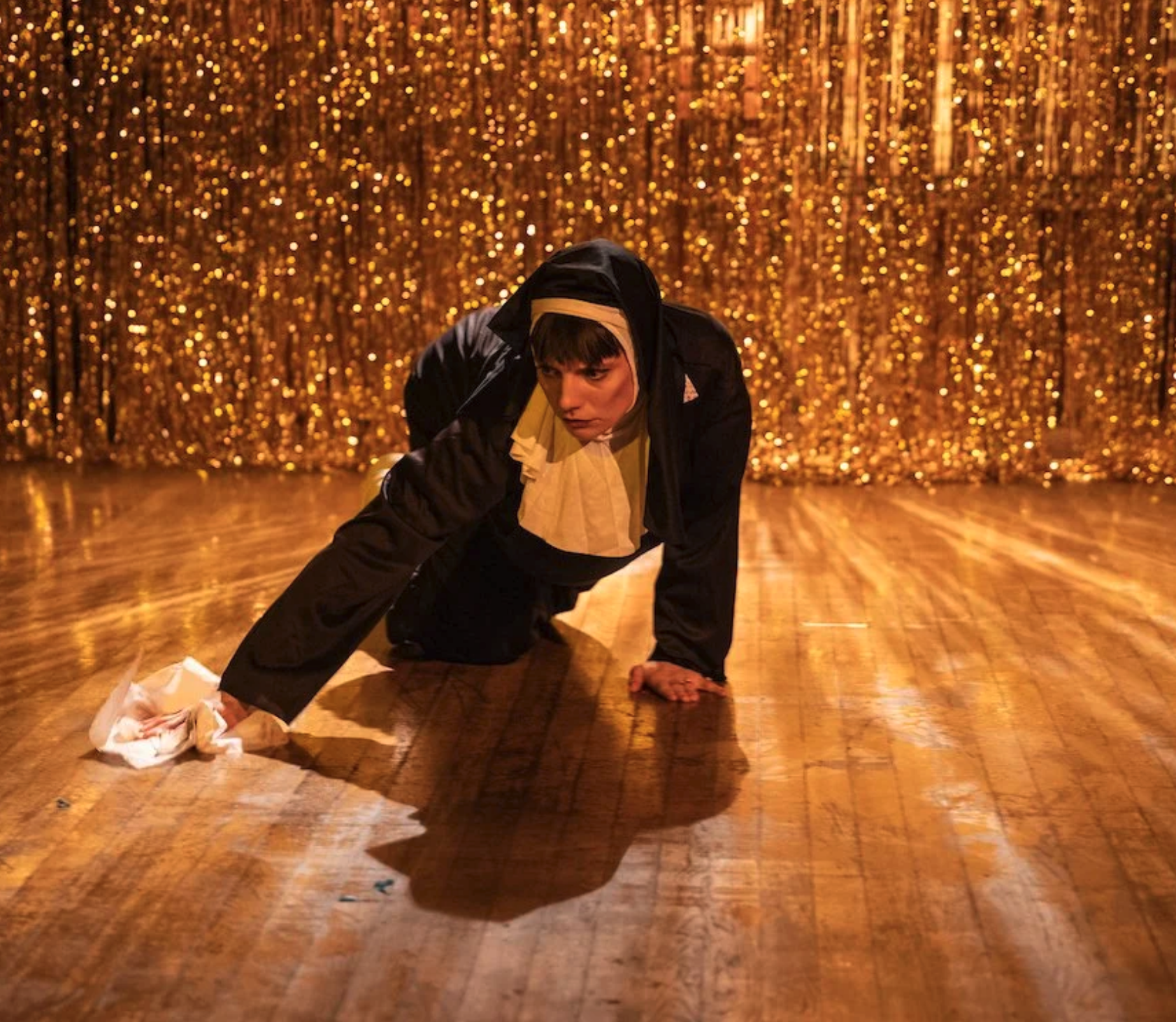
Image from Sonntags wird gelogen Or We Only Lie on Sundays (The Brick Theater 2021) by Walter Wlodarczyk featuring Leonie Bell
Soapbox: Objects in Motion (July 2026)
By Reuven Glezer
It is perhaps decently known that I see a lot of work around New York’s performance scene, which has done wonders for my psyche. This “column” covers a smattering of work I saw this dying July, as I waded through wildfire haze, diarrhea parasites, and the tears of Argentina supporters.
WHAT A WORLD! WHAT A WORLD!
Any queer worth their salt is, at some level, something better than a “cinephile”. A glamorous cinematic presence is weaved into our conscious minds, the glow of the screen gently wafting from our ears if you catch us in the right light. Maybe you watched Lubitsch’s Trouble in Paradise (1932) with your cultured grandmother, maybe you went to your first rep screening as an undergraduate and caught The Earrings of Madame de… (1953). Eric Marlin’s play is a shit-eating grin inducer for those of us who love the movies and ping-pong with our peers about the queerness burned onto film. The title itself, a line made famous in The Wizard of Oz (1939), readies us for melodrama. This is not a melodrama. This is two performers, Queen-Tiye Akamefula and Annie Hoeg, motioning through a gray no-man’s land that could be 1) an empty rehearsal studio, 2) the crappy employee space of a movie theater stripped of furniture, 3) student lounge of an underfunded state university, but really anywhere you and your compatriots might bicker about the merits of art. They’re readying themselves for a drag reimagining of The Pearl of My Oyster (1943) and also starring in The Pearl of My Oyster (1943) and also watching and also watching the drag reimagining and perhaps many more as they bring so much life to themselves that it’s almost an existential tizzy. Who hasn’t been so affected by art that they conclude -
“i’m such a bad homosexual
like i wanna be effortless and composed and gritty and authentic and vicious and terrifying and
nuanced and cosmopolitan and salty and wondrous and glittering and multifaceted and
sensual and seductive and seducing and wild and free.”
If the authenticity is buried deep within, Ilana Khanin’s artful production excavates. Layer by layer of light, proppage, and a bit of metatheatrical fun brings the work closer to an unknowable surface and then, at last, the drag performance which volleys between camp, recreation, & transformation in a way the best drag does.
“did i miss it?”
I sure didn’t.
WHAT A WORLD! WHAT A WORLD! ran as a Tank Core Production from July 9th to August 2nd.
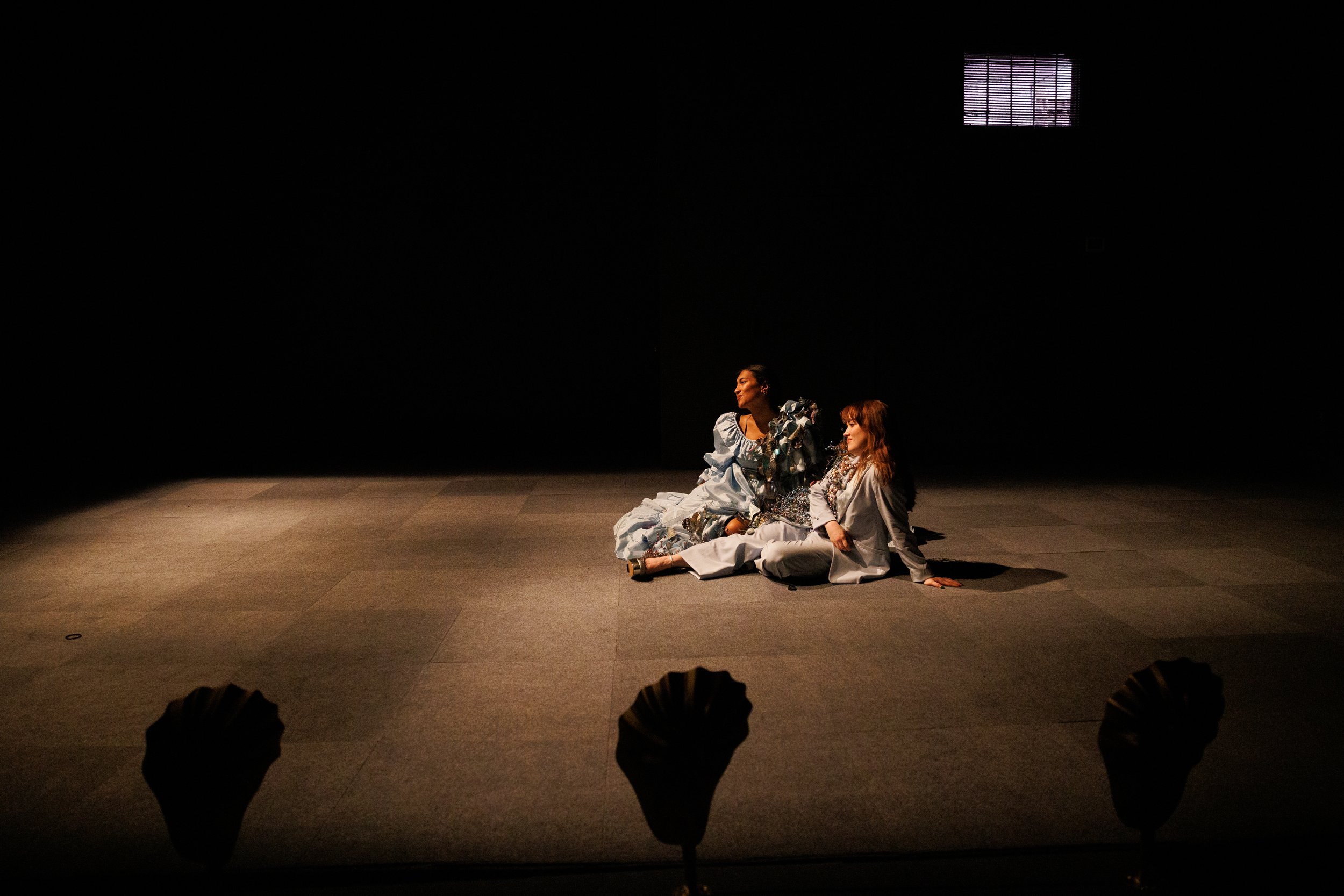
Queen-Tiye Akamefula and Annie Hoeg. Photo by Maria Baranova.
Object Permanence
Nico Krell’s latest unclassifiable work (dance-theater feels reductive, frankly) plays games with us. At the top of the show, Krell informs us that in place of blackout, an actor will clap and we’ll close our eyes - when we hear another clap, we’ll return to the world. Krell teaches us the move, and then leads us into the work. Object permanence is why you can play peek-a-boo with a toddler and elicit joy from their little selves; in this case, reality ceases to function within the normal parameters as we watch seven performers play their own games, make their own time worth it, as some great and terrible “it” menaces them, unseen to us.
Fun fact: when I was a child, I had (and still somewhat retain) a deep-seated fear of houses with all the lights off. Flash forward some twenty-odd years later, and I would walk through the blocks of massive Victorians in neighboring Ditmas Park during the early days of the pandemic to ease my mind. I hurried past those homes at nightfall, filled with the chatter of true-crime reports of horrible happenings behind closed doors. I would wonder if my homeowner neighbors were sacrificing goats in the basement and summoning poltergeists, some kind of Brooklyn Amityville Horror crossover.
Object Permanence is based off a very real case of child abuse and neglect. When we closed our eyes to “blackout”, my mind leapt to the unimaginable things happening to these children away from sight. The simplicity of the ask, to listen for the clap and join or unjoin ourselves from the play-world, becomes its own dramaturgical filter. Seven talented, ambulatory performers appear and reappear and vanish and move strangely by the door at the far end of the Kestrels space, beyond which (from my vantage point) you only saw darkness and glimmers of hanging lights. This lo-fi dungeon is suffused with an uneasy, almost revolting, silence. We hear whispers (pre-recorded and not), the creak of the door, the almost-sneezes. In what world is a sneeze a source of fear? We can all fathom an answer, but there’s no room to say it in the hour-long performance. Your oxygen can be a combustive agent. Someone’s gotta be the victim this time.
The worst part? We’ll still be playing a game of peek-a-boo once we step back out into the Gowanus night. I get a beer with a friend visiting from Philly. I look out from the bar window. I wonder who’s missing.
Object Permanence ran at Kestrels from July 17-19.

Sydney Chow and Marc Anthony Gutierrez - Photo Ellie Gravitte
Foosball
In Douglas Stuart’s John of John, the titular character is beaten by a father who later looks upon what he’s done to his son and is hit with a deep, soul-shattering regret over his actions and the prospect of losing his son. In Sean Czarnecki’s promising Foosball, Will Ehren’s JJ is hit by his father (Forest Malloy), who comes to regret it and is haunted by, you guessed it, the prospect of losing his son. I can’t help but compare the two works that I experienced so closely together by sheer coincidence - a small town that chokes those who live there, a community that can't quite see what you’re going through, the cold of Scotland and Michigan. The kicker here is that JJ is caught in a situation with his “auntie” Evelyn, an old friend of the family who acts as a surrogate mother but, more importantly, is raping him.
I don’t use this word lightly, it’s all very May December and Last Summer, though without the former’s humor and the latter’s atmosphere, but it’s the situation at hand and JJ, like many a lonely and troubled child on stage and screen, thinks his rapist is his friend and his lover. Evelyn (Mia Vallet) is lonely, overworked, and the only maternal figure JJ has ever known, but therein lies the trap that keeps him from metabolizing just what’s going on here.
Herein lights the strength of Czarnecki’s play, a fine and sturdy work that pops a bubble in JJ’s dreams of moving in with Evelyn, and kept anchored by a very actor-friendly production helmed by Claire Siebers. Ehren is an excellent 16-year-old, who breaks when hit, who doesn’t know what’s wrong with his arrangement, and the rest of Siebers’ cast is always moving, always careful in choice, present and capable in the cozy (and humid) Arts on Site space. The design is low-key but with wonderful touches; I was especially a fan of the lava lamp with mango-colored wax that flickered with anxiety as we black out to JJ and Evelyn “having sex” on the couch (shoutout to Jordan Barnett for some really lovely moodiness in these lights). All of these (mostly) make up for the contrivances needed to push the avalanche down the mountain, and some of the on-the-nose choices in the work to remind us that this is about teens, about growing up.
At one point JJ wonders if there’s another version of him out there, one that wasn’t born into poverty and stuck sleeping on a couch, badgered by an angry father and drinking cheap beer to cope. It’ll take so much to get out, so much to know what else is out there.
Foosball ran at Arts On Site from July 16th to August 1st.
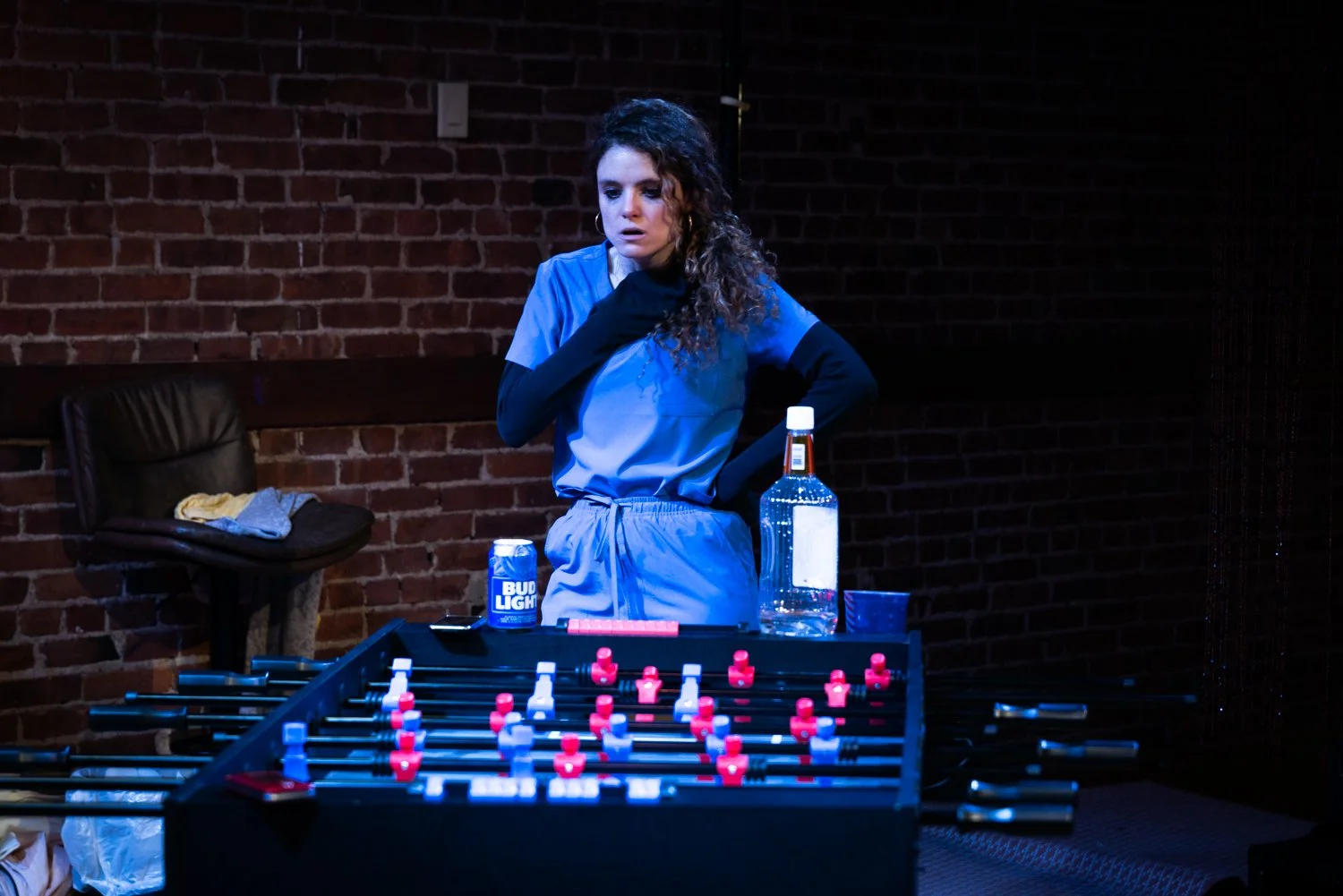
Mia Vallet. Photo by Jacqueline Silberbush.
DISPATCHES FROM DOMINO PARK: SUGAR! SUGAR! in the Summer of New York
by Leah Plante-Wiener
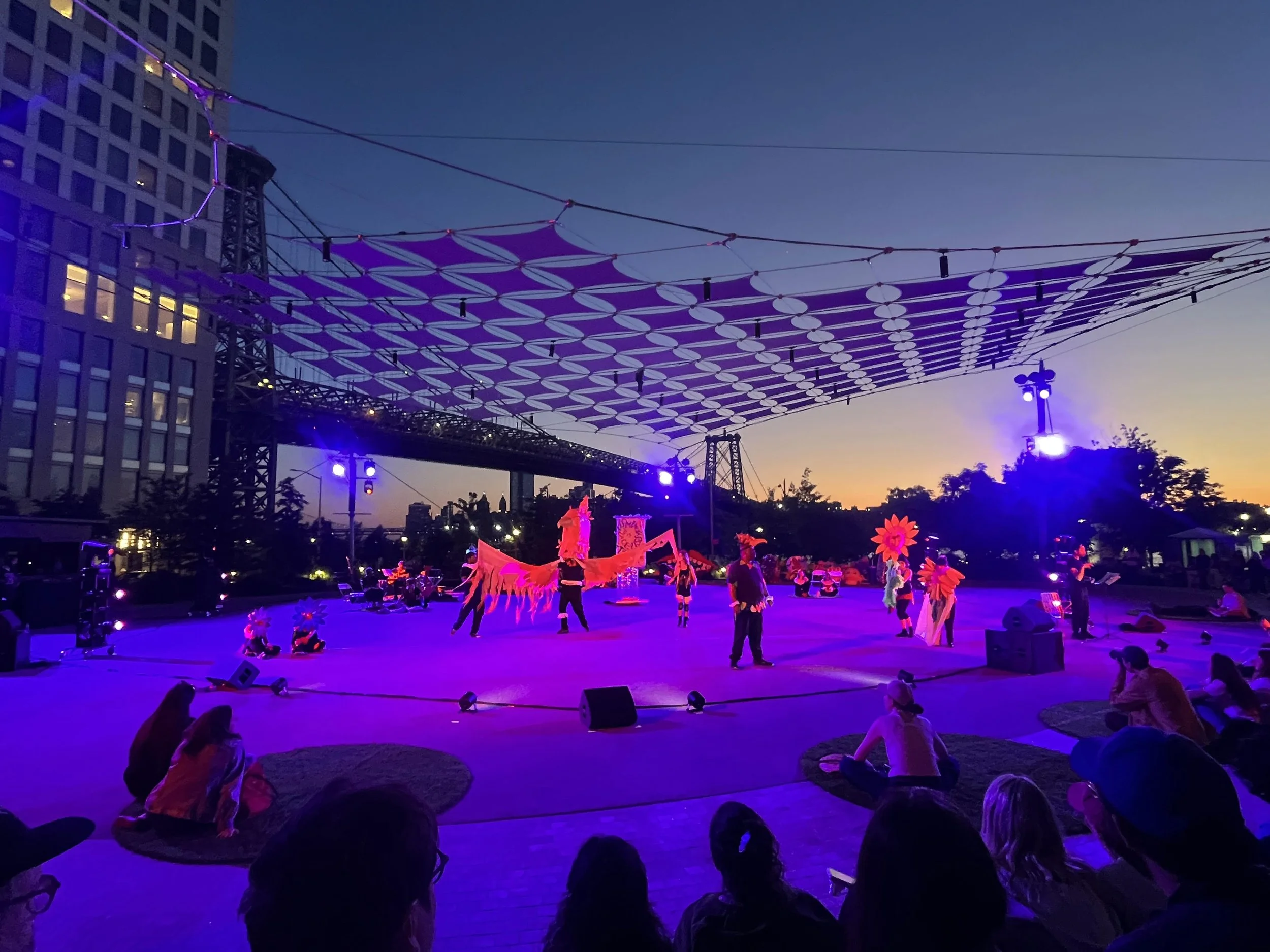
Pussypaws Puppetry / photo: Leah Plante-Wiener
In the year 2026, June settles upon New York like a dream. Pride Month is afoot and the Knicks are winning, with Zohran as our mayor and this summer’s more apocalyptic weather yet to come. New Yorkers everywhere sink their teeth into a city-wide craving for community, mass gatherings, and celebrations with strangers. Simply put, the city has been struck by a great spirit of neighbourliness. It’s been declared online, but it’s even more real in the streets: this is the Summer of New York.
My June settles upon me like a fog. Work is slow, my air conditioning is brimming with mold and unusable, my lawyers are finishing up my O-1 visa application and there’s nothing for me to add. A little aimless and rather unmotivated, I spend much time yellowing my bedsheets with sweat, wondering if it is better to be overheated or unmedicated. The saving grace of this period of sweltering atrophy presents itself in my weekly Wednesday pilgrimage to Domino Park, where SUGAR! SUGAR!, curated by Theresa Buchheister, Annabel Thompson, and Alessandra Gómez, turns my Summer of New York into reality.
Here is a series of observations, superlatives, and musings from SUGAR! SUGAR! 2026.
Quote for the season: “Domino Park is the BBL of public space,” Malcolm-X Betts
Accessory for the season: Crackhead Barney’s ninety-nine red balloons
Set piece for the season: Scaffolding (HOLE PICS, Malcolm-X Betts)
Transcendent instances of fabric use:
-Kat Sotelo’s scissor lift dress
-Buffy and her shroud, with support from the wind
-Isa Spector’s multipurpose red fabric, equally sublime as both wine and decapitated head
Inaugural Gazelle of North Brooklyn: Lena Engelstein
Phrase I say the most on SUGAR! SUGAR! opening night: “Wow! Everyone’s here!”
Moment that meets me exactly where I’m at (third summer in a row hung up on the same guy): MTHR TRSA does “Nothing Compares 2 U”
Moment that best captures the state of things: The audience clapping for Two Trees Management during special thanks and Charlene crying out, “Don’t clap for them!”
Moment that makes me go yeah, I could raise a kid in NYC:Toddler dances along to Julia Antinozzi’s choreography
Duo that makes me go yeah, I could get married:Star & Stan
Song that I am reminded is basically perfect: Solange’s “Cranes in the Sky”, courtesy of Cherry Jaymes
Biggest lore drop: DeliaDelia’s two sisters (Aeon Andreas, Maxi Hawkeye Canion), who have graciously left the swamp to shake ass for us
Chekhov’s gun: Buffy’s bag of sugar, introduced at the top of HOLE PICS and ultimately poured onto her by MTHR TRSA, also making for the most deliciously literal moment of the month (SUGAR HOLE alive and well)
Favourite audience member: Guy who has clearly just finished a run but decides to hang for the night, stretching shirtless in the first row
Least favourite audience member: Middle aged guy who gets weirdly close to film MTHR TRSA pouring sugar onto Buffy, implicating his poor beagle, who didn’t ask to be part of this
Favourite Pussypaws puppets:
-The stripper and her very long legs
-The good patient and her many organs
-The bisexual devils on the hunt for a threesome
Imminent battle of the bands: Isa Spector’s grapes versus Kat Sotelo’s construction crew
Am I Scared or Am I Turned On Award: Gus Mahoney as Dionysos
Dance lift that makes me crave intimate physical contact with another person like a mf: The one that happens about halfway through Julia Antinozzi’s piece in one of few moments of contact between dancers thus far, which makes me gasp, and sigh, and long for better for myself
Night of Most Vehicles: Malcolm-X Betts (U-Haul truck) + Kat Sotelo (motorcycle, two scissor lifts)
Original tune that gets stuck in my head: Pussypaws Puppetry’s “Life is Not a Taylor Swift Song”
Most topical happening: DeliaDelia playing basketball
Snippets of text that got me thinking:
-”The end is not my style,” Isa Spector
-”All of this work and look what it’s got me,” Malcolm-X Betts
-Brendan Germaine’s monologue on wanting to be remembered after death
Artists that I am HONOURED! to have donated fabric to, without knowing what it would be used for, and what a delight it was to find out: Pussypaws Puppetry
Meltiest popsicle available at the refreshment stand: The goat milk caramel situation
Food item we need more of next year: Pizza
Overarching theme: DESIRE! DeliaDelia longs to be real girl and taunts her basketball competitors with “gay boy”; Pussypaws Puppetry turns disabled artists’ tales of sex and love into song and dance; Julia Antinozzi stages choreography to ambient breakup music where dancers touch only in fleeting moments; Isa Spector adapts the Bakkhai; HOLE PICS does as HOLE PICS does; Malcolm-X Betts paints the hottest gay guys you’ve ever seen and beats up a mattress with a baseball bat; Kat Sotelo asks if this is beautiful and sits on cake. SUGAR! SUGAR! 2026 is a horny, sticky dreamscape ripe with longing, where bodies reach for each other, what is beyond them, and what is tucked away within them.
Public bathroom I wish was open after 10 pm: Domino Sugar Factory
Will I be attending all four SUGAR! SUGAR! programs next year? Yes :)
Should I be entrusted with programming one of these? YES PLEASE GAWD THERESA EMAIL ME
Show Response: Woyzeck
by Aaron Tomey
Adult Film’s production of Georg Büchner’s Woyzeck brings to life the climate catastrophes, paranoia, and sexual dysfunction that plague us today. It was terribly hot in the show’s venue, Ridgewood’s Modern Sweater, and the free water and fans were only palliative. There is no cure. This is how the world will end, right outside our door.
Woyzeck (Ryan Czerwonko) reports what cannot be staged: a sky cracked open, a sky on fire, the length of eternity, something moving behind infinite darkness. Being watched and being spoken to by the unseen. Flock cameras, gang stalking: his hallucinations reflect the surveillance we’ve come to collectively accept. He has visions of climate annihilation: NYC is subtropical now, and the show’s opening week alternated between Canadian wildfire smoke and flash flooding.
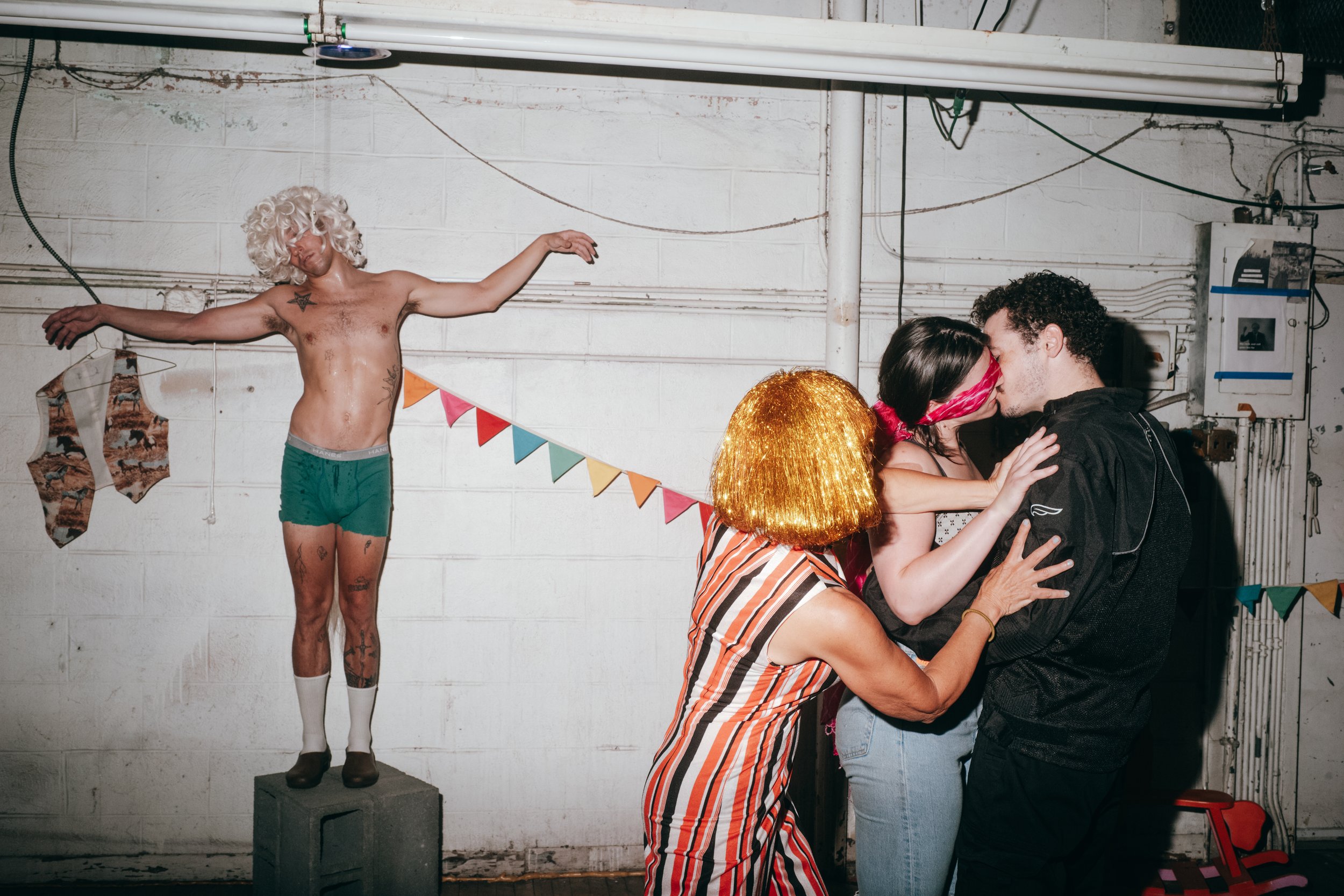
He is a madman, soldier, new father of an out-of-wedlock child (played by an accordion), and cuckold: he does it all. We are stretched horribly thin, forced to do so many things at once, and, like Woyzeck, we’re mostly bad at them but get no slack for barely treading water. We, like him, have to report to authority figures we do not respect but who regardless hold great power over us. Instead of the Captain (Randall Jaynes) who chides him as sinful, or the Doctor (Megan Metrikin) who prods him and collects his piss, we face middle-managers listing our deficiencies to Claude and Clippy. Higher up, we imagine ourselves resisting a government that is either the malicious abetted by the incompetent, or a cabalic structure, but either way we feel like we’re looking at it the wrong way.
The Drum-Major (Taylor Petracek) steals Woyzeck’s lover Marie (Madeline Bernhard), and emasculates him twofold by beating him. The cuck and the bull: sex is no longer spoken of with any romance. Woyzeck never appears devoted as a father or partner, and the Drum-Major is only driven by lust. We crack and stretch each other out. We can’t even exchange names on Feeld. He kills Marie, drags her corpse outside into Ridgewood. Love and military work gave him nothing. Woyzeck extricates himself from society by violence, and for that he receives no reward: there is no cure for him.
The play subverts any attempt at relief. Scenes at the local carnival and party play out like dive bar nights or k-hole club escapes: no catharsis, only an abatement. Adult Film’s production of John Christopher Jones’ translation is urgent and brutal. During a DIY cover of Yeah Yeah Yeahs’ “Heads Will Roll,” Woyzeck stalked through the attendees, grabbing the shirt of a man sitting beside me, close enough for me to smell the reek of layered sweat on him. And then he was gone, through a door and back onto the stage, and that’s how it’ll end for all of us: too scared to keep up with what’s happening, Metrikin’s Doctor cowering on a ladder, Jaynes’ Captain dozing off in the corner, no help before or after it’s over.
Adult Film’s production of Georg Büchner’s Woyzeck opened July 17 and will run through August 15.
Aaron Tomey co-edits North Brooklyn news site Grime Square. His essays have previously appeared in Hobart and Bushwick Burner Phone. He can be found on Twitter @ecstatic_donut.
Third Sister and Theresa Buchheister in Conversation
Last Laugh has 3 hot nights in Brooklyn before embarking on a grand Edinburgh Fringe Festival journey, so catch it while you can at Vino Theater July 27-29! I wanted to interview this team because I am intrigued and delighted by their vibe, their marketing, their collaborators… so I am stoked that they took the time to go back and forth with me.
Theresa Buchheister:
If so, first question is always - tell me about yourselves! Who are you? What’s your vibe? Who is Third Sister?
Third Sister:
Third Sister is a production company founded by sisters Ibby and Kate O’Carroll, specializing in film and theater producing, party planning, and performance art. We gravitate toward surrealism, comedy, costumes, pop stars, twins, Bob Fosse, murder mysteries, and primary colors. The titular “Third Sister” refers to our friends and collaborators who become family to us, including Last Laugh’s director Elena Messinger and playwright Zoe Redlich. We all want to tell funny, interesting, affecting stories about girls being friends, among other things.
TB:
Amazing! Were you always close/always collaborating? Or is there a moment where that came into being?
TS:
We (Ibby and Kate) grew up making music videos on iMovie and hosting costumes-required Oscar parties. When we graduated high school, we met Zoe and Elena and were thrilled to find out that they wanted to join in on the fun.
TB:
What do you find the most exciting about creating and producing theater and events? The most challenging? The most confusing? The most rewarding? The most elusive?
TS:
Exciting: We’re so excited to be a part of Fringe and see what everyone else has been cooking up, meet fellow flyer-ers, and share Last Laugh with the festival!
Challenging: Working on Last Laugh through many timezones - some of us are in LA, some are in NYC, but soon we’ll all be in EDI!
Confusing: Converting dollars to pounds (oops)
Rewarding: Getting to spend time diving into such a wonderful play in the rehearsal process with our two brilliant actors! We’ve had most of the rehearsals in our apartment that Ibby, Kate, and Elena share. It’s a family affair!
Elusive: Going viral on Tiktok
TB:
If someone wanted to work with Third Sister, how would that happen?
TS:
They can DM us at @thirdsisterentertainment on Instagram!
TB:
What kinds of things are you interested in hearing from people or being pitched? For example, how did you meet your collaborators for this project? What drew you to saying yes and creating a world in which you bring this show into reality?
TS:
Our playwright, Zoe, had worked at Fringe and regaled us with stories of her Scottish adventures. We all had FOMO so she wrote this play so we could go! We're interested in making theater and film that is funny, strange, vivid, and joyful. We love the work of Annie Baker, Lucas Hnath, Liza Birkenmeier, Julio Torres, Todd Haynes, Cheryl Dunye. If you also do, reach out!!
TB:
Speaking of artists you love, for each of you, what’s the first thing you saw or listened to or read that cracked open your brain or expanded your universe?
TS:
Zoe: A Gentleman’s Guide to Love and Murder when I was 11
Kate: A high school production of Grease the Musical I saw when I was 6. The teenagers who did the high school musicals were the biggest celebrities in the world to me when I was in elementary school, and it was the first time I experienced real life theater magic. I grew up and did the high school musicals, too, but nothing beats watching those first few shows!
Elena: I can’t say exactly why, but when I was 11, the 1995 BBC mini-series of Pride and Prejudice totally captured my imagination. I started watching over my dad’s shoulder one night, and basically demanded that we watch all six hours in one sitting. I now credit the adaptation as starting a life-long love of the romantic comedy. It was witty, heart-wrenching, and built with a clear tenderness for its characters. That Pride and Prejudice helped define my artistic sensibility before I even knew what those words meant.
Ibby: Lorde’s Melodrama tour choreographed by Andrew Winghart. Seeing Lorde’s Melodrama tour showed me the true magic of a live performance — from the communal catharsis to the stage presence to the emotional reverence. The strong vision of the music, the set design, and the choreography all meshed and told a story, and only further inspired my love of creative collaboration!
TB:
Very cool… I loved Gentleman’s Guide. Jefferson Mays is a dear friend! I feel like these inspirations are starting to paint a very fun picture for me of Third Sister… I guess the last question I will leave you with is - Why should people come see your show?
TS:
Every year, no matter what is going on in the world, thousands of people throng to the Edinburgh Fringe to enjoy live performance. Last Laugh aims to answer why live performance remains so central to human joy and connection. Our characters are Fringe performers themselves, and we suspect our audience of artists, art lovers, comedians, theatre nerds, and clowns will feel seen by Alice and Bee's desperate need to create art at the end of the world. We also hope that this play fits in along with other new work at the Fringe that blurs the boundary of form. Part improv show, part scripted play, Last Laugh aims to bring spontaneity and honesty to theater in a way that feels particularly welcome at the Edinburgh Fringe.
TB:
Thanks, all! I cannot wait for the show!
Show Response: I Wanttt A Unicorn Frappe!!!
by Allyson Dwyer
After seeing I Wantttt A Unicorn Frappe!!! I asked Catherine Weingarten, its playwright, what does a unicorn frappe actually taste like? And she said: I don’t know, that’s why I wrote the play.
Much like her desire to try the titular drink, the play is a mischievous tragedy of desire wrapped inside a warped, kaleidoscope comedy. And it moves fast. Every line is unpredictable and frenetic in its interpretation of reality. The language of modern desire — fed to us through influencer and marketing culture — has merged with the voices of these characters. They don’t really speak to each other, they perform for some third party. An interloper watching from anywhere — perhaps a phone? Perhaps an audience?
You see, Jenny is getting married to a really hot guy. Someone she can hang all her hopes and dreams on, including a wedding that will tell the world about her, and about their idyllic love. A tale as old as America 250, this is the thing all little girls are told they want. The friction between truthful reality and manufactured reality can be a scary place, made all the more scary with the extra lens of digitality built on top of that: that of the audience, the gaze of the scroller. This production captures what it must feel like when three temperatures of reality collide. Almost like a sugar rush. Almost like a Unicorn Frappe.
There is beautiful levity given to these complicated topics and language with Alex Tobey’s cheeky, textured production. All the design elements of this show swirl together, pink and blue with globs of sparkly whipped cream, into a plasticine venti cup with stunning, hand-crafted care and love by a team of extremely talented designers. From scenic design that morphs and speaks to the audience, to gentle disco ball infused lighting, to ornate costume and prop design that looks like dreams of candy, the play world is a stunning tableau onto which the characters and language of the piece flourish.
There are five characters — Jenny, her fiance, her best friend, her mom, and her wedding planner — and each grafts onto Weingarten’s language with fluid immediacy. The actors perform zany, self-absorbed lines with the intensity of a thousand burning suns. This show starts at a full 100 and ramps up to 500 miles per hour by its end. There is an emotional power to feeling like you’re on a runaway train for a full 90 minutes with actors who are not only game but unafraid and excited, bending and swerving with the choppy rush of the dialogue without a pause.
And then the dark moments begin to land, especially toward the end, and you find yourself breathing differently. Suddenly the fun we’ve been having isn’t actually funny. These characters are far away from a place where they can ever fulfill their desires. They are distant, we are distant. You begin to remember what it feels like when you’ve had too much sugar, too much caffeine. Like Jenny, you’re unravelling. But you also cannot get enough. You feel pulled from every corner. Is this what it feels like now, to live in multiple manufactured realities? Can you put down the drink, the phone, long enough to remember?
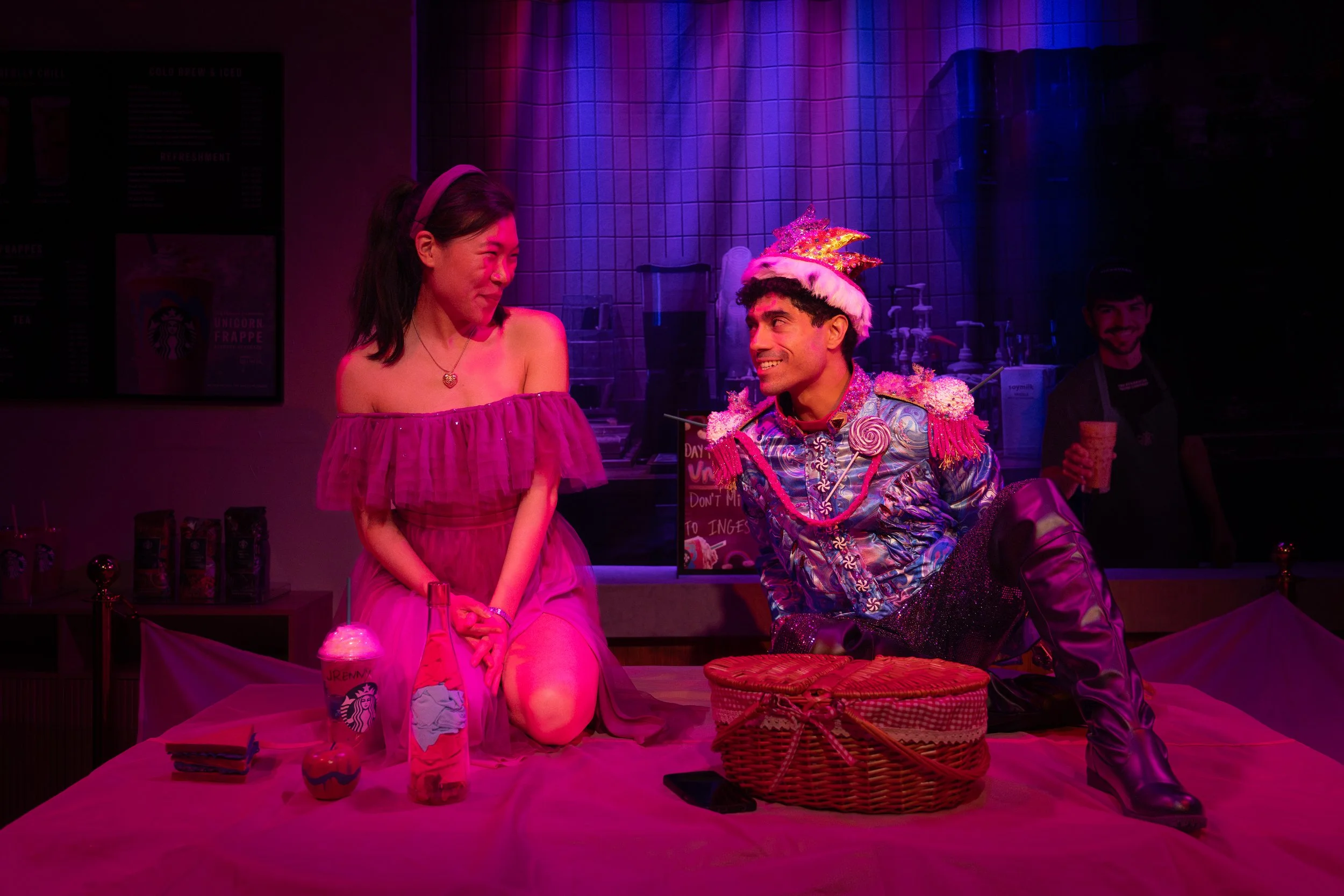
photo: HanJie Chow
I Wanttt A Unicorn Frappe!!! runs until June 21st at The Tank. Tickets and more info here.
Show Response: SUB: An Underwater Workplace Comedy
by Theresa Buchheister and Reuven Glezer
Staff Pickers Reuven Glezer and Theresa Buchheister attended SUB by Alex Aguirre during its run at ERF June 4-7, 2026, and decided to do a Soapbox Response together!
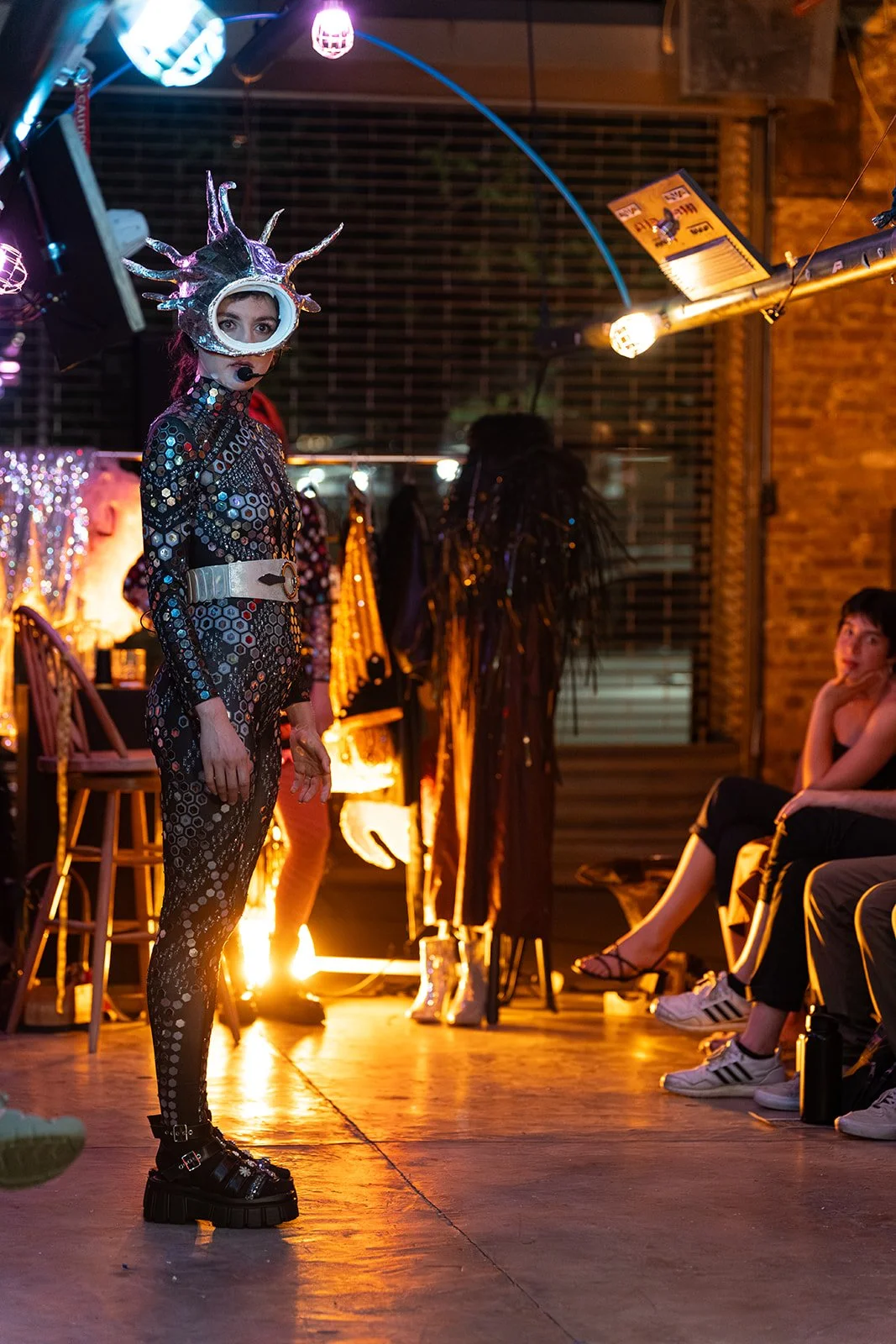
TB:
Hi Reuven! We saw a play together last night! I will kick off our conversation about it, which is how I typically prefer to respond to shows (yacking with others)... One of the things I really love about Alex Aguirre’s vibe as a playwright is that he creates a very interesting container in which the action occurs. World-building, I guess you could call it. This play takes place in the future in a submarine, stationed above San Francisco, which is now deep under water. As a fearful fan of submarine movies, I was super intrigued by this idea. I am sooooo scared of the ocean and also admire the power and mystery it holds. The idea of being in a metal tube in the ocean is one of the scariest things I can imagine. So, that is what I entered into this show feeling. How about you?
RG:
It kinda reminded me of Down Periscope a 1996 infamous flop about submarine war games that you wanna watch three vodka stingers deep - which is to say, as a former aquaphobe, I love being told we’re lost in the deep vast of the sea and then hijinks occur because you can’t get out. No escape! No portholes to plop out from! There’s a lot of tension built into “we’re trapped and hate each other” that Alex takes to the silliest of extremes. I once went down into a submarine (the USS Growler docked off Pier 86) and thought, wow no one gets out of here sane.
TB:
As a concept, I am really into that. More satires on submarines! Speaking of satire, I really felt like the characters who entered and exited the most were super tapped into the satire - Arnold, Cloë and Barnaby. They were Ludlum-esque, I kept thinking. I almost wanted more wild interjections and less world-building through monologuing. But that is personal preference, of course. Speaking of archetypes, I thought the costuming was a treat for all of these characters. I love to see that specificity in a cool, DIY production.
RG:
Very Ludlam. Everyone's existence is on the borderlands of extremity! The future is made up of people who have bits (beep beep I’ve just been informed not to call it “a bit”) which recalls of a kind of weirdo science fiction populated by writers like Mœbius - the future isn’t just bad, it’s incredibly strange and that strangeness is dangerous. And our in-house weirdos were bringing their A-game, I told Chloe Claudel after (who plays Cloë) that I had never seen her scream in a show before and that was such a thrill. And yes, Olivia Vaughn Hern’s costumes were top-tier. The design was so simple but effective, which is always a plus in my book. I know it’s not a Goat Exchange show, but Mitchell (Polonsky) helming gave it a similar vibe to their material that tends to oscillate between the maximal and the minimal in a way that served Alex’s play quite nicely.
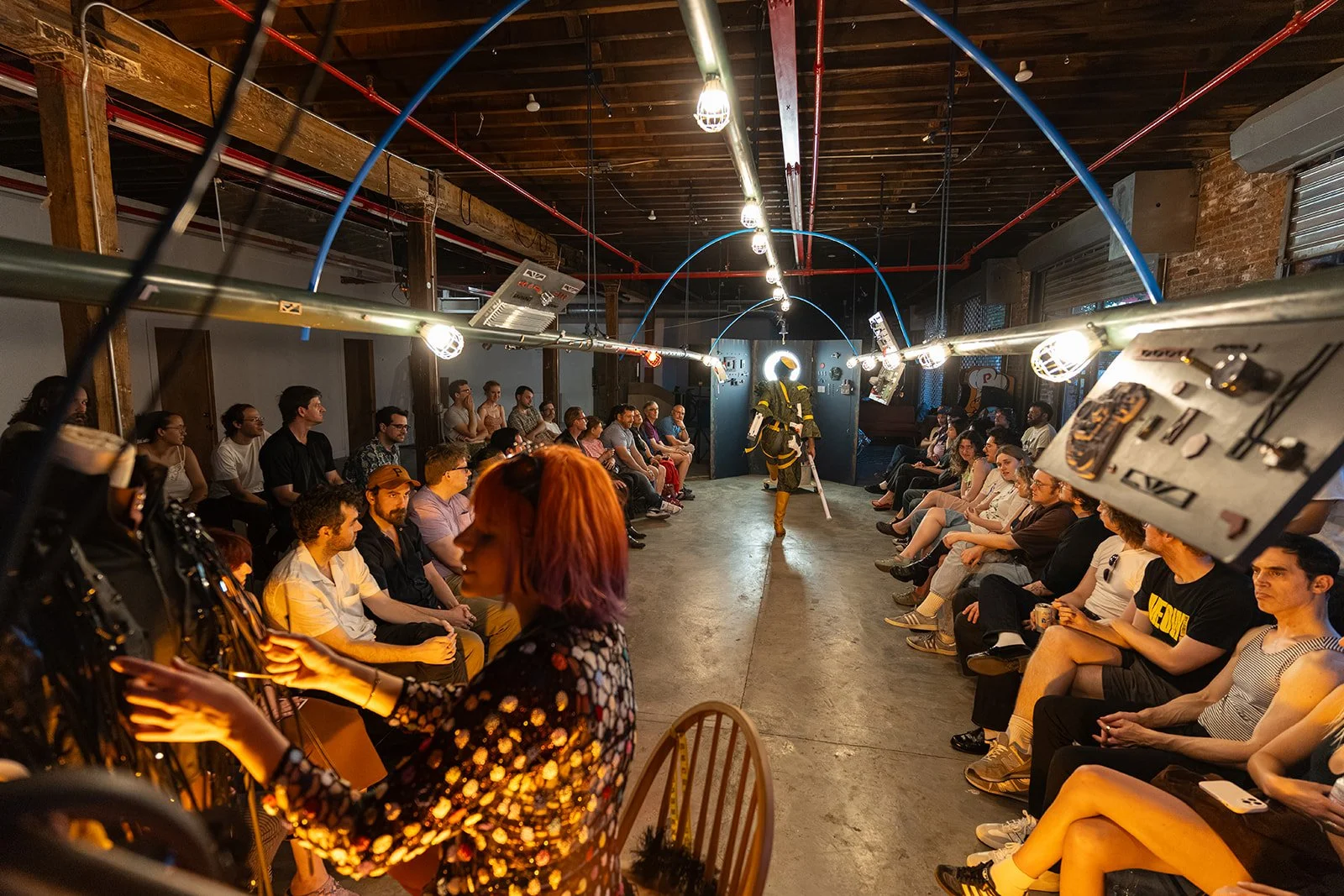
TB:
Totally. Collaboration is so key on a project like this, and I am really glad that this team came together and also found this very cool space. It made me feel like I had time traveled back to 2006, as an audience member seeing a show, even though the play takes place in 2085. Very of the time when East Williamsburg was called Bushwick and all the warehouses had wild stuff happening in them. But back to collaboration! I love seeing how artists blend and layer their vibes and aesthetics. Sometimes it creates friction or does not fully make sense! But it is always interesting. And it always gets my wheels turning. A few thoughts I had throughout: Would it compromise the power of Cloë to have all of the characters amplified in some way. Cloë had a Madonna mic, used to great, powerful effect. But I wanted it to be harder for the characters to communicate in the submarine, so that they would need devices to assist them… walkie talkies, tin cans on strings, PA systems, a mic clipped to the can that Peter (Nick Walther) was in the entire time (what commitment!!!). That kind of thing. I also wondered if they could be inside of a plexi glass submarine. That would feel even more claustrophobic and tense, which would be so wonderfully punctured by the satire. Also, periscopes. I want periscopes! Creating a space in which my mind can expand and contract and fold over on itself is very special. SUB created that space.
RG:
Let it be known Theresa’s wish list for an ideal show includes periscopes. But! I agree that there was, I felt, a physical claustrophobic element missing that would have completed the total immersion of being in a sweaty, metal sub in the late 21st century. The open catwalk with a metal frame was delightful, don’t get me wrong, but there was some kind of wonkier, more pressure-driven element that felt like it was being hinted at in terms of the dramaturgy. There’s a really specific kind of ask for an audience to struggle with experiencing the show (I am pro a little work for an audience) that reaps its own rewards. I kind of wondered what it would be like if we just experienced the show like it was a metal door and we only saw what happened via portholes. There’s something about subtraction that reignites an audience’s imagination and adds a delicious layer of tension in the theatrical experience.
TB:
YES! I want to watch through a peephole or porthole or periscope hole! Two friends told me to go to the Duchamp exhibit at MoMa (so I will) and there is a piece he never told anyone about that was to be viewed through a peephole. (I guess the actual piece lives in Philly). We (the audience) had to do some work to experience SUB, with the runway set up. The tennis heads, going back and forth. But I wanted to have it be harder! Limited! You cannot possibly see or hear it all! But, like you said, there were fantastic hints at this kind of fully immersive submersive potential in this current iteration, so I hope they keep going with it! The play takes place 59 years from now. How did you relate to that futuristic element? Did it feel like sci-fi to you? I think I thought it would, but it sort of forced me to think about the difference between sci-fi and apocalyptic.
RG:
It did! Which, from my understanding, is Alex’s usually chosen mode? Felt a little Star Wars-esque with the mentioning of ships docking and strange militias inspired by…music genres? The way Alex worldbuilds gave this a satirical veneer over the whole business, and what I really think a good science-fiction does isn’t so much as imagine a future as capture a future, by which I mean it’s less about sitting down and thinking what will the world look like 59 years from now but more about thinking what echoes of the now will still be recognizable through the fragments. The first cinematic Dune installment featured bagpipes when the Herald of the Change initiates the events of the story, which Villeneuve explained as kind of a callback to a familiar humanity (one of the smarter moves in what I found to be a generally weak adaptation). But that’s the thing, and I think Alex gets at this, the future will be familiar in terrible ways. No more cocaine or California, but there will be definitely sick rich fucks in who essentially live 24/7 in kayfabe. I think critically the lines between the dystopic and science-fictional are thin, and SUB freely teases those lines and for all the cum-powered DNA bullets, it’s still class warfare 20,000 leagues below.
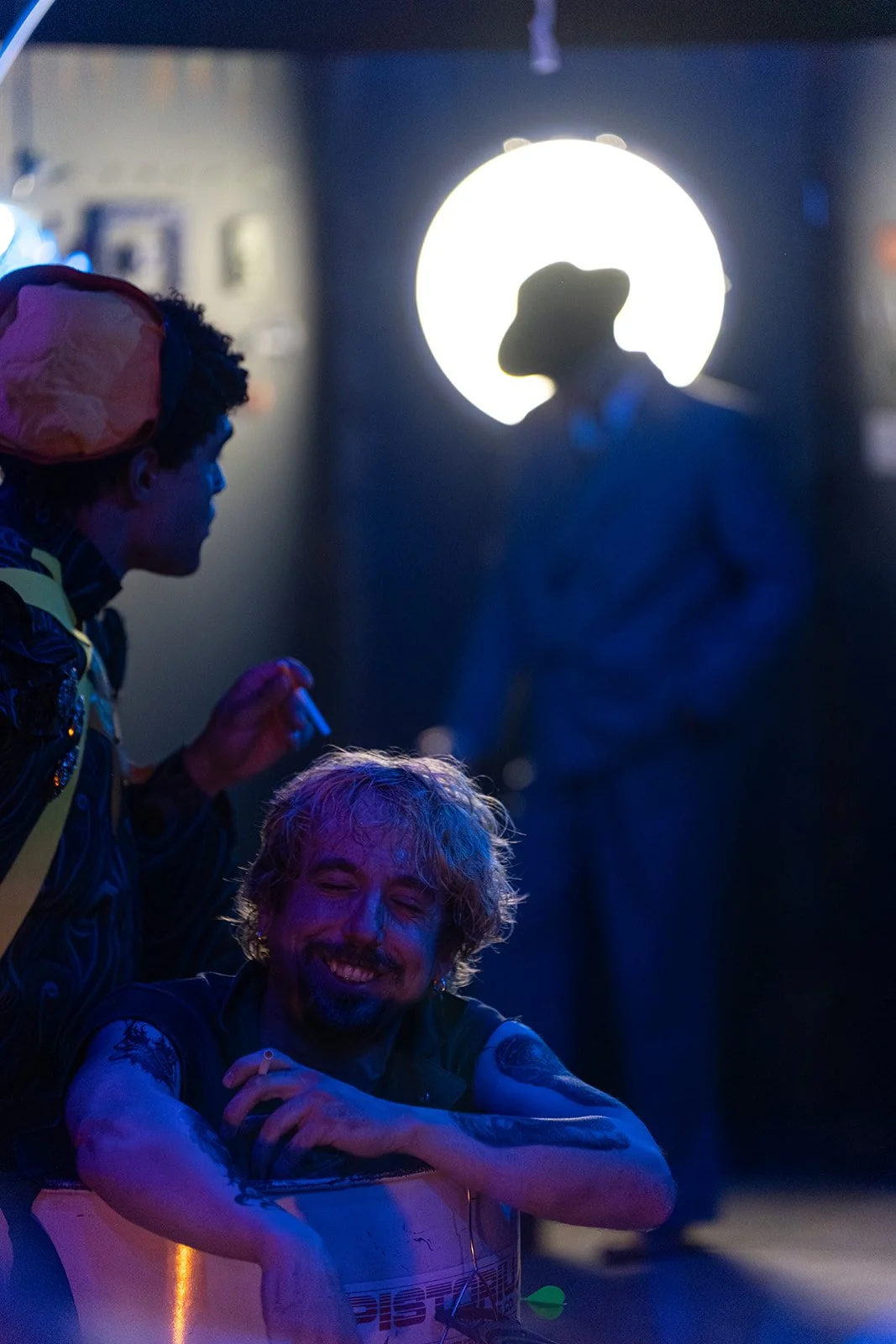
TB:
Dang, Reuven. This is excellent. Exactly why I like conversation post show more than sitting down solo to write a review, personally. Linking the past and present into a fully realized future world is sending me into Music Town. I did enjoy the selections in SUB, but now I am wondering… what music was made and distributed between 2026 and 2085? Question for the playwright! I could also imagine that they are stuck with their CD collection from the 1990s, because everything else was destroyed. Music and culture, as well as cum, are identity-based weapons in this world. But not of mass destruction.
RG:
T, I’d argue cum is, in fact, a weapon of mass destruction. But to loop back around to a previous point of yours, questions like “how did they end up stuck with a record collection from the 1990s/2000s?” is one of those punctures in the hull of the world I wanted to see / address. Spoilers: when Alex (who plays an unfortunately terminal boytoy) gets his face melted to a pop punk track (in this case the 2007 hit Thnks fr the Mmrs by Fall Out Boy) I did wonder about the dramaturgy of the song choice! This is a world where the crusty ex-punks and nepo baby fashion designers are, in some way, still in tune with Fall Out Boy and Slipknot?? It’s a big choice! Here we are, in the Atlantis of the anthropocene, and somehow we’ve still got nu metal blaring here. I think we should tell Slipknot.
TB:
It is a big choice, indeed. And you know, I think the last thing I will say is - Here’s to big choices! More of that, please! I tip my hat to Alex Aguirre and Mitchell Polonsky and the entire team for going big! And I cannot wait to SUB to ride again!
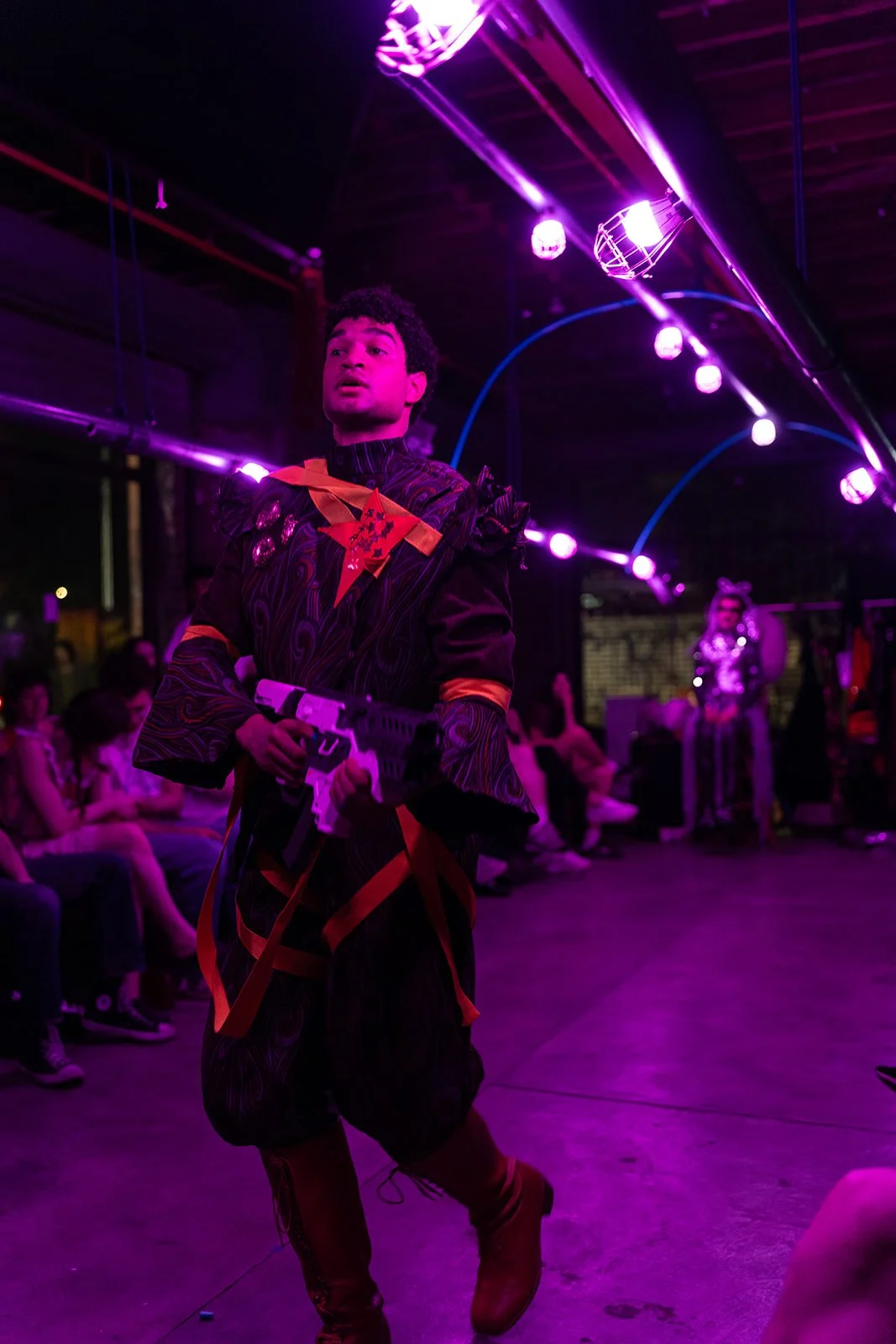
all photos: Jose Miranda
Show Response (pt. 2): 21st Century Princess
by Joey Merlo
This show response is the second of two; the first featured Joey’s thoughts before seeing the current production. You can read the first part here.

all photos: Angela of York / Andrew Hardigg, Misha Brooks, Jess Barbagallo, Zach Donovan, Carolyn Kettig, La Daniella, Pauli Pontrelli
Jordan Baum’s 21st Century Princess was like I remembered it—but also not. The seemingly quieter production at The Collapsable Hole had me leaning in to watch a mesmerizing cast of thirteen actors perform—what seemed like a hundred characters—in a play that was simultaneously a miniature and multiverse. At times I felt like I was on a lazy river—although there was nothing lazy about this meticulously crafted and precisely executed hyper-real fantasia. I floated through scene after scene—winding this way and that, getting stuck in little coves and under waterfalls. Currents carried me along but never rocked the boat too much—and that was part of its strange, unfolding charm. I was lulled by the play and, in a way, it made me feel like a child again, in the sense that I was filled with joy, wonder and awe.
At the same time the play is like being lost at the amusement park—maybe after dark. You can kind of choose your own adventure. There are no adults to pull you this way or that—just Jordan’s invisible yet persuasively gentle directorial hand. I overheard some audience member say that the show is like the best kind of people-watching and I thought that was pretty accurate—I found myself eavesdropping on intimate conversations between characters, as if I were a fly on a wall—or a magic cricket. Each scene took me on a different kaleidoscopic ride through the hearts, minds, social lives, trials, and tribulations of the equal-parts mundane and whimsical Disney employees and their patrons.
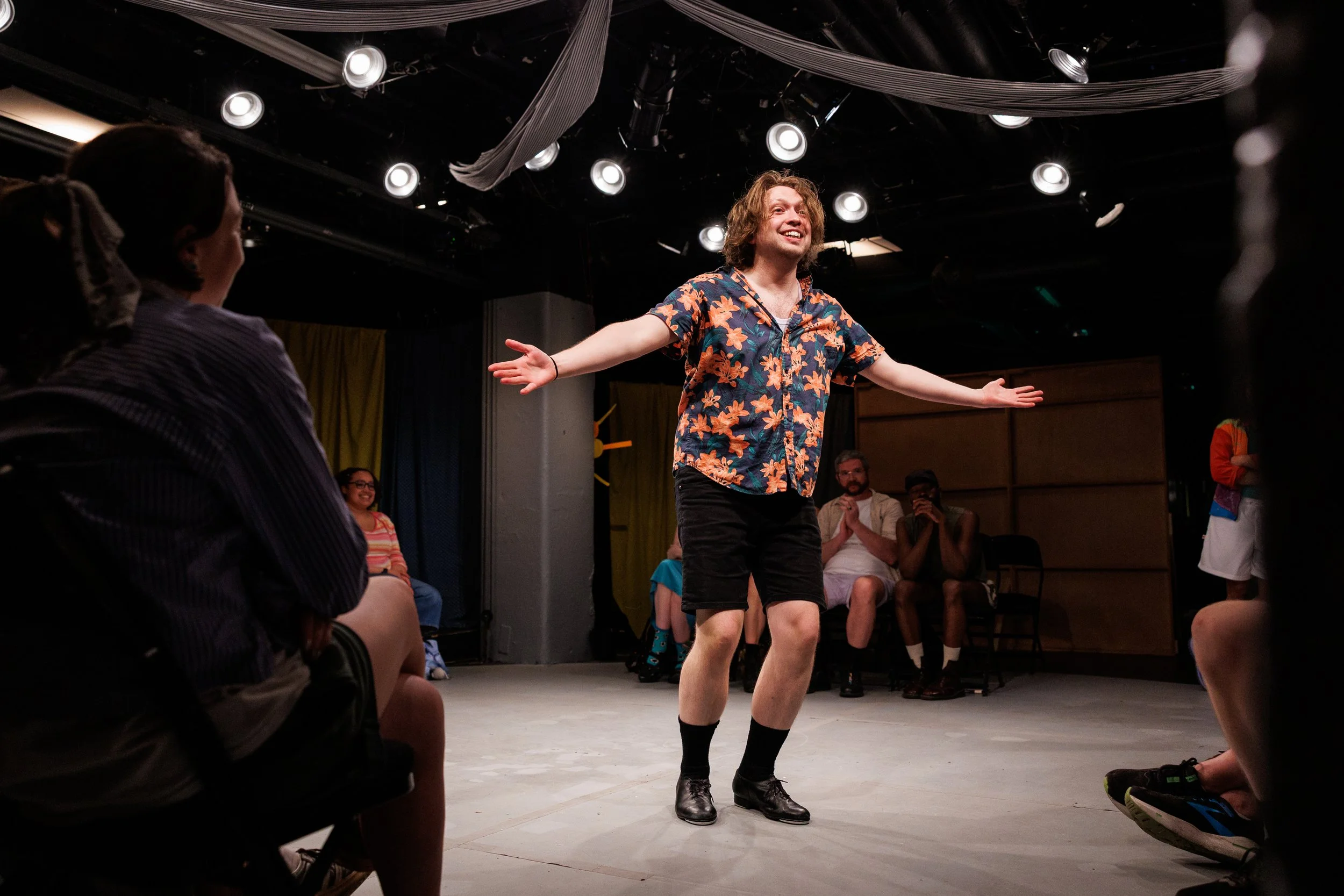
Zach Donovan
“Disney is like the Mecca of Capitalism,” my friend Marissa Joyce Stamps commented to me after the show—and the play contained this sentiment as well: the subtle sense of the class disparities that perpetuate any capitalist endeavor—the economic realities that make Disney the happiest place on Earth for some and, for others, a way to make ends meet. The play seemed to say that Disney is not only a paycheck (or a price tag) but a way of connecting—a way of life. Disney means community on many levels—there are the tourists who exist in a kind of pretend community simply because they are there at the same time—waiting on lines and eating the same exorbitant Mickey Mouse-shaped popsicles. These are the folks who were all at the airport together—united by their common love for a giant rodent and their ability to pay big bucks for quality time with their families.
But the play also shows us another community—the community formed by the workers who make Disney World go round—everyone from the person who cleans the toilets to the guy who dresses up as Prince Charming. This is the community we get to spend most of our time with at Jordan’s Disney Universe—and thank God for that.

Andrew Hardigg, Misha Brooks, Jess Barbagallo, Zach Donovan, Keyana Hemphill, Carolyn Kettig
The play takes a third shape—a kind of carousel. I saw this most clearly in a labor meeting scene of Disney employee introductions that went round and round and round and round—each actor playing character after character after character. The meeting is being held because the powers that be suspect that some employees might be living out of their cars—not in Mickey’s parking lot, they don’t. The play gives us a tender peek at the romances and tragedies these employees face. We get to know them as we believe they know each other and, as we do, the park becomes more human than fantasy.
Baum’s cast is fine-tuned and they operate as a kind of unified organism that makes their chemistry feel molecular. There is an approach to character that is the opposite of heavy-handed—it’s relaxed, chill—yet theatrical. From Jess Barbagallo’s fantastically embodied performance to Zach Donovan’s song-and-dance number, this cast is full of miraculously physical actors with impeccable comedic timing. These are actors who know how to use their entire bodies to convey character in ways that never overshadow anyone else—time plays by their metronome as they move together to build this big small world. I stayed for a while after the show to bask in its communal magic.
21st Century Princess closes May 31.
Show Response (pt. 1): 21st Century Princess
by Joey Merlo
Disney has billed itself as “The Happiest Place On Earth” — I wonder if that phrase is trademarked*. Mickey Mouse is and when his copyright expired I think that Disney fought to get it extended—and they won. Because Disney always wins. Because Disney has as much power as a blue genie played by Robin Williams and then some.
It holds a special place in your imagination, doesn't it? What was/is your favorite Disney movie? Who is your favorite Disney Princess or Prince or Villain? Have you been to Disney Land? Have you been to Disney World? Have you Been to the one in Paris and wasn’t there one in China that maybe closed? Disney is very American. Disney is USA. People who have lots of flags on their property love Disney and so do gay people.
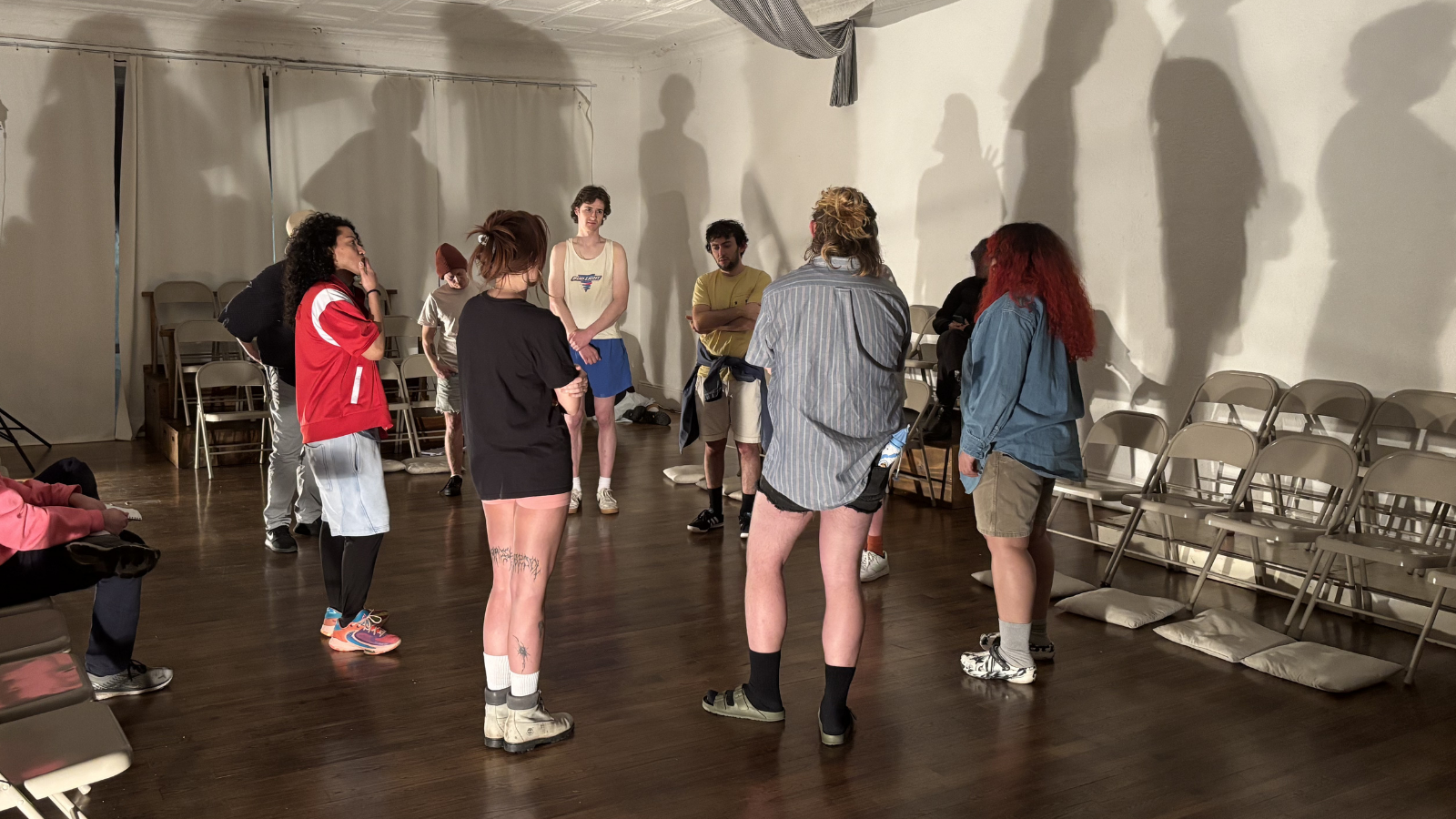
Images are rehearsal photos from The Barn at Lee, 2025. Rosemary Quinn, La Daniella, Zach Donovan, Andrew Hardigg, Misha Brooks, Jess Barbagallo, Eliana Mullins, Pauli Pontrelli
As I got older I realized that a lot of the Disney villains are queer coded—I wonder if this is why Ursula and Cruella and Maleficent were my favs. I had a cartoon crush on Aladdin with his little midriff. I played Puma in a Disney concert when I was ten during theater camp. Hakuna matata.
I remember looking up at a statue of Walt Disney holding Micky’s hand when I was around the same age—behind them towered the Magic Castle. Is that what it’s called? The Magic Castle? Remember that tune that would play at the beginning of all the movies? A shooting star would spread across the blue Magic Castle image and that same old tune would play?
My Dad told me that Walt Disney’s severed head was frozen at the top of that castle and I believed him because science is magic and magic is what Disney is all about. I believed because I wanted to believe in something bigger than myself. I wanted to believe that a visionary like Disney had the power not only to create but to extend his life into the future—that he alone had access to cryogenic technology us mer mortals could only dream of. Disney was a Sagittarius—and some say, a nazi.
But I digress.
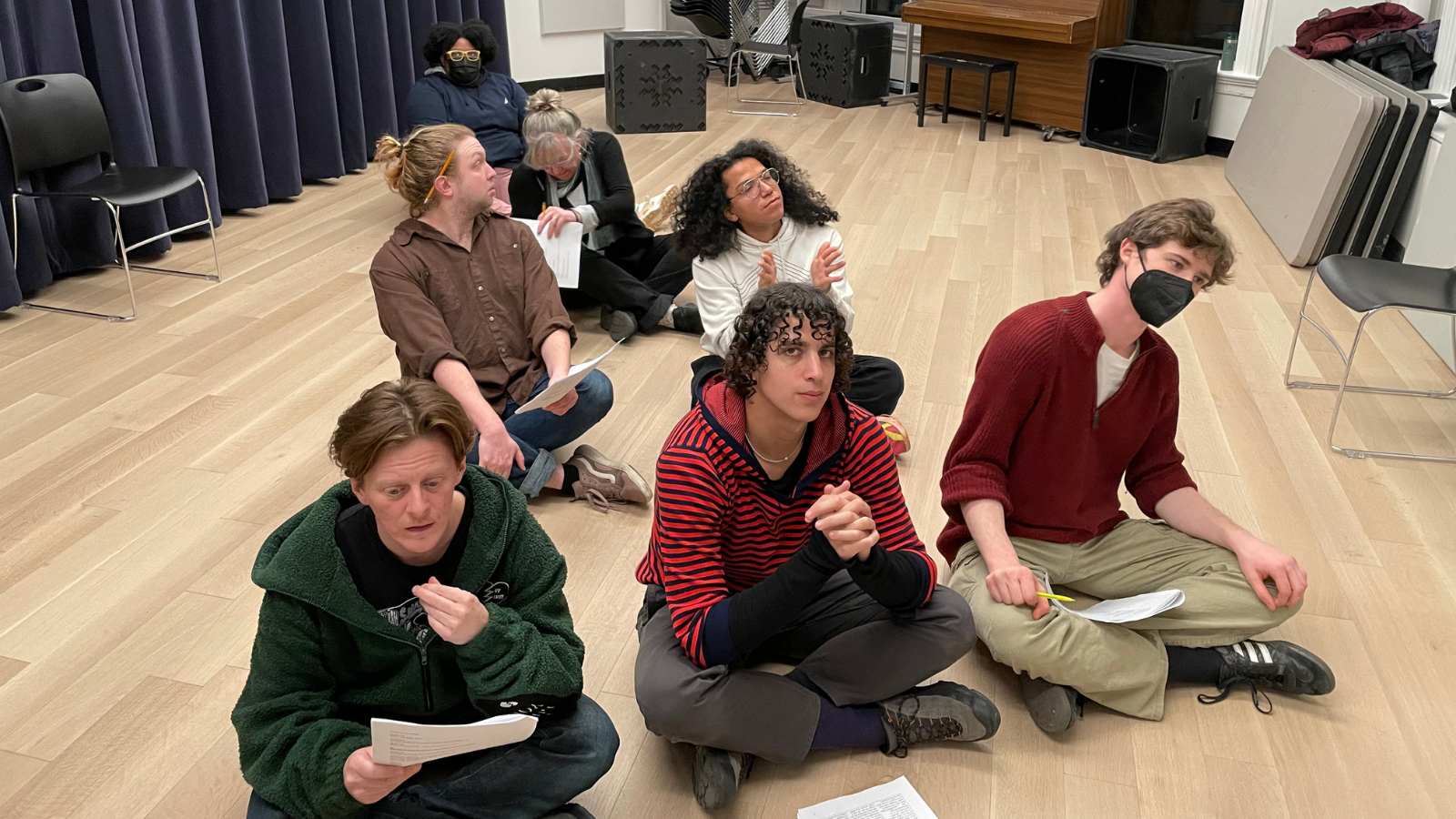
Keyana Hemphill, Rosemary Quinn, Zach Donovan, Pauli Pontrelli, Jess Barbagallo, Sebas Alarcon, Andrew Hardigg
I’m supposed to be writing about Jordan Baum’s exquisite new play 21st Century Princess opening at The Collapsable Hole in NYC on May 20th, 2026. I saw this play in 2024 and I’m excited to see it again — BTW this will be a two part Staff’s Pick Special — with the second part coming your way in early June…
So what do I remember of Jordan’s sprawling, funny, heartfelt play and why is it my Staff Pick?
The first thing I remember is the smell of waffles — mmmm — Micky Mouse shaped waffles. I remember these strange but whimsical and elegant hanging shapes (made by Amanda Horowitz) that hung around the space and did, in fact, make me think of It’s A Small World (has anyone else been stuck on that ride?).
Andrew Hardigg
The set was a big open space that made me feel giddy with anticipation. There were no bells or whistles or magic carpets but who cares! The real spectacle happened in language that was like Tinker Bell’s Pixie Dust and with the supercalifragilisticexpialidocious talents of a truly herculean cast that includes Misha Brooks (who was just uncanny in Cherry Lanes production of You Got Older), Jess Barbagallo and Paul Pontrelli (two of my favorite actors who you may have seen together in The Trees at Playwrights Horizons and who always bring equal parts heart and charm to whatever they do), Rosemary Quinn who left me more spellbound than a fairy godmother turning mice into horses.
Oh! And there’s Andrew Harding too who last stole my heart and made me lol at Nurit Chin’s, Godbird at The Brick and who I somehow remember as both Prince Charming and a lost child with high socks and a tiny backpack? That can’t be right. Anyway!
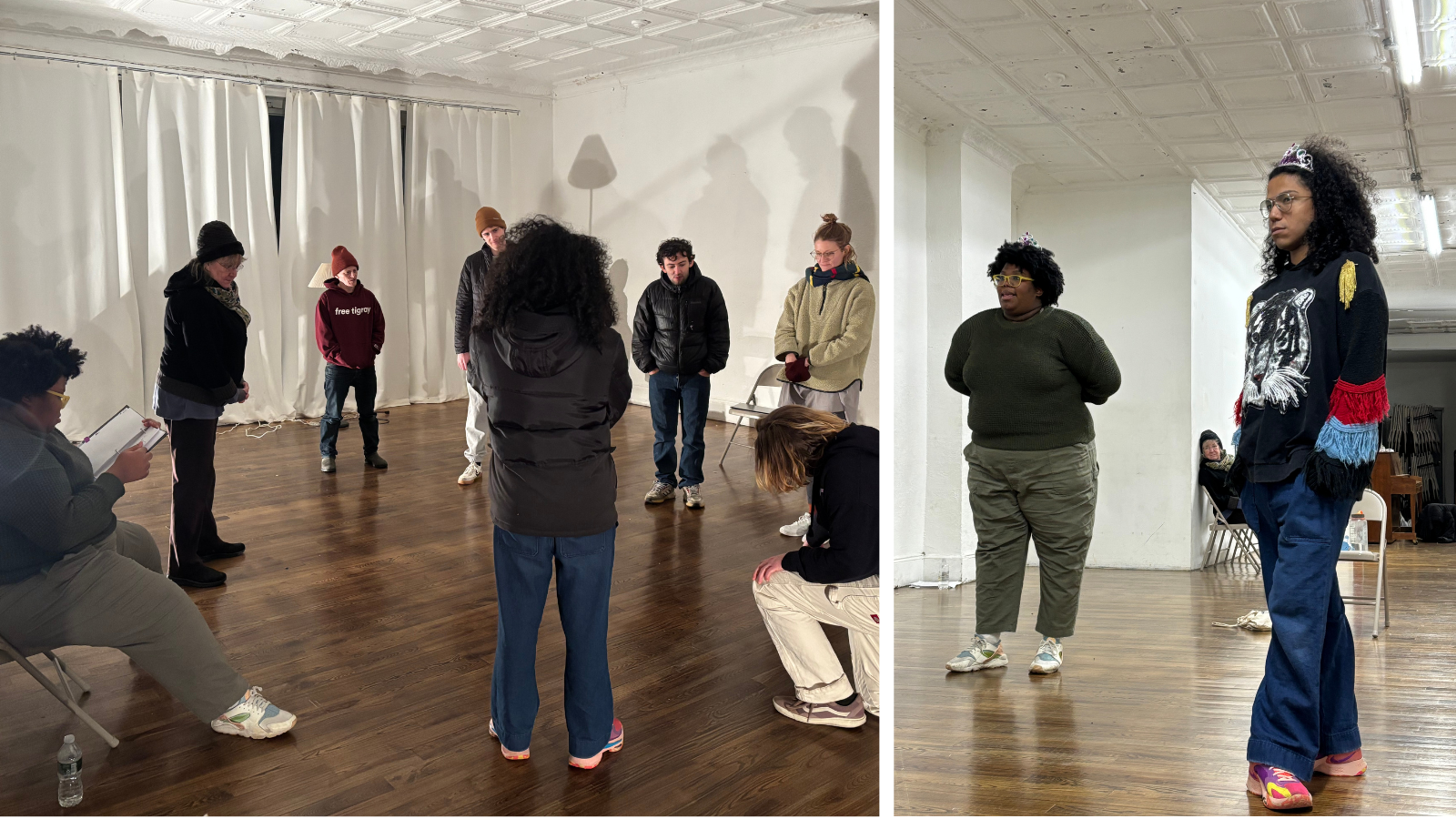
left: Rosemary Quinn, Keyana Hemphill, Emily Davis, Zach Donovan, Andrew Hardigg, Misha Brooks, Jess Barbagallo, Pauli Pontrelli. right: Pauli Pontrelli and Keyana Hemphill.
The play was truly a wandering, mesmerizing, dazzling dream of a wish my heart made — with gadgets and gizmos a plenty and objects that come to life. There’s love. There’s romance. There’s enchantment — there’s humor and heartbreak and cigarette breaks in the back of a never-ending Goofy parkingklot. There are Cast Members stuffed into small cars and an old lady who kind of gets seduced?
My Disney-colonized-memory may be failing me but like the best Disney rides, Jordan’s show is worth the wait for another go-around.
21st Century Princess will run May 21 - 30, 2026 at The Collapsable Hole.
This show response is the first of two; the second will feature Joey’s thoughts after seeing the work.
Show Response: Single Family Home
by ad canter
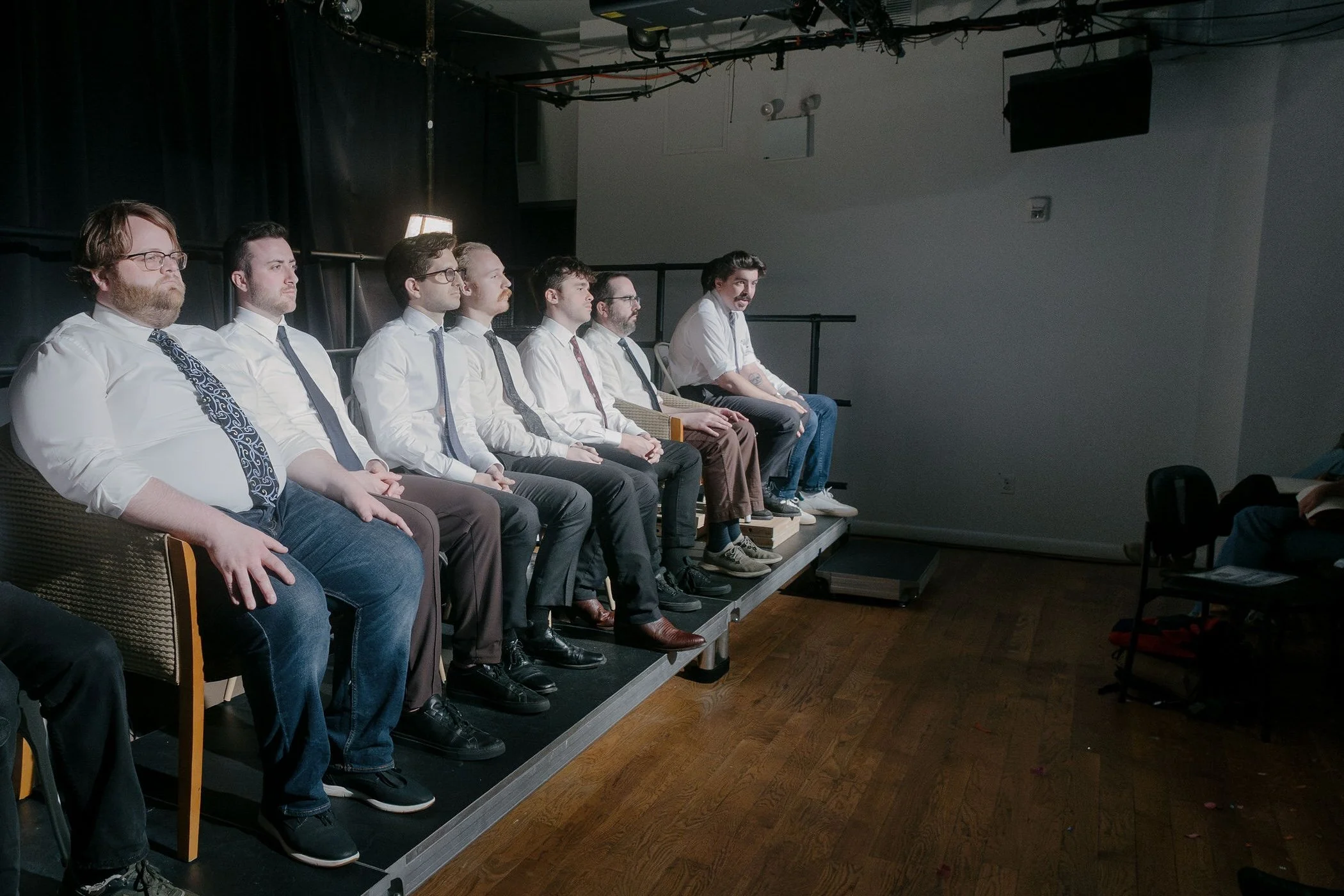
Single Family Home by William Sydney
I think Single Family Home is about the incapacity to communicate, how hard it is to reach anyone. I think Single Family Home is about the imprudence of constructing meaning in a self-involved, benighted culture—so no one gives a damn, and even if they did what good would it do—and that the labor of it (trying anything) is just entirely exhausting, and can make a man mad. I think Single Family Home is a play about being a boy then being a young man and coming to terms with a debased inheritance, which sounds a lot like being an American, so I suppose I think the play is about becoming a man in America, and trying to look at that in the mirror, and not meeting its eye.
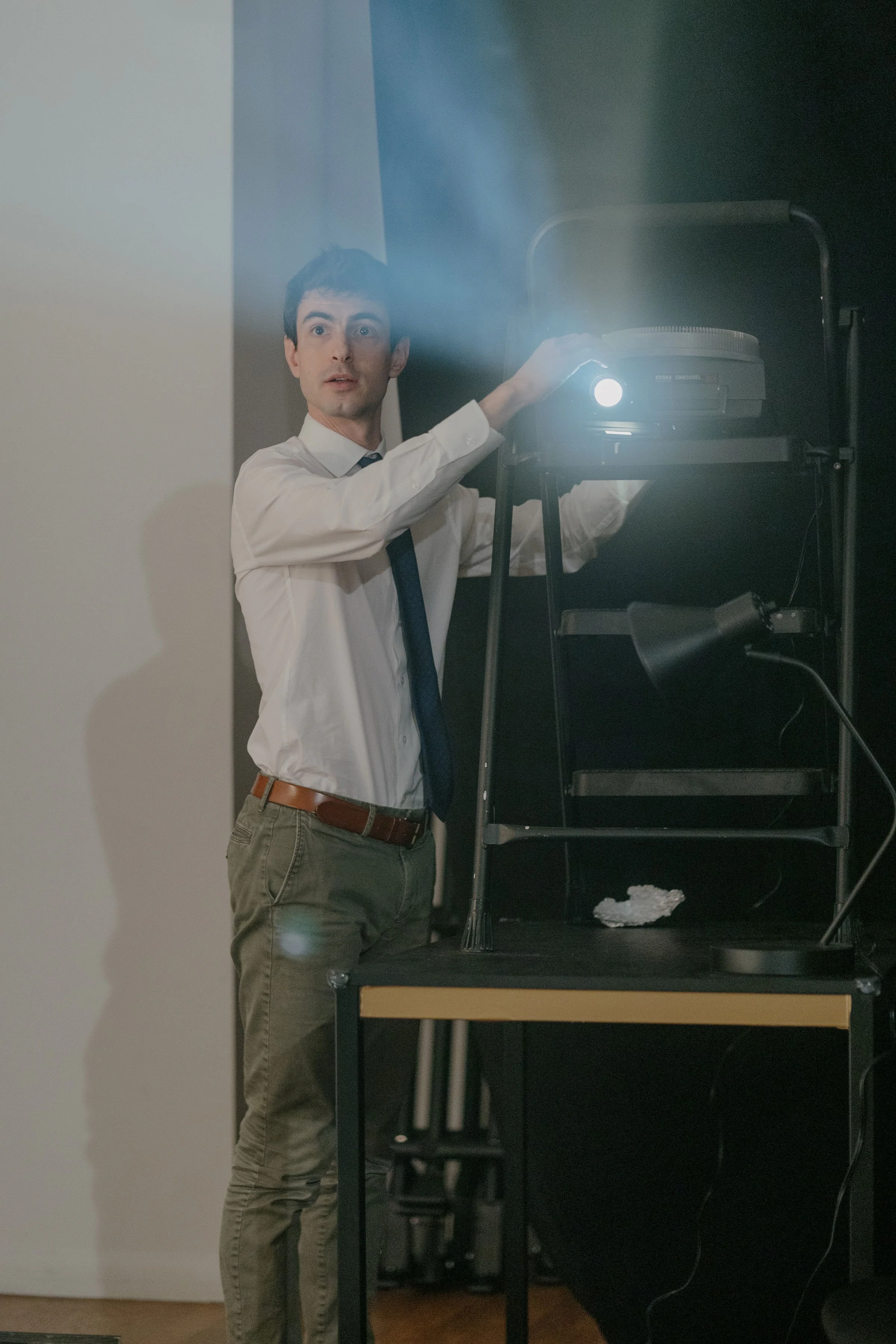
I do not equivocate as some sort of false modesty but because I attended the show a month ago and do not remember meaningful details with alacrity or precision, which is no credit to me. Good artworks stay with you but must be met halfway; that’s the way with everything these days, it seems. Just as the character William Sydney is somewhat of the playwright William Sydney who is too somewhat of the person William Sydney we are in a slanted relation to our own lives and experiences: Partial, perhaps impartial, embarrassed, endlessly adjusting, constantly catching up, designed and unwittingly constructed. One of the two great strengths of Single Family Home is how the play toyed with the upsetting contradiction of self through liveness—the diegetic and the non-diegetic clarified at one moment and then again obscured, which is the theater—and how that discontinuity spells out the formal mechanism of our relationship to ourselves.
The other great strength is another formal one. The play is perfectly Greek: Trump is Zeus the father; the play is performed in recitation; there’s a Chorus above (err, behind; wait now before) the action; everyone is wearing a mask. The Chorus is just excellent, and the high point of the evening is when their many voices become one wall of sound. Reimagined, the Chorus does not exactly comment on the dramatic action but rather further contextualize this central character/person, William Sydney (the name is probably stated over one hundred times), who is the synecdoche for our shared experience. He is stated over and over because he is singular and he is one of us; it’s an efficient and successful marshaling of a dramatic and narrative symbol, and is the key to the show. Through him we face the void alone, but given that we are working through him we are in fact not alone we face the void together. So I think the play proposes how to be a man in benighted, debased America: Go to theater, experience art with others, face the void together.
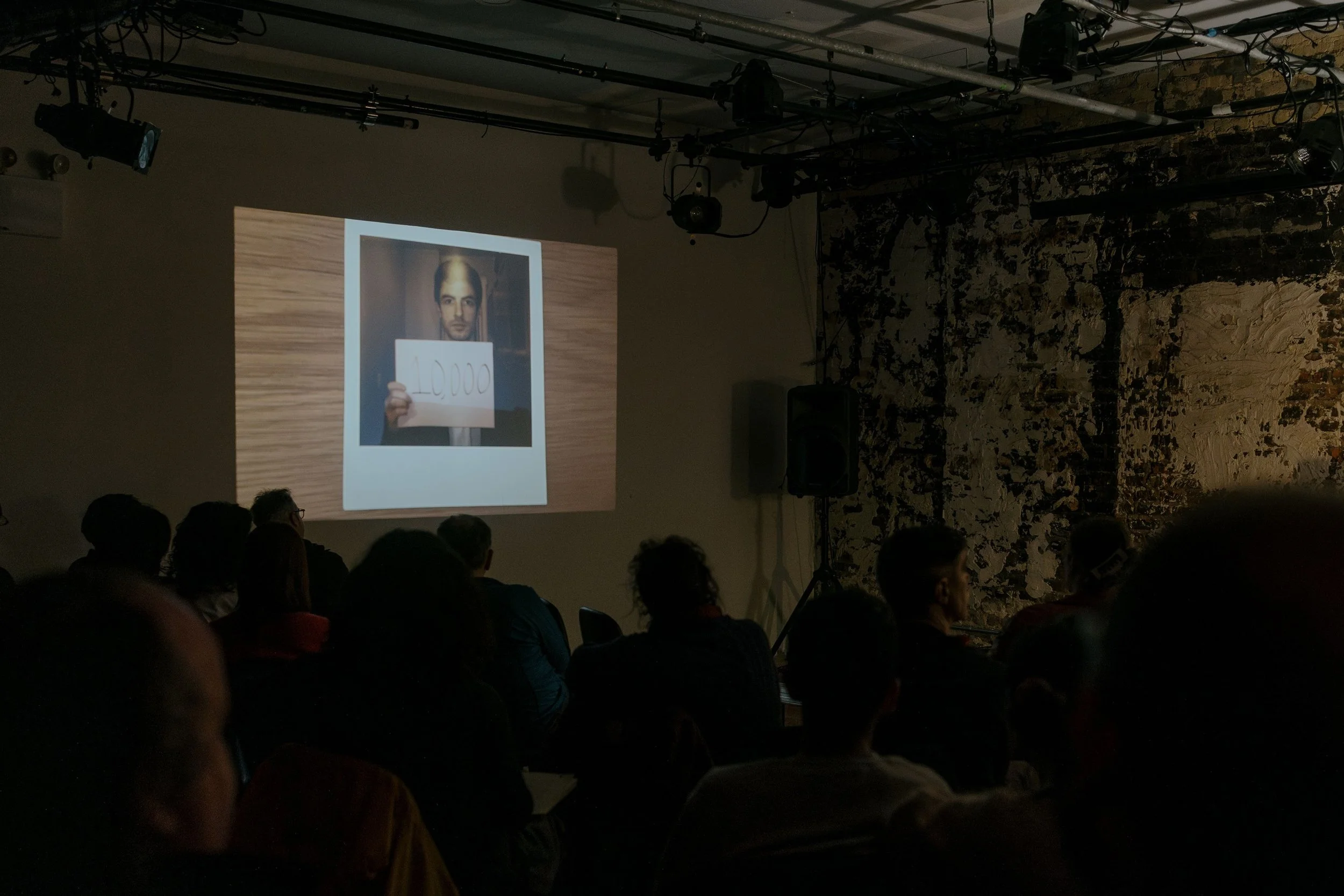
Single Family Home ran March 26-April 5 2026 and was presented at JACK.
Featuring John-Philip Faienza, Scott Gunner, Dan Hasse, Nathaniel Jameson, Paul Ketchum, Jack Langberg, Jake Lewtan, Robert Malbrough, Nathan Rtishchev, Mike Steele, Sven Stenroos, and Walsh.
Lighting design by Jacqueline Scaletta.
All photos: Jimi Sweet
If You Look Long Enough at the Camera Lens, Does it Go Out of Focus?
Object Collection’s “Actua 1” at Collapsable Hole
by Joshua Dumas
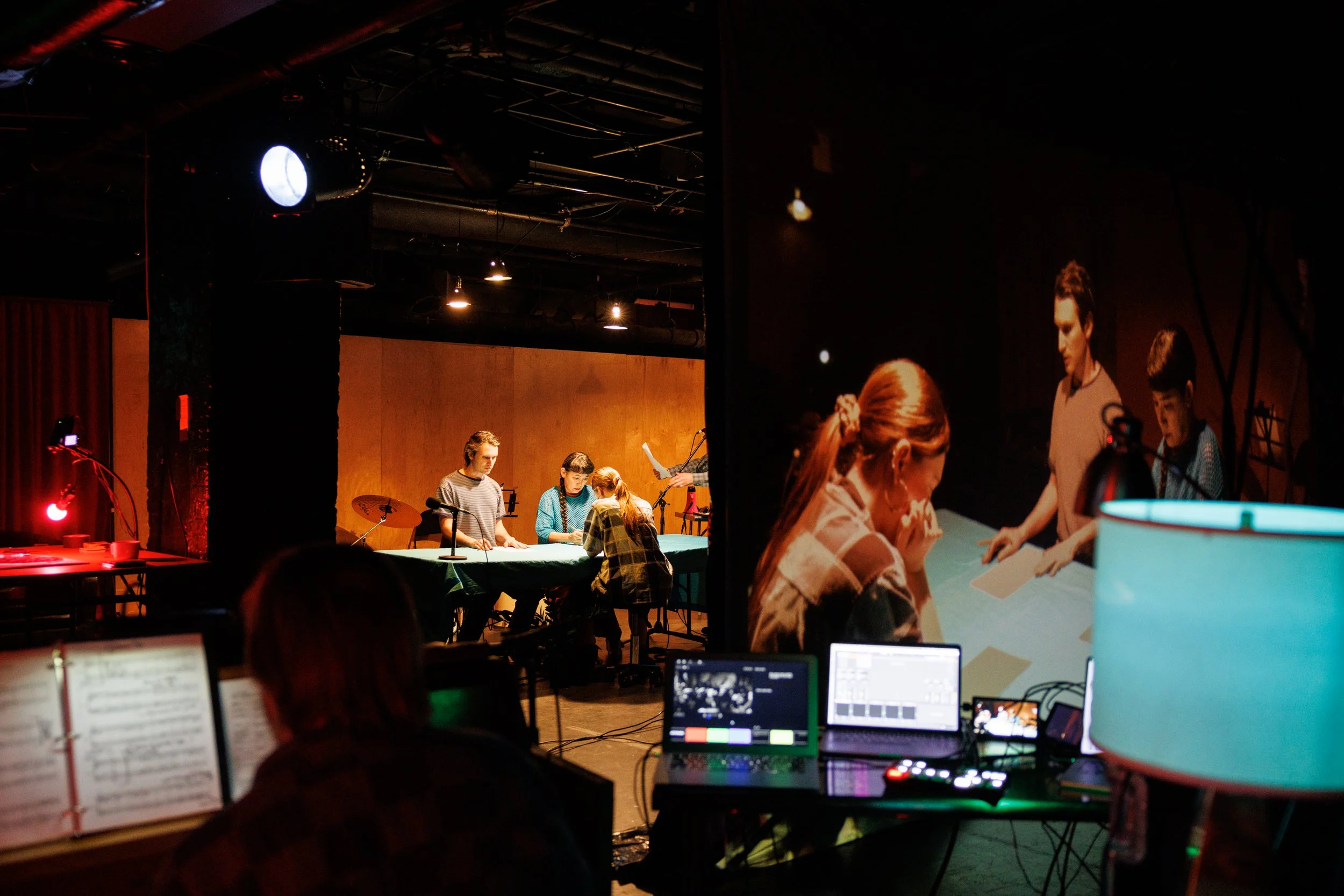
photo: Maria Baranova
In March 2026, Object Collection presents a multimedia collage of live art, music, expanded cinema, theatre, performance, an anxious glitch clown clutter, a tone poem, a Fluxus score, three houseplants, a fever dream, an out-of-tune piano through a broken megaphone. We watch a movie screen. But overhear and catch glimpses of the construction of the video images we’ll see. Performers drag tripods and cameras and mic stands to corners of the space just out of eyeshot, until the camera blinks on into live feed, and we are in an interrogation, or a space-age dance break, or a very loud and strange meeting with HR. We know something’s happening right over there, but are only able to experience it via the lens and projection. The players are actors, stagehands, boom operators, cinematographers, puppeteers, musicians; they are taking the plane apart on the runway, and dismantling it still, as it flies.
In May 1968, anti-capitalist, anti-authoritarian, anti-imperialist student demonstrations at Nanterre University in Paris crest into a broad public mobilization, a general strike of 10 million workers, all across France. A moment of near-revolution.
In May 1968, a 20 year old Philippe Garrel is there, filming. His camera trained in accusation, upon the Compagnies Républicaines de Sécurité, a division of the French National Police. But the result, a short documentary film called “Actua One”, a work he describes as a “revolutionary newsreel”, never screens, and the only print is lost.
In 1970, Jean-Luc Godard, in the journal Afterimage, writes “Que Faire” [What is to be done?]. It begins:
“1. We must make political films.”
“2. We must make films politically.”
In 2004, writer-director Kara Feely and composer-musician Travis Just form Object Collection, a Brooklyn-based multimedia performance group.
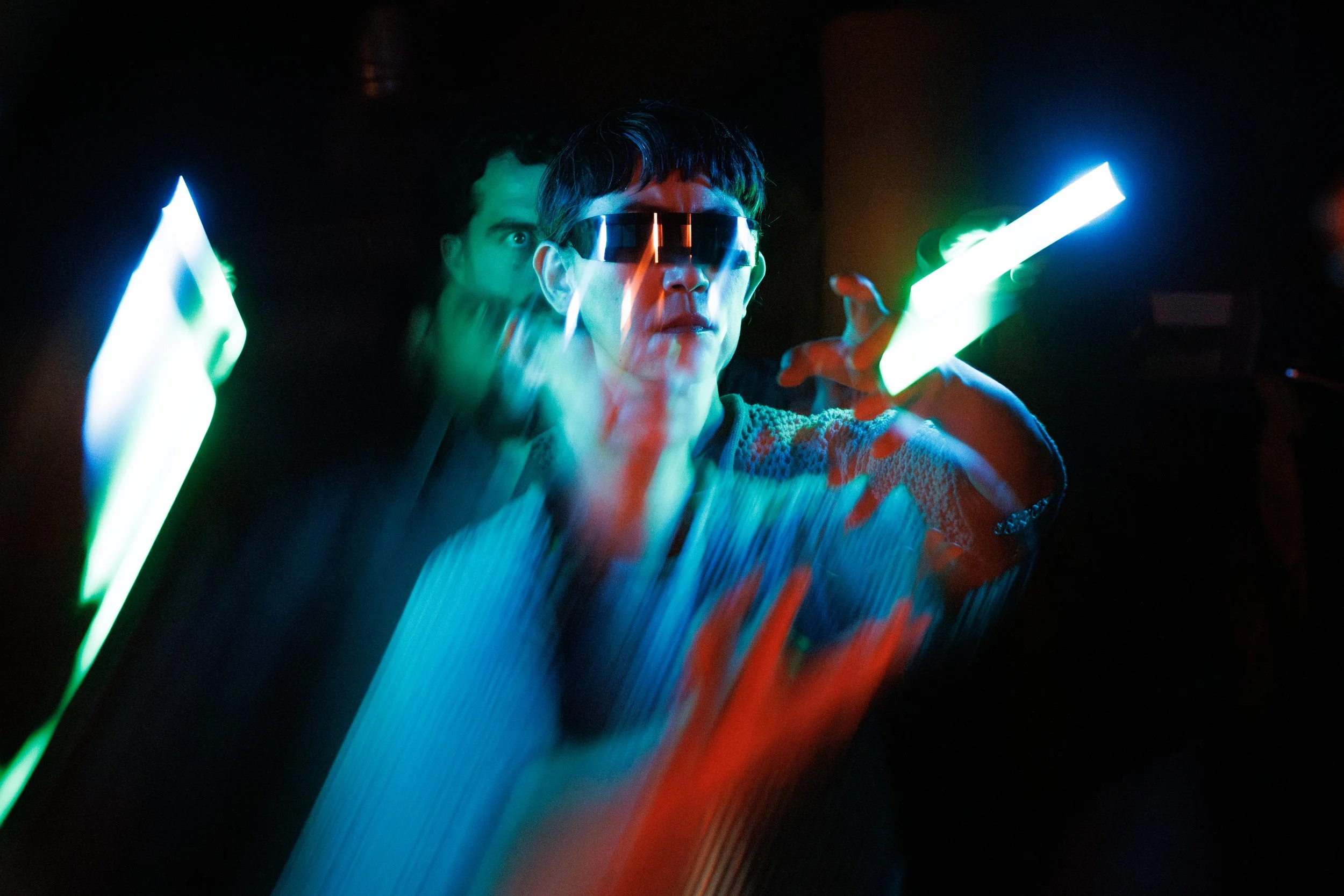
photo: Maria Baranova
In September 1968, in an interview in Cahiers du Cinéma #204, Philippe Garrel agrees that the camera is an instrument of torture.
In 2003, in a different war, in a different city, we shout “the whole world is watching” at the riot cops, believing witness and documentation protects revolution.
In 2026, onscreen, small in the distance, looking past the camera, Pimprenelle Noël asks: “If you look long enough at the camera lens, does it go out of focus?” We hear her voice through the speakers, and also in the room.
In 2005, in “Regular Lovers” Philippe Garrel re-creates his lost doc, re-making shots from “Actua One” from memory, staging with actors and sets scenes of revolutionary actions he’d participated in and witnessed over three decades earlier.
In 2011, Object Collection shares an early one-off lo-fi version of their “Actua 1” at Presents Gallery. And again, in 2013, a new iteration at Invisible Dog Art Center.
In 2026, I sometimes struggle to remember a time before multichannel everpresent media-dump, before the unrelenting spittle of content-flood, where quantity and mundanity and atrocity drown curiosity in like a half-inch of poisoned churning.
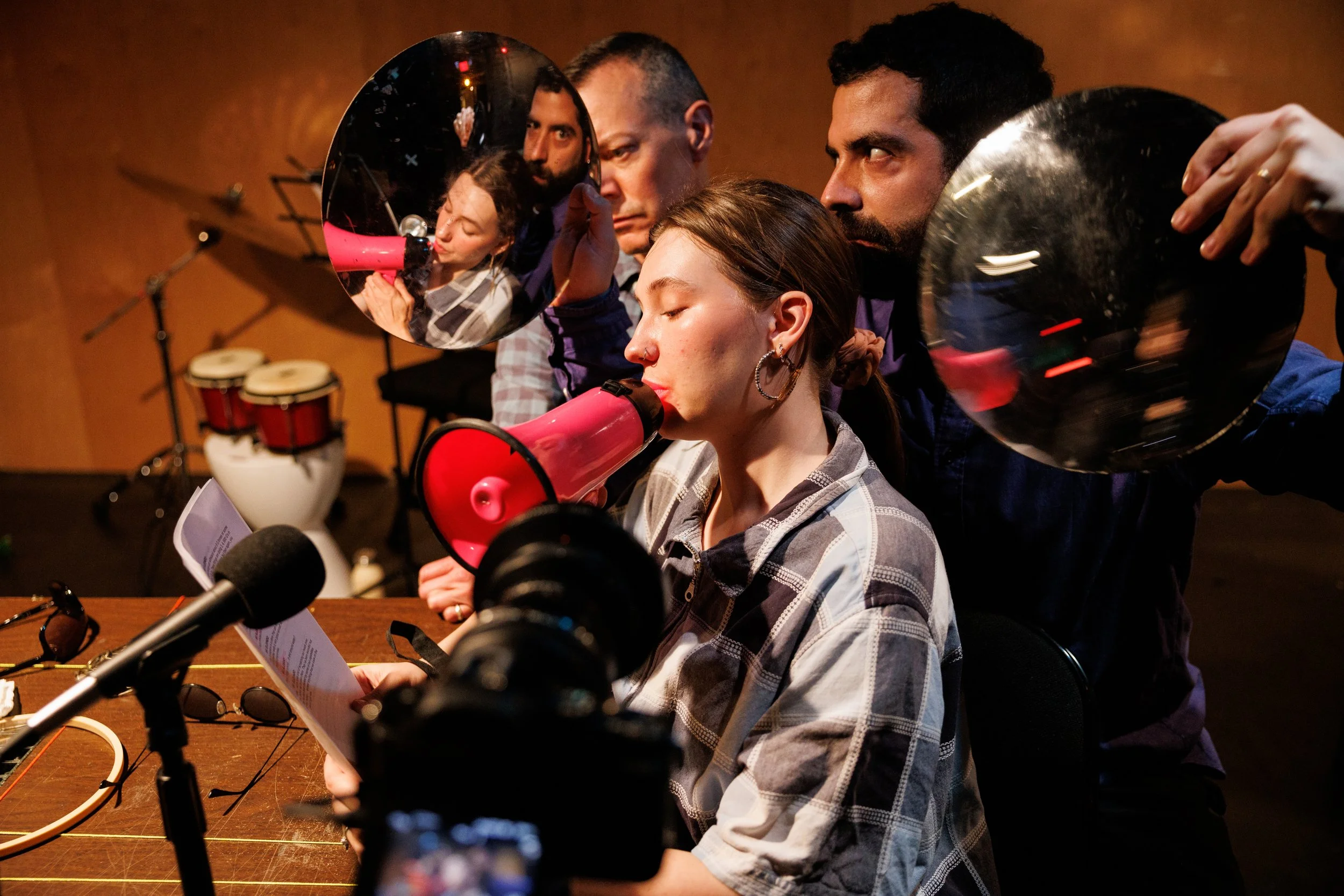
photo: Maria Baranova
In 1970, Jean-Luc Godard, in the journal Afterimage, writes “Que Faire” [What is to be done?]. It includes:
“18. To [make political films] is to describe the wretchedness of the world.”
“19. To [make films politically] is to show the people in struggle.”
In 1793, Jacques-Louis David paints “The Death of Marat”, an oil depicting the assassination of the radical journalist and the painter’s friend, Jean-Paul Marat. The painting makes Marat into a symbol, a kind of martyr of the revolution.
In March 2026, Object Collection premieres a newly reworked version of their “Actua 1” at Collapsable Hole in the depths of Westbeth in the West Village in New York. The show runs March 12th-22nd. It is written by Kara Feely and Travis Just, with Music by Just and Production Design by Feely. Video by David Pym, Sound by Robin Margolis, and Lighting by Celia Krefter. It is performed by Just, Yuki Kawahisa, Daniel Allen Nelson, Pimprenelle Noël, Nicolás Noreña, and Timothy Scott. It is scrappy and pushy and odd and funny and smart and aching.
In 1970, Godard, in “Que Faire” [What is to be done?] writes:
“32. To [make films politically] is to dare to know where one is, and where one has come from, to know one's place in the process of production, in order then to change it.”
“33. To [make films politically] is to know the history of revolutionary struggles and be determined by them.”
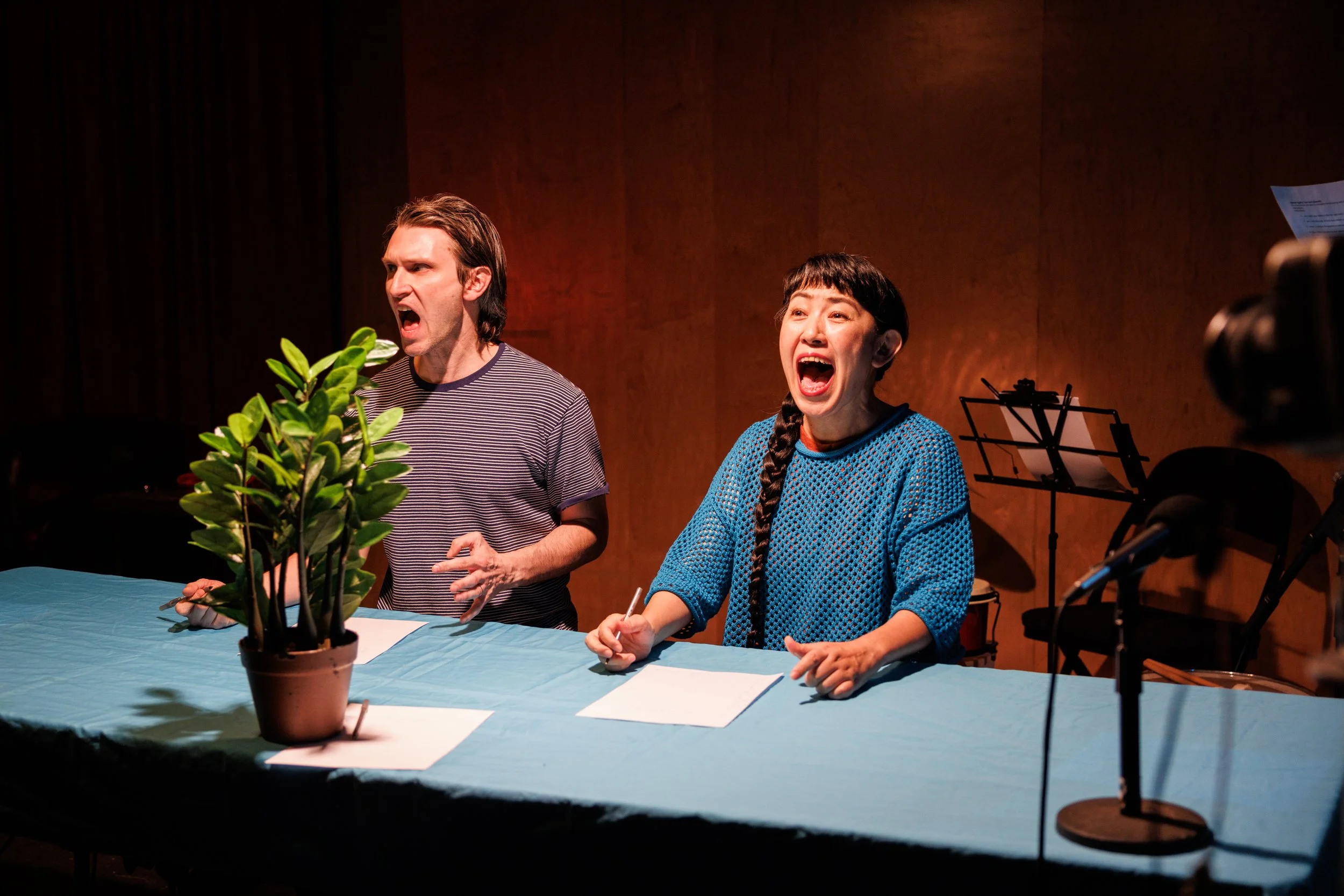
photo: Maria Baranova
In May 1968, at 2am, on Friday the 10th, the French National Police attack the protestors, injuring hundreds, fighting, making arrests until dawn. The police violence was broadcast live on the radio, as it occurred.
In 2014, the Cinémathèque Française discovers Philippe Garrel’s original print of “Actua One” in their archive, simply mis-filed. They restore the film and screen it.
In 2026, Object Collection’s “Actua 1” is a turbulent poetic live art cinema performance, jumpcutting across time and place to show us a loosely twined string of “revolutionary newsreels”. And at its center, questions about documentary and memory and performance and revolution and media, haunt and inspire, perhaps wondering “what is to be done?”
Actua I runs March 12-22 at the Collapsable Hole. Purchase tickets here.
Paul Pinto and Object Collection (Travis Just & Kara Feely) in Conversation
Travis Just
Okay, it's recording, so it's official. Now everything's on the record, and the CIA owns it all. The last time we did this, Paul, was 10 years ago. So how have you been?
Paul Pinto
My God, well, there's some times where I feel like I'm so old, and there are other times where I feel like I just graduated college and I don't know what I'm doing. I don't know if that resonates, but my brain has been mushy in really interesting ways the last couple of years.
Travis Just
I try to exist in a permanently juvenile state. I’m gonna hold on to that for as long as possible.
It seems with Mano a Mano, it was hard to tell if it was a generalized approach to storytelling or if it was two competing approaches to storytelling that were being set up in comparison to one another. I don’t know if source text is the right idea, but the two dominant source stories are Beowulf and Gawain, and I don't know if you were trying to set off methods of telling from each of those in addition the characters themselves.
Paul Pinto
I realized I started writing this piece before the two of them were the main characters. They were like vignettes, things about masculinity and about self reflection that I really found powerful. They were autobiographical and sometimes a little masturbatory, a little self serving: this is about me and my body. And so after taking a break from it, I found through lines and rewrote it. And in that rewriting, zeroed in on masculinity as I want to explore it as told through these two tropes, these two stereotypes.
Travis Just
it's funny that the way that would manifest is through these centuries-old stories, instead of the NFL or something. I would have assumed, and I did assume, that you had this overriding obsession with medieval Bardic tales. That you were gettinng into your inner D&D bard-in-the-corner.
Paul Pinto
Definitely both, right? I am obsessed with this stuff, I just didn't think I could write an opera about it. So I wrote an opera about that, plus 100 other things, and then narrowed it by cutting, trimming, editing, chopping. It can just be the story of my childhood interest, and the reason it's not the NFL is just because I don't watch football. If I watched football, I'd make a show about football. I was super into boxing, so this is why boxing is such a big part of the show.
Travis Just
In addition to masculinity, there's the idea of how a story is delivered and what it means to recount histories in the sort of broader sense of a history, which is not necessarily facts and figures, but more narratives and myths that then fall apart, and get constructed, and then are laughed at. Obviously the piece is very contemporary feeling. But these approaches, you can find it in Chaucer just as easily as in the 21st Century. So, it seemed like there was a lot about what it means to tell tales.
Paul Pinto
I'm thinking a lot lately about translation and transmission. Someone whispers a thing, and you remember 90% of it, and then five years later you remember 50% of it. And then, you remember 10% of it, but you can make a whole show out of the 10% that you remember. What parts of it are from the source, whatever that means, and what parts are just this one detail I can remember and get fixated on for 20 minutes.
Travis Just
It's also about how reliable is the narrative to begin with. Obviously, we've been beaten over the head with Western canon, which hopefully we can all move beyond, but in its original state, if we go back to these original, ancient poems, they're not canon. They're just fucking stories. They're just interesting stories about weird and nonsensical occurrences that may or may not be true, probably more likely not true. And in a way, making everything so certain is almost the Great Lie of the last 1000 years, right? And a little more uncertainty might suit people better.
Paul Pinto
It's just what the drunk guy was singing in the bar, you can listen or you can not. The stuff you guys do, the stuff I do, that bombardment is such a huge part of what we do. And when something thins out to, say, a single idea repeated for 11 minutes, it just feels like an opportunity to give context to everything else that's been going on. It's also the two extremes of the things I like to write-slash-perform: durational work that has one simple idea that just goes until it doesn't need to go anymore, and then a barrage of text on the other side.
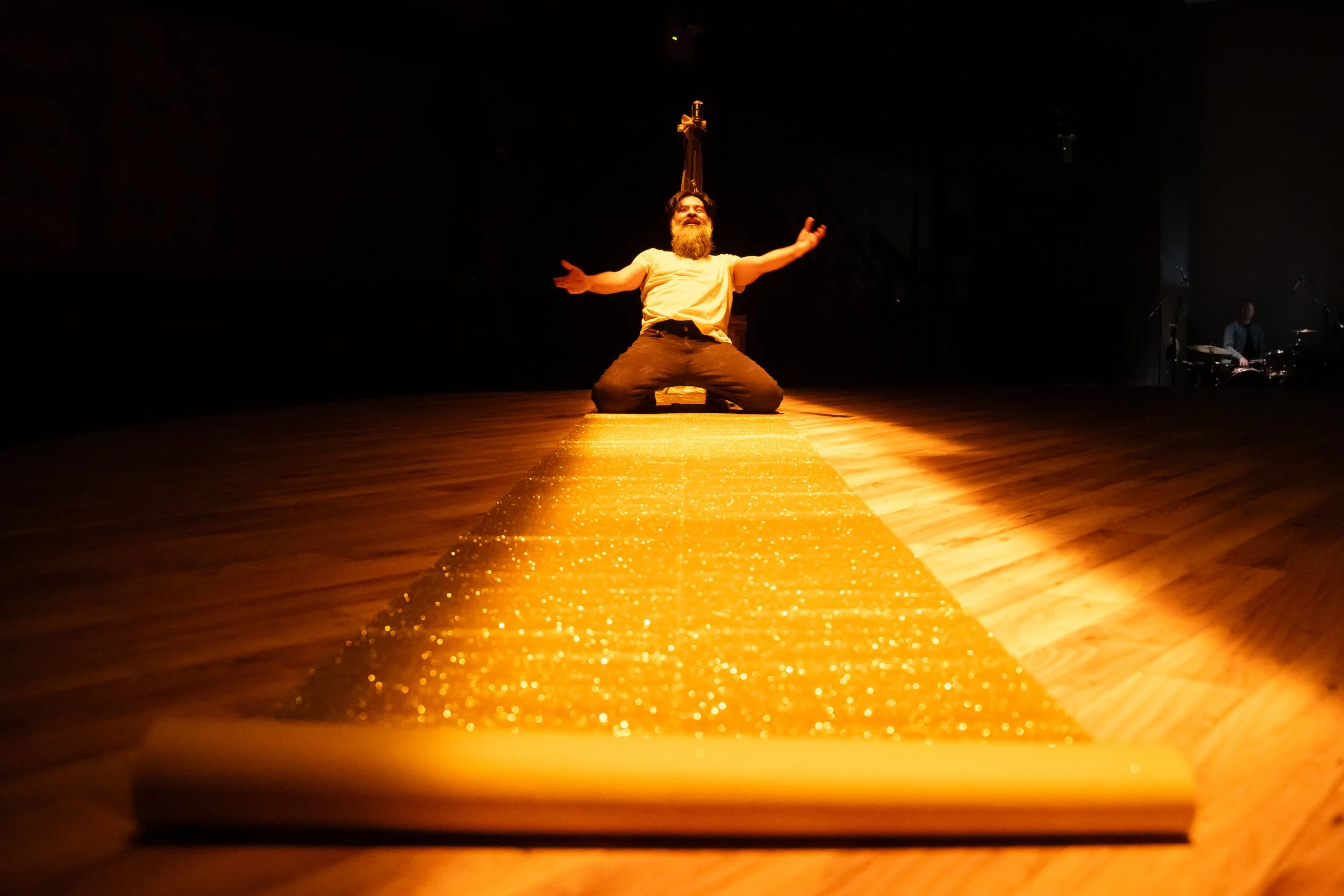
Paul Pinto / photo: Steven Pisano
Travis Just
Do you see Mano a Mano as examining your own being and ego? Because I did not read it that way.
Paul Pinto
That's what it used to be for sure. That's what it was when I started in 2019 when I first assembled a version of this and put it up for a workshop. People liked it. It was cool. I liked it. But then on reflection, I thought, this is not a show about anything else except what I'm feeling about my body and myself at this moment. And stepping away from it for three years and then rewriting it really allowed it to be way more than that. So at its root, I think it is all self reflection. But thankfully, collaboration and time makes it more, makes it a work.
Travis Just
I was wanting to talk about collaboration a bit too. Because a lot of composers take on all the tasks themselves. And they will avoid that kind of collaboration. I was interested to hear about your experience with it, especially doing something that was so personal, but then, opening it up to other people, bringing them in, and, not being the final arbiter of all things.
Paul Pinto
I think we we work in teams even if creating is a solitary act. The first people you share it with are the collaborators, right? So I feel lucky to have shared it with people that believed in it along the way and then added their instincts and their questions and their critiques and their shaping from the earliest collaborators like Jeanette [Oi-Suk Yew]. We were hanging out in Mana Contemporary, doing a workshop in 2019 of this piece. And after the one-day workshop with two days of prep, I remember being moved to tears, because here I was performing a piece that I didn't know that well. It wasn't in my body, but I thought, okay, I gotta put something up. And so I'm rolling around the table, and Jeanette is lighting me. She's walking around with a flashlight, pointing it in my face. Trusting someone to do something with this. I can only take it so far, I have an idea, we're just going to try it. And then get gritty, get your hands dirty and just do something. And how that process evolves with time, patience, and money into a thing that is more fully realized by more people: technicians who support associates who can execute; programmers who can make the MIDI triggers accurate. It all stems from a place of “here's as good an idea as I can make. I've thought about a lot of this, but not everything. Help.” And, and then someone takes it, smacks it one way or bumps it one way, and that's the oldest collaborator. And then Kristin [Marting], somewhere in the middle. After I abandon the project, she comes into it, and looks at the libretto, and says, this could be something more. And pushes me to rethink it and remake it. And at every moment, at every workshop, talking about: connect. How is this connecting to the ideas before and after, but also to the audience. How you transmitting this story? How are you translating and transmitting? And that completely reshapes it.
Travis Just
I think it's also a willingness to step out of the way and know when you don't know something, which can be difficult for composers in particular, and maybe even fits into this idea of toxic masculinity.
Paul Pinto
I think so. it's why a monodrama feels so fucking masculine. When someone says to me “one man show”, I say: oh no…monodrama. I prefer the word monodrama. It's my own baggage. I hear you. It's what a one man show is, like I can do everything: all singing, all dancing, all the shit. It doesn't mean that it's not valuable. This idea of that I want to be able to do everything, and actually the attempt to try to do everything, I think it helps my performance.
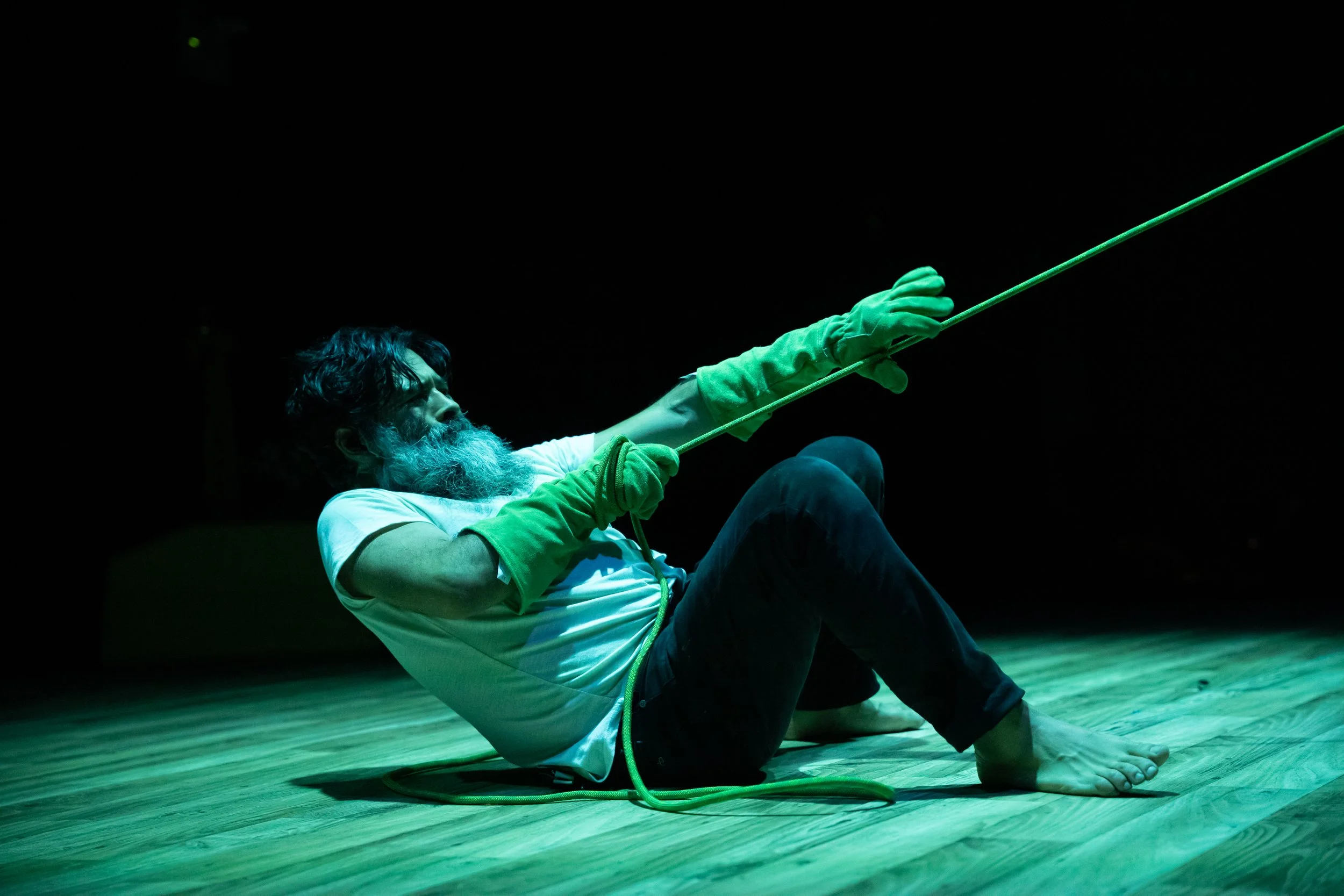
photo: Steven Pisano
Travis Just
There's a franticness certainly in the text and in the delivery. But frankly, those are through lines in your work, whether it's a theme of the piece or not. It's part of your palette, and in a positive way, you know? There's something about it being so much about your voice, too. It's your voice and your body. Those are the first instruments and the first objects, right? So it is going back ultimately to the roots.
Kara Feely
How do you feel performing it every night?
Paul Pinto
I feel tired, but every time I every time I do it, I get closer to the feeling of a junkie or something, where I just want to do it again right away, right after. I think conditioning is so real, and I kind of take it for granted. You write a piece in your 30s, and then you perform in your 40s, and, oh shit, my body's different. I can't just wake up and do this thing.
Travis Just
Now we definitely have pieces where we're not going to ask this person to throw themselves on the floor anymore. It's just not a reasonable request.
Kara Feely
Yeah, now you're gonna slide off the chair…
Travis Just
slowly and elegantly.
Paul Pinto
I'm curious about this. It's really easy to call those things compromises. But how do we renew performance and make it fresh to our bodies? You've been working with the same collaborators for so long, where else has that come up? Maybe in this new work?
Kara Feely
We actually have brought in younger people to sort of balance out the aging. Because we've worked with a lot of the same actors, I have to make sure that I'm not just asking them to do the same things over and over again. Because I get fixated on energies that they have. I know them so well, I know what they do well, and I have to remind myself, oh yeah, we did that the last show so do something else this time. I think that keeps it exciting, because you're always trying to get at what they do really, really well. Sometimes I find things with them that didn't occur to me before, and it opens up a new door. They put on some wig or some outfit and, oh my god, I never thought you would look like that. In HOUSECONCERT we brought in a regular to understudy one of the roles. And he showed up with his hair slicked back and adopted a totally different persona. After seeing him do that we put him in our next show and made him that character. Okay, this is you now.
Paul Pinto
I was thinking about the [Robert] Ashley band, where you see these regulars and then every time they make an adjustment to the expectation, it's mythology-making.
Travis Just
From a writing standpoint, with composing, I don't need to do as much to get as much. You and I, we have fairly idiosyncratic ways of making music and text and drama and whatever. As I get better at it - not that I'm trying to do “a thing”, and I'm getting better at “that thing” - but as I keep doing more of it, I find ways to do a more involved thing but put it across in a more simple way. Or I use a type of shorthand with people. Or realizing that I can simplify something and get the same effect in a given moment, without some kind of unnecessarily fussy notation, or an overly baroque set of instructions. Being able to read the energies and direct them, and also then being able to get at it in rehearsal quickly. And also knowing when it's working and not working, and knowing how to make an adjustment really quickly just having done it for so long. In a way, it opens up greater degrees of complexity and layers. Because I can do the hard things musically and with text more easily. And so I can pick these moments to ratchet up the density. I know how to do that. And there's things that I've learned, between myself and musicians. And working with Kara and working with the vocalists and the performers and the actors. Knowing when to stay out of the way is also big. So, a lot of time with the same people helps. Do you think of your work in the context of a progression of other artistic figures, or in terms of the past? I mean, do you place yourself in some way, or do you place this work in that way? I mean actively, not just in terms of influence, but in terms of where your work situates. Frankly, I was hearing not a small amount of Peter Gabriel and Prince in your performance. Which I would hope you realize I mean as the greatest of compliments.
Paul Pinto
Up is a deep, deep classic of mine so there you go. How am I actively placing? I'm not 100% sure. I don't know if this answers your questions, but I think about what context best serves the work I'm making. Is this a concert hall work? Can it be adapted for a concert hall, or does it have to be in another venue? Somewhat of a programming question. I'm more interested in writing an evening-long thing, being the only thing on the program.
Travis Just
Placing your work within a musical history, I think ties into a theme of Mano a Mano. Maybe not the generative theme, as you talk about your obsession with your body and things like that, but the construction of stories and the construction, or falling apart of narrative, and how, musically, it fits into a narrative that's maybe fallen apart. I think about especially in the 20th century, you had so much seeming development and progression which then ostensibly comes to a crashing halt sometime in the late 1980s or early 1990s. Now, I don't necessarily believe that's true, but that's a narrative that's been foisted on our generation for the last 20 or 30 years. That history ended and art stopped developing. There are no more heroes. And I think: great that there are no more heroes. They were boring to begin with. But somehow the narrative of experimental culture, for lack of a better term, is not progressing. And I'm curious about that. And the storytelling of art makers, in addition to the storytellers of Beowulf and Gawain as they start hoovering up everything that's around them and spitting out something not unlike your piece. There's not really a question in there, I suppose.
Paul Pinto
Yeah. I mean, excited to ditch heroes. Ditching heroes feels exciting. That feels like progress, right?
Travis Just
That in itself is a fundamental theme of the piece. Ditching them by them being beheaded, or ditching them by narratively ignoring them.
Paul Pinto
There are still stories that I love because I read them at a formative age, and now they inform a lot of my practice. Whether that's intentional…I don't know if I can say that I consciously adopt what it means to be a man, whatever that means, from Arthurian stories and Anglo-Saxon poetry. But I can't say that it didn't have an effect, and that there wasn't something about knowing these stories, actually having the knowledge about them and being excited to talk to someone about them. How can I say this in a way that doesn't sound stupid? The work is less about Beowulf and Gawain and medieval shit than it is about: guys, I have been thinking about this for a while, and I am so excited to talk to you about these things and just convincing you how important they are to me.
Travis Just
Well you say that right at the beginning, as you list this absurd waterfall of information, and then, say “I didn't expect you to understand that. And half of it I made up anyway.” Which is a great way to start by telling the audience that you're lying to them and that we should all be on board with that.
Paul Pinto
It's okay to distrust an expert in fear, right? Like, I'm not flying a plane.
Kara Feely
What are the stakes?
Paul Pinto
Yes, that's just it. It's a safe space. Where are you guys in your process? Are you in rehearsals right now?
Kara Feely
Not yet. We're actually doing a really condensed rehearsal period. I think we're only rehearsing 10 days before we open. But we're working on the outline and everything. It's part of the idea of the piece to put it together quickly and have a kind of scrappy energy to it. So the 10 days will be adequate.
Travis Just
It's a nice shift from the past few years, which have been so structured with long periods of work,
Kara Feely
And rehearsals where I just felt, how are we ever going to be precise enough? We don't have enough rehearsal time?
Travis Just
But it still comes together. It's definitely a different way of working, and I like that way of working. A lot of our pieces are sort of atomized and very involved. But I think it's really important to be able to function under many different methodologies. To be able to do something using the most basic of means, and to do it incredibly quickly.
Paul Pinto
One of the things that I deeply remember from our 2015 interview was your talking about your suitcase pieces. We had this exact conversation where we were both in the middle of making big work that took many years to make, and I was saying, “Ah, I want to work like this all the time, where I'm spending years in development”. And you said, “but it's also really great to just have a thing that packs up and then unload it on the day and put it up.”
Travis Just
I'm really envious of some of my improviser friends that just show up, do their set, and then go to the bar. Meanwhile, I'm still putting kill all my stuff into all of its little compartments. It's absurd, this beast that we've built for ourselves. I think it is because we don't always have access to funding and materials, and I don't want to be beholden to that infrastructure. We have more support than we did 10 years ago. We don't have a lot more support, and we're not making a living off of this at all. But the shows are paid for and we give people as much of a fee as we can afford. Most of the money just goes to people, as it should. But if that goes away, I don't want that to mean that I am no longer an artist. The experimental world has contracted in some ways, I think. Not the aesthetics of it, or even in the number of people that are involved in it. If anything, I think there are more people and it's a larger and more open situation now than what I remember from 20 years ago when we started the company. But there are a lot fewer resources. There are fewer venues. And the venues are much more difficult to access. So, there's a lot of DIY out there. When we started 20 years ago, just nobodies, we had access to black box theaters that were fully stocked. They just give us the keys and we'd have 24-hour access for three or four days. Now people in their late 20s, that's not what they get. And that might mean that our way of making work is in jeopardy because people either have everything: loads and loads of stuff and dough and support and critical buttressing or they have fucking nothing. And in the society at large, there's a huge disparity.
Paul Pinto
You mean the income gap has gotten bigger?
photo: Object Collection
Travis Just
I know, but to see it played out in the cultural field is striking because instead of experimental venues being relatively accessible to relative unknowns, now there's a huge amount of administrative hoops that you have to go through. Or you have to have a certain amount of buzz or interest or this and that. It feels very professional. So I'm very turned off by it. Because if there's one thing that I think is the death of the arts, it is professionalism, and so it just makes me shudder. But I also think that there's a huge groundswell of people that feel, well, it's not open to me, so fuck it. I'm just going to go over here in the corner and do my thing. And if a few people come and if nobody's going to write about it, then fine, we'll just be over here. In a way, it feels very much like the 60s and 70s, where there was no apparatus. It was completely pushed to the side. As opposed to that weird moment in the 1980s and 90s, where all of a sudden, there's money, people have these fabulous apartments, and they're getting all these awards and grants. They're touring the world. It's like, what the fuck? It wasn't like that 10 years ago, and it's not like that now, just that weird bubble in the middle there.
Paul Pinto
I guess that that's all well and good. If I think big picture, which I sometimes do, but I wonder in our own practices, do you feel that you've gone through golden periods? Or do you feel that there are moments where things are really aligning? For your own career, for your own work, for your own practice?
Travis Just
No. I think it's just a stubbornness to simply not stop, maybe a stupidity to not stop. Just sticking around in the face of it all. We have a small audience, and we have some people that are interested in our stuff. But by and large, we are very much ignored and out of favor, especially here in New York, and have been the entire time. But we're 20 years deep in this fucker. There's no going back now. I don't know how to do anything else at this point, I mean, that ship has sailed. There is no other alternative for me at this point. So this is it.
Kara Feely
It really doesn't feel like there's ever been a moment when it's been easy and things have been just rolling into the next thing.
Paul Pinto
Yeah, well, I wonder about this, because, my wife reminds me that I'm always stressed, and though it doesn't feel easy that doesn't mean that you're not in this golden period. I guess there is something that has entered my mind about nostalgia that is new since having a child. I never used to really reflect on where I've been, but since having a child, I do that so much, and so it's really easy for me to look back and to think about golden periods. Because they're rooted in what I was doing at home versus what I was doing while not at home. And when Jonah was four, he was in a stroller, and we were going for walks, and I was composing in my head, as opposed to at a table. And I think, wow, I didn't have any pieces performed for a year, but it was a golden period in terms of a new way I got to think about music making and writing something I don't know, the reflection where I've been. This is a new thing for me, and I wonder if that practice of reflection is more present in your work.
Travis Just
I think there needs to be a separation between a creative sensibility and, for lack of a better term, professional sensibility. Creatively, absolutely. There have definitely been periods where it felt like artistically, things were coming really easily, and there were just too many ideas. And then there have been periods where it felt like “this piece is such a slog. I hate every choice I'm making, and I'm convinced it's terrible.” It's such a cliche, but then the piece happens, and I'm still pretty unconvinced by it, but for some reason it does better with audiences, or my friends, who are really the only audience that I actually trust. The people that will tell me, that wasn't very good, or that was great.And then when I look back at the work a few years later, I look at the material and I think, it's not so different from those pieces that felt so fluid and easy. One year might be much easier than three years later, for no apparent reason. Just drawing the same connection, or finding almost literally the same compositional solution. I find that kind of thing all the time. But I think our place in the world and the practical realities of making work hasn't changed for us. That's never been particularly easy, and frankly, at this point, I don't ever expect it to be.
Kara Feely
When I was saying that it's always been difficult, I guess I meant just in terms of navigating the professional opportunities and getting the gigs. But, in terms of making the pieces, I think we cultivate the difficulty. I think we make things more difficult for ourselves, probably than we need to be. We're always making choices and asking, why? why are we making this is so complicated? I feel that's just our tendency and that's the good difficulty part. I feel like if there isn't a certain level of complexity, I haven't done the piece.
Paul Pinto
Because you brought up the term experimental, and you were talking about your lineage, and, what experimental work was…I've struggled with carrying this identity a little bit. So I'm curious about what you said, how you see it as experimental? What are you experimenting with in this new work you're making? And how important is that?
Travis Just
For me, the word experimental is a shorthand. There was a long time where that's what we were told in the scene, that it is experimenting and blah, blah. It's like, when I'm on an airplane or a bus and somebody says, what do you do? And I say, I'm a musician. Most people, if they looked at what I did, they would not see “musician”. Or I say I work in the theater. And in their minds, something happens that's wonderful, and I'm so happy for them that they're having that thought. But, what we do is very much not that. It's just a shorthand. So, the word experimental is just a way to get through it. I guess I mean something that's well out of the mainstream. I'm not interested in the mainstream. It has nothing to do with with us and I have nothing to do with it. We just have mutual disinterest. And I find it really easy to just sidestep out of it. So for me, this kind of art and music is just stepping outside of those rivers of expectation, and thought, and way of being, and way of thinking, and way of having your thoughts shaped by the work. Just not partaking in it, just doing something else. And I think audiences generally are very receptive to that. In terms of lineage, I don't know. As I kind of was alluding to earlier. I think that idea of lineage was a sort of received, historical obsession, which was maybe a misstep in the first place. And so I don't see our work as necessarily moving the scene forward, because I don't know that I believe in “the scene”, and I don't know that I believe in “forward”. I just believe in things that are occurring and that are delivered with a certain…it sounds corny, but honesty and integrity is pretty much all that I can hang my hat on at this point. And so I know it when I see it, and when I see it, I'm incredibly grateful. Now what it does could be myriad. And so it's not the idea of: “Oh, I'm doing indeterminacy, and this is my way of interacting with it”, or “I'm engaging with ideas of performance in a museum space, and this is how I do it”, or, “here are my thoughts on AI and Trump. I've really synthesized something fascinating and I can't wait for you to see it”. I don't give a shit what it is or how it's formed, but when it's done honestly and with integrity, it comes across. And that's all I'm looking for, and that's all I'm hoping to provide to people, is that kind of a thing.
photo: Object Collection
Kara Feely
It's funny that we use that word experimental, because I guess I don't necessarily feel like what I'm doing is experimenting with anything. Because I know what I want to do, and I'm not thinking, “what will happen if I do this?” I know what will happen. When I do the things that I do, it's very intentional. I get bored watching theater performances that fall into tropes or familiar rhythms, and I think, why is everybody laughing at this? I don't think it's funny. Everybody was laughing because they feel like they should laugh, or why did they feel the need to end the scene there? Or things just falling into very familiar rhythms. And I'm always thinking about trying to make a different choice with that. So I guess maybe that is experimenting, but I guess I don't think of it in terms of what I'm doing, because I know what I want to do. When you make a strange choice in terms of your piece, or with the rhythm of it, or the way it unfolds, sometimes that kind of creates a sort of energy that is really, really exciting. And you kind of know it when you're working on something. Like the scene that you're describing of Jeanette following you around with a flashlight, and suddenly you think, this is amazing! You know when something is working and this is really exciting. And I don't really know why, but we've hit on something, and I think that this sort of teetering point of catastrophic failure there, where this could just go belly up, but it's instead somehow lifting in an exciting way. Whenever that happens, we always try to jump on that and keep that going.
Travis Just
I think we commit to things, and then we go all the way with them. It might be a really long section of a piece, and it may be terribly aggressive, or terribly boring, or terribly ridiculous, but we've committed to it. I'm not interested in valorizing the text above all things, having the performance be an honest realization of this very well defined text. I can't imagine anything more dull than that. So there is always an element of where, when we do it in the show, I just have to trust that, say, Daniel, Yuki and Nico are going to figure it out on stage, they're going to pull something. Or maybe I write this really stupid thing, I have this idea for some vocal notation. It's not very good, but I know if I give it to Avi, he's gonna do something with it. I think that goes back a long way. I mean, Duke Ellington is not Duke Ellington without Jimmy Blanton and Ben Webster delivering the goods night after night.
Paul Pinto
And it’s not a new idea in opera, right? Whatever that word means. The score is one part of a vehicle of transmission. It's not the only thing that transmits.
Travis Just
I think it is something that has shifted, and I hope it is a permanent shift, away from that kind of 19th and 20th century idea of very much valorizing the score or the text. There are plenty of plays that are all about the word on the page or whatever. Opera… I stopped using that word for my own work many years ago. In my heart, I'm still very much committed to it, but I just can't be a part of what it is in the culture, I just don't want to be part of that. But, musically, I do very much see my work that way. I mean, there's music, there's text, there's theater: that's opera, that's what it is. But if there's going to be a future of opera or theater, it has to let go of those things. It has to acknowledge where we are at this point in history. It's always shocking to me, the amount of work that doesn't. I just can't believe it. I can't believe that people are writing it. I can't believe that people are listening to it. It just blows my mind. But what do I know? In a way, it's like seeing Mano a Mano, nothing else could be like this, but everything should be like this.
Paul Pinto
Can't we hope that for all pieces: I don't want everyone to write a work like this, but I'm glad that this exists. There can be nothing else like this, and now I can't unsee it as what theater can be, or opera can be. I think of [Object Collection’s 2011 piece] Innova in this way? I can't unsee this opera. I can't unpair Innova from what opera should be, right? And I saw that piece so many years ago.
Kara Feely
You were one of 20,
Travis Just
Yeah, you want to talk about poor attendance. Let me tell you, we hold the record. That fucker was three hours long. We had shows where there was one hour per person in the audience.
Kara Feely
To some extent, you sort of have to feel that I don't have anything to lose, because as you're starting out, you have nothing, and I still kind of feel that way.
Travis Just
I very much feel that way because there's nothing to gain. I don't expect any level of success. There isn't any for the kind of work we do. We're very fortunate to be able to continue making it, but there's no award at the end of this road. And good. I don't make that kind of work. I don't want to make that kind of work. It's very freeing to just get rid of all of that. I studied with James Tenney, and he would talk about the idea that when nothing's at stake, you can do anything. And I think that's a very liberating thing. And so in this moment when nobody writes about it, there are very few platforms, there are vanishingly few venues. In a way, that's maybe one of the best situations for the art. It's better if people don't go into a show thinking “this is going to make my career if I can just get that review and then book that gig”. How boring. I just want to know about the thing you're making. I don't give a shit about you climbing the ladder. Kick the ladder away, burn the ladder. Much better without ladders. No ladders, no leaders.
Paul Pinto
At the same time, you're talking to me like heroes. And I am talking about, man, I want to kill my heroes. But here you are talking like a hero to me at the same time.
Travis Just
No heroes, just people. No heroes, just people.
Paul Pinto
Just people. I don't give a shit about reviews. I don't read them, I don't read other people's reviews. But there is a reality that I spent eight years making this work, and I want to do it again, and there's still a sting that an opera I made in 2017 that I spent a lot of time on has never been performed again. And I feel like, if there's something that's changed in me, it's that I want to go slower and ensure that everything I do has a life beyond the first time I do it. And press, unfortunately, is one of those things, one of the gatekeepers. Not of the whole thing, but it is one of the gatekeeping factors. Sometimes I want some reassurance, not that other people find it valuable. I feel like I find value, but that there's a way that I can continue paying everyone that worked on this project for the next year.
Travis Just
I always think our work: it's for anybody. It's not specialist work. It's for anybody. But it's definitely not for everybody. Anybody can come in and see it. Honestly, when we've been on tour a lot of times the professionals in the audience, you know, the curators and the other touring artists, they'll sort of sniffle their noses at us, but the people who work the door, the kids working the bar, they're the ones that will come up and say “that was amazing”. But the professional curator from wherever, they'll say, “I don't know…” I know which audience I'd rather have.
Kara Feely
I have such bizarre reactions and I take away such strange things from pieces that other people don't take away. And I feel like I would never presume that everyone is going to be getting the same thing from my piece. They may wildly misunderstand the theme, but we've always made pieces that allow you to have any of those reactions, you can still experience it and in that way, I feel it is accessible, although I'm sure many people would say it isn't. Because I'm not expecting you to get any one thing from this piece other than just to take it in, and have a night, and have thoughts of your own.
Travis Just
Maybe there is a proselytizing aspect. If there was an overarching project, it's this idea that by doing this enough the culture can be radicalized. Like little bits of light here and there, what's the phrase…little drops move the ocean, or some fucking thing. It's just doing our little bit to say: I'm not part of your algorithm, because I literally am not involved in it. I might be subject to your police state, but I fucking resist every aspect of it, and I exist outside of it. And if you come in, because I'm from Minneapolis, right, if you come into my city and try to impose it, that's not going to fucking fly, and it stops now. I think that there's something, there's a certain refusal that is galvanizing.
Paul Pinto
The galvanization really lands for me, because the idea of doing a thing loud enough and often enough that people think this is the water. This is what it is to go out and have a night in theater. This is what it is make political art. This is how much we should spend on a slice of pizza. If enough people start changing this, then it does change the culture.
Travis Just
I think that's the thing that's so effortless about Mano a Mano that you did, just to sort of bring it home here, maybe, at the end. That it doesn't feel like anything that you recognize, but it feels so comfortable. And that's sort of its magic, in a way, that it could be a tradition unto itself. And it doesn't feel labored in any way. And that's in and of itself interesting. And one reason I thought it was so successful.
Mano a Mano: an operatic monodrama by Paul Pinto closes Sunday, February 22 at La MaMa ETC and Actua 1 by Object Collection runs March 12 - 22 at Collapsable Hole
Show Response: Mind Dream Theater Season 1
by Travis Amiel
Self-portraits of the artists
When I scroll, it sometimes feels as though the only form in the world is the interview. I think it must be that every video and audio artist or technician is allowed only to put a microphone in front of people as they have a conversation. It makes me so glad that my friend Allyson Dwyer has a new project bucking the trend! Mind Dream Theater presents short audio stories, with new episodes dropping through March 16th. The writers featured this season are Theresa Buchheister, Devon Wade Granmo, Rawya El Chab, Elijah Guo, Catherine Weingarten, and kanishk pandey. There's also a "bonus" episode from Jerrod Jordahl.
The lullaby theme song (by Devon Wade Granmo) places me right in the emotional state of slumber. The episodes feel like dreams I can remember, or states I've entered between dreams, trying to fall back asleep. For a compulsive eavesdropper such as myself, the show satisfies my curiosity to hear things I shouldn't from strangers, and try to place the little fragments into a fuller understanding of who and why they are saying all this stuff.
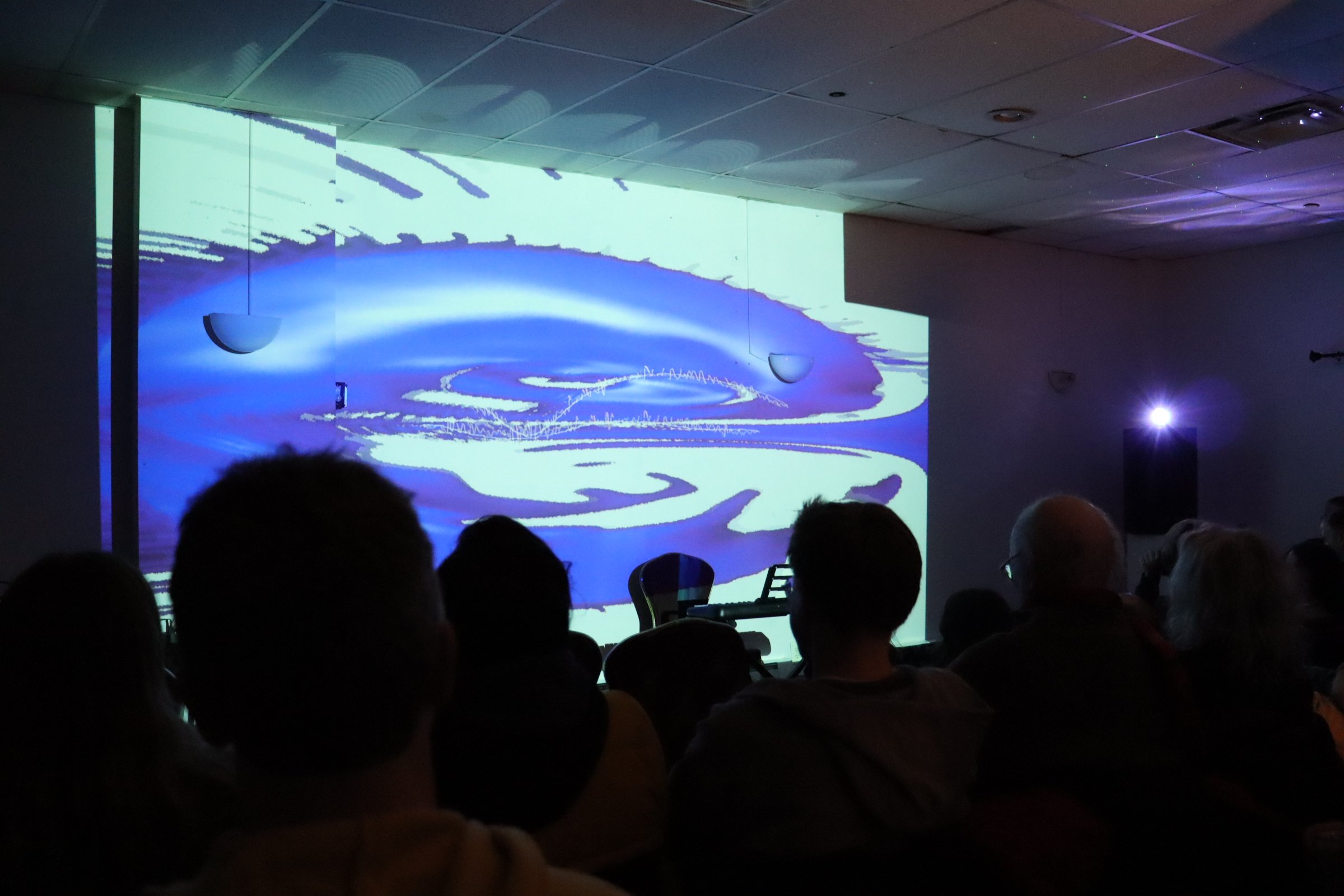
Mind Dream Theater Season 1 launch party at Brick Aux / photo: Lauren Serafica
There's existential spiraling about ideas ("Knock Knock Knock"), scary doomsday situations ("Der Tag der Kinder or Hamelin Revisited" or "Rough for Radio III (Annihilation)"), text-fights about petty social faux-pas ("u ruined my life... again"). Each episode has a dedicated sound designer separate from the writer and director, which means the sonic world is its own work of craft. On hiatus from live performance during COVID-lockdowns, many artists pivoted to online live streams or audio pieces, and I find I can appreciate Mind Dream so much more as a part of my now "normal" life, whatever that means!
Simon the Taskmaster: A conversation on dance and systems of command between Nora Raine Thompson, Noa Rui-Piin Weiss, and Miranda Brown
By Nora Raine Thompson
In this conversation, I speak with Noa Rui-Piin Weiss and Miranda Brown ahead of their work-in-progress showing of ¿¡¡simon negs≈≈>:(:{{**, which was presented at the Exponential Festival in January 2025. This was a partner piece to their earlier work, !!simon says~~!:));)$$, which they presented in 2024.
In both works, an unnamed character (presumably, Simon) communicates with them through text instructions displayed on a screen, commanding them to dance in unison, touch the ceiling, dissociate, glisten, torture, even kill. Their attempts to fulfill these tasks (they always try, even as they search for loopholes) is what makes up both iterations of this work.
We are all interested in impossible tasks. My doctoral research uses this idea to study how improvisational dance practices interface with neocolonial and capitalist logics, and how conceptions of possibility get negotiated among choreographers, dancers, and audiences. Noa and Miranda are deploying impossible tasks to craft a choreographed commentary on systems of command, inside and outside of the field of dance. This shared interest led to a conversation about authority, agency, embarrassment, and more.
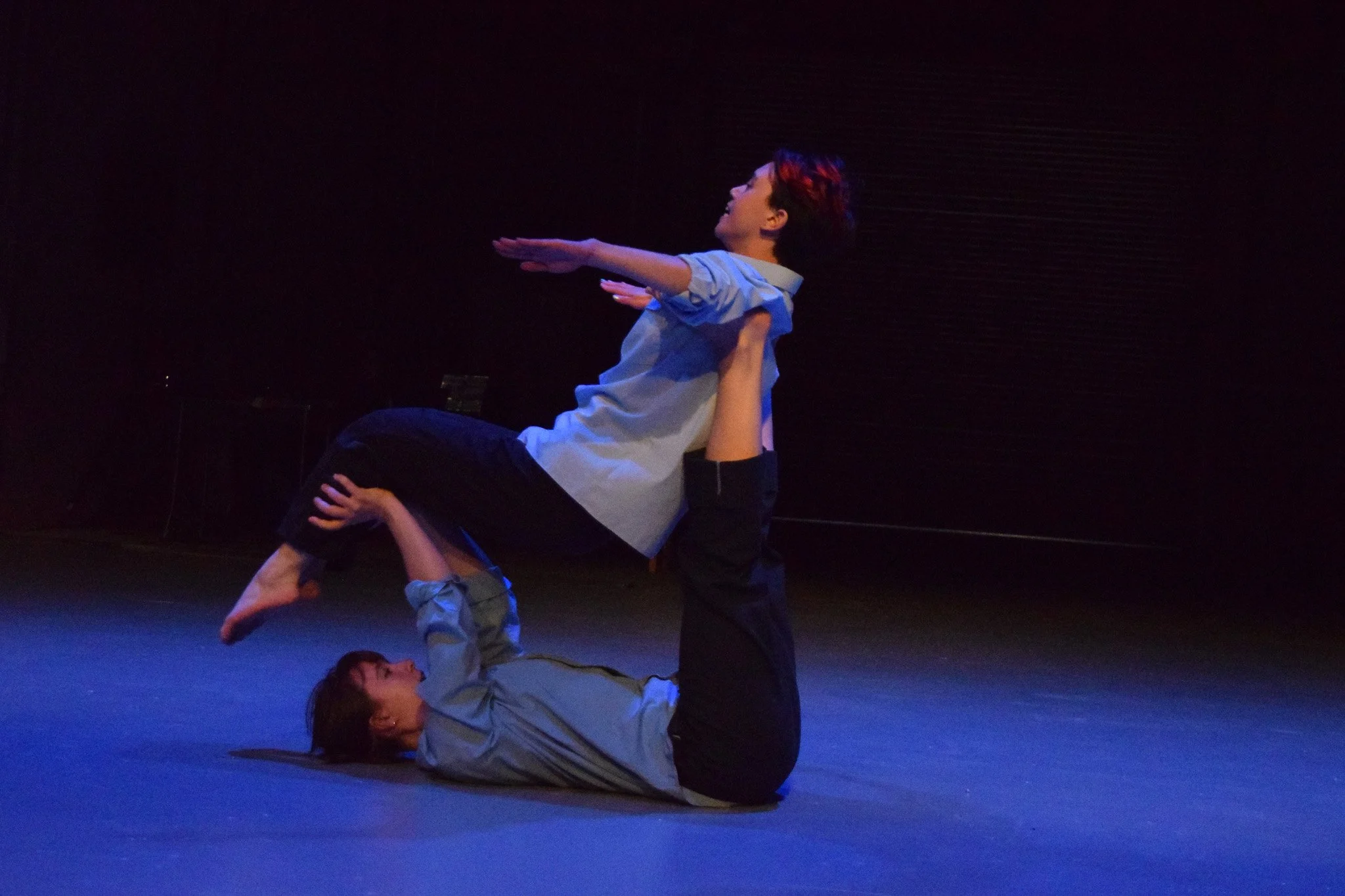
photo: Eulàlia Comas
Nora:
I would love to start with this figure of authority (Simon) and how it fits into the context of dance, the dance world.
I remember in “Simon Says,” there’s a sequence where the instructions keep changing but you repeat the same action over and over... I think high-fiving each other. I can see you all messing with instructions or commands. It’s like a rehearsal process where an authority figure keeps giving you new instructions, and you’re resisting by repeating the same thing.
Noa:
Yeah, it feels related to when choreographers say they’re working with a task-based structure, but there's a lot of unspoken rules about how it's supposed to look. And there’s a question of who determines success. Who's to say if I’ve accomplished the task if it’s supposed to be impossible? Or they don’t know how it will be accomplished? Who are you to say?
Miranda:
You don’t know!
Nora:
That is a central question in the tasks that I'm looking at in my research, too. Who gets to say if you did it? I think many choreographers have a fraught relationship with that question. They want to say, “it's not up to me.” But then they say things like “try harder.”
Miranda:
Or “that’s it,” or “good job.”
Noa:
Or even, “that was interesting.”
Miranda:
One of the first things Simon says in this piece is “the dancers did a good job.” And despite the fact that we wrote that, it feels good every time. I think, thanks. And it feels especially good when we know that he will then ask for more and more effort, and not be satisfied.
Noa :
Right, and when Simon says, you could put in a little more effort, it actually stings.
Nora:
I appreciate how you two seem to be testing out coaching strategies and seemingly tricking yourself into actually feeling the emotional impacts. Which I think speaks to the tension between just trying to just follow the task, wanting to make an interesting composition, or trying to please the authority figure.
Noa:
Well, there are so many experimental or postmodern dance practices that seem to claim you can trick your mind into making your body do anything, which is not actually true. It can be really cruel to tell a teenager, “it's actually your brain that's not right, and if you can believe hard enough, or if you can believe that you are capable of it, then you'll open up some access to your knees.” But it’s actually just about the depth of your hip sockets! That conflict is really part of our dance trainings, which are both physically rigorous and full of this idea that you have to believe in yourself in a particular way.
Nora:
Right, and in this piece, Simon is saying you have to train, physically.
Miranda:
And he’s saying that the dance needs to be more complex.
Nora:
Which again reminds me of trying to surreptitiously, as a dancer, insert your will or opinion into a process. A friend of mine was recently talking about trying to show her director that their idea was bad by performing it in a particular way, a bad way.
Noa:
And that’s a weird risk, because sometimes you do something to mock, or to show the stupidity of the direction, but then the person in charge says “I like that.” And now your ego is on the line. You’re ultimately the one humiliating yourself in front of the audience.
Miranda:
I will say, half our work is us trying to humiliate ourselves in front of the audience.
Noa:
In a way that is bearable.
Miranda:
In a way that is safe. In the opening improvised section of the piece, for example, we are coping in different ways, through the embarrassment.
Nora:
Why do you want to humiliate yourselves?
Miranda:
(turning to Noa) You had a theory.
Noa:
I think dance is embarrassing.
Nora:
Say more.
Noa:
We don't live in a culture where it's acceptable to move your body in wacky ways in public. The way people get around that is by achieving and trying to prove it’s not silly, show it's actually really cool. Virtuosity, right? Virtuosity is a way of showing that even if the dance is humiliating, I can do it really well. So, as people with complicated relationships to virtuosity and achieving, we are asking, how do you manage not being able to achieve and also not embarrassing yourself?
Miranda:
And so we’ve come to trying to dance in an entertaining way. We value legitimately trying to entertain. We’re trying to make you laugh, intentionally. We don't want you to be bored. We don't want you to just say, what is this weird experimental dance? We want you to find it funny because that's an easier access point into thinking about all of these things. We want to speak to people who don’t dance…
Noa:
Or people who would normally watch a dance and think, that was embarrassing. We’re with them, laughing, and saying, we know it's embarrassing.
Nora:
I wonder if you can genuinely feel embarrassed if it is all planned, choreographed?
Miranda:
Well, I genuinely laugh when Noa says the line about my not having a solid shit in a week. We try to make each other actually feel something, blush. But we also try to stick to what we can get over.
Nora:
What do you do when you can’t or won’t fulfill the task? I know Simon tells you to kill someone in this dance. How do you not do the thing in the frame of this dance where you keep trying to fulfill?
Miranda:
That’s the question, that’s the work in progress.
Nora:
Right, how do you find the loopholes of how to achieve something, or, find your way?
Noa:
Malicious compliance.
Miranda:
We are looking at the internal mental gymnastics you do every day to feel okay, infusing those into the strategies we’re using.
Nora:
Finally, who is Simon?
Noa:
Simon is us, through and through. But we like that there is no audible narrator, that we and the audience have to read the cues in our heads. It’s the voice in your head.
Miranda:
We’re all together, hearing that voice, having that voice. It is an outside political figure, sure, but it is also our own inner critic, telling us we are not succeeding.
Festivus: Theater for the Rest of Us
by Reuven Glezer
Festival season has come & gone and by all accounts, it was glorious. Of course it was - some of the most exciting exhibitions in performance, theater, dance, & indescribable mutations take root in New York like rats in summer. January becomes the grand convergence of boundary-pushing work you will rarely see elsewhere in the hopes it will come to a performing arts center near you. I was on a lighter track this year, having seen only twelve works across four different tentpoles (Exponential, Under the Radar, PROTOTYPE, and wonderful newcomer The Get Together). Some of you freaks made it out every night, and I salute you. I, for one, am hopeful for a handful of remounts to get my own freak flag aloft again (*cough* Creature/Comfort, my utopias, ¿¡¡simon negs≈≈>:(:{{**) but here’s an incomprehensive smattering of work I did interface with that delighted, fascinated, and tickled, with musings attached.
i'm going to take my pants off now
You walk into Life World and you’ve gotta put on some booties. Me? I have Hobbit feet and accidentally tear the first pair so someone kindly passes me a larger size. Crisis averted. You walk into the space and are greeted with turntables and green shag carpeting, surrounded by mylar balloons (Carolyn Mraz’s production design befits a stylish bedroom-cum-mind palace). This is Ann Marie Dorr’s latest, and you will find yourself face-to-face with them for an hour of your time in one of the most intimate theatrical evenings I’ve had in a long minute. Bonus points to any producer who brings this back: keep the 10pm shows. This is perfect alchemy for a late-night showing. Composed of kindnesses requested by Dorr, who initiates the show by knocking out the lights and changing in the dark with a quickness that immediately syncs you into the rhythm of the work. You might be asked to shine a light on Ann Marie, you might be asked to spank them, you will be lifted into the mind of someone who wonders if they, like the cod fish who suffered in the imperialist trade wars between Iceland and the United Kingdom, can be lifted to the light and be seen, worms and all. We’re all caught in the Þorskastríðin of the self, so why not reach for one another, pectoral fin-to-pectoral fin in the dark waters? And we will be in the dark, plunged and only guided by music and Dorr’s voice, as the mylar picks up any stray lightbeam and hits back like the eye of an undersea denizen. At the risk of overdoing it with the sea-related analysis, I did watch this work’s composition unfold in a method that reminded me of Maggie Nelson’s “propositions” in her seminal Bluets (and, frankly, manifest in a work better than Nelson has written in the last five years or so) - radical intimacy, but with an originality that outmatches what feels like a world constantly funneled through a lens of “intimacy.” What’s worth sharing in the social media new world order? What’s intimate when everything is surveilled? Maybe all we need is to listen, to wonder about each other in the inky black as a 12-inch LP of T. Rex plays. As we (and everyone in my audience did) offer a kindness to Dorr, I wondered if this energy would maintain after. I walked out of Life World in the 27 degree weather, late in the eve out from the 10pm show, and I was offered a kindness - I was given a lift home.
TRAD
Hannah Mitchell, in the marvelous TRAD, gets trapped (by the patriarchal forces of American Christianity). This is a good thing. I think I have a particular affinity for this because I did grow up around people who would become the Orthodox Jewish version of wannabe tradwives (who value modesty but are quick to show off engagement rings in the WhatsApp groupchat, if you know you know), but Mitchell does some absolutely wacky shit here and I kind of wanted to be a fly on the wall for every Loading Dock audience. If you aren’t familiar with tradwifery (god bless you, honestly), it’s an especially present phenomenon on TikTok where women document their “traditional” lifestyles in an alt-right ecosystem that values women as breeding units and indentured servants. As a tradwife, and this isn’t the case, this is devotion to faith and home. It is, uniquely, a bastardization of a return to nature philosophy that is insidious but, understandably, deeply addictive for internet anthropologists. Hannah Mitchell’s tradwife is raising several children, her cheery voicemail-leaving husband is MIA (classic), and she’s got another bun on the way. The work is a fun metatheatrical double burden, Mitchell messes with us as she occupies an eerie psychic space, a grand white curtain with a pasture in the background (courtesy of Jonathan Schatzberg), whose hinges loose as the evening progresses. I can’t stop thinking about this moment where we were all asked to pluck a petal from a rose, only for another rose to emerge for Mitchell to demonstrate its frailty and preciousness - she smashes it against the wall and reader, I howled. The vibe, as they say, shifted. I’m reluctant to spoil what happens in the back half of TRAD in the hopes (as I have for all the works!) that it comes back, but there comes this strange, time-merging duet featuring a birth danced to Moondog’s “Edelweiss” and Kiki Milner’s Little House on the Prairie-coded idol of aspiration for our heroine. It’s sudden and dramaturgically risky but a sudden moment of energetic calm that merges the scenic work, Jacqueline Scaletta’s mesmerizing lights and Ethan Lindhout’s wonderful sound design in a stunning tableaux. Praise be.
Time Passes (for Ellen Brody)
I am sensing an aquatic theme to my choices but nevertheless, I persist. Tiny bias alert, I collaborated with the Goat Exchange (theater-making duo Mitchell Polonsky & Chloe Claudel) on the first iteration of this, but I had no idea the dimensions (literally and spiritually) this would take and was pleasantly surprised. Merging all of Ellen Brody’s lines from the Spielberg megahit Jaws and the Virginia Woolf’s To the Lighthouse (specifically the chapter that grants the work its name), an unlikely mashup becomes an unusual meditation on a kind of Anglo-American anxiety about the ever-changing world. Serenity is drowned in blood, ghosts pass through us, and there’s danger in the water. Woolf’s work is inextricably tied to the sea itself, and Jaws is nature itself plundering the American idyll of its summer leisures, and so the Goat Exchange link these two through American cinema’s unsung hero, Ellen Brody. Chloe Claudel is our Ellen and our Woolf-ian narrator, and the way Claudel can change tones at the drop of a hat is astounding. One minute she’s disassembling a whole chicken and talking to us/Quint about how he’s into sharks, and the next her voice becomes this hollow, entoning phantom as it motions through Woolf’s words. There’s power in the way a performer doesn’t walk a fine line so much as jumps through these thespian hoops into another arena, and Claudel pulls it off with finesse. The show’s design is the real shark here, while there is a literal 30-foot shark that has lines (albeit in a “the adults in Peanuts” indecipherable garbling way), there are lighthouses and gems across the cavernous scenic work (from Forest Entsminger) that give the work the energy of a nautical museum, while Abigail Sage’s lighting feel like observing the sun from the epipelagic zone of the open sea, and the lost, unappreciated billows of daylight in an abandoned home all together. Olivia Vaughn Hern’s costumes here are a delight, from Ellen Brody’s blue-and-pink dress to the very 70s swimwear for the beach scenes. It’s a mashup that takes a willingness to get a little ridiculous, perhaps no better exemplified than Claudel singing an Edith Piaf number accompanied by a goblin shark on the piano (the very talented Mateo Lincoln). A new world crashes open like a wave, we are neither in Woolf-land or Spielberg-land. We’re in the land of time passing, to and fro.
Watch Me Walk
Anne Gridley would like you to know how to help a disabled person who has fallen. The answer is simple, ask if they need help and if the answer is no, take the no. She falls and asks us this during her fun, illuminating, and heartfelt semi-solo work Watch Me Walk, and observes with mischievous eyes as she rises herself and congratulates us on listening to instruction. Gridley is educator-scamp-queen of the castle in her wonderful play, directed with fun and aplomb by Eric Ting. Gridley’s work is form-melding and thematically tight, as befitting a co-founder of the Nature Theatre of Oklahoma, but it’s also the life of an artist and all the life within her as a disabled person. Her disease is incredibly rare (and unforgettable once you’ve got the catchy tunes about her “orphan disease”, from Noah Lethbridge, stuck in your head) but inherited, at one point Gridley tries to find out which generation it originated from but it becomes less of a climb up the family tree and more a leap from canopy to canopy in search of answers to questions that were inconceivable in the generations before. Gridley is here to educate you about Hereditary Spastic Paraplegia (HSP) but she’s also here to walk through herself the person, herself the scion of a family with its own secrets and unanswerable mysteries, and to show us the person she is. Her pet duck, Ping (played by Alex Gibson, one of the show’s “Adonises”), tells us of Death, a process, “We are actually dying every day, every moment. Like we are getting close to death every every moment. And...it is a process.” In this segment, he’s describing the failing of motor neuron function, but he’s just as much talking about the inevitable boogeyman of life and how that journey isn’t, and shouldn’t be, a tunnel-vision endpoint. To live, body and all, is an eternal accumulation of (epi)genetic luck and the time you take up in the present. There are almost no photos of Gridley’s grandmother, Mary Virgil, where HSP can be found in its earliest example in her clan, but there are plenty of Anne, who can still dance and do tricks and fall from ladders. In the most moving section of the show, she performs vaudeville cane routines with the endless ooze of charm, and fellow Adonis, Keith Johnson. Johnson messed up slightly on a move the night I saw the show, and who can blame him? He’s only human. That’s life.
Bellow
I truly had no intention of seeing Bellow. I got a free ticket through UTR’s free ticket drive (thank you Mayor Mamdani) and wanted to kill time on a Tuesday evening. What I thought would be a rote bio-play was my own cynicism talking, because this was a Brokentalkers production, an Irish theatre troupe that utilizes unconventional collaborators to create uniquely unconventional work. In this case, the main collaborator is Danny O’Mahony, accordionist of the finest order and a master of traditional Irish music - while it claims to be biographical, it is profoundly anti-biographical and somehow more honest, more spindly, and one of the best things I’ve ever seen. I was (joyfully) taken aback at how Feidlim Cannon poked fun at the very process of devising in a way I found, unlike other examples of self-deprecating depictions of theatrical process, genuinely critical of its potential and clear-eyed about its inherent pretension. There’s no true way to articulate art and life in an easy package, so Bellow goes in another direction. It’s, in many ways, a hagiography of traditional Irish music itself, but also snapshots and slices of a life devoted to craft. Partway through, Cannon and O’Mahony admit they had trouble going forward and cast a dancer, Emily Kilkenny Roddy, to collaborate on the work and see what directions they can go in. Roddy becomes Danny’s avatar, as well the avatar of his music, at one point demonstrating the process she used to try and figure out a choreographic language for Danny’s music and when she shows us what she’s got, my jaw dropped. I’m not, to my detriment, great at describing dance but her movements felt like I watched the groans and tones of an accordion given a human soul. Roddy puts on a mask and becomes a young Danny later on and, in one of the show’s darkest moments, moves as Danny himself describes the awful things that will happen to his body in the years to come. The work is a portrait of an artist (not to get all Joyce about it) becoming themselves, not through dates and times, but through the spirit of the art itself. In the show’s final moment, Danny plays us a tune as Cannon and Roddy surround him with huge photo cutouts of what I can only assume are other masters of Irish music and the lights shift so slowly until it is as if Danny himself is just another photo, playing with such stillness, and then Sarah Jane Shiels’ lights roar with color and remind us this is a living master, this is a world that breathes like the accordion itself. I only cried, like, four times.